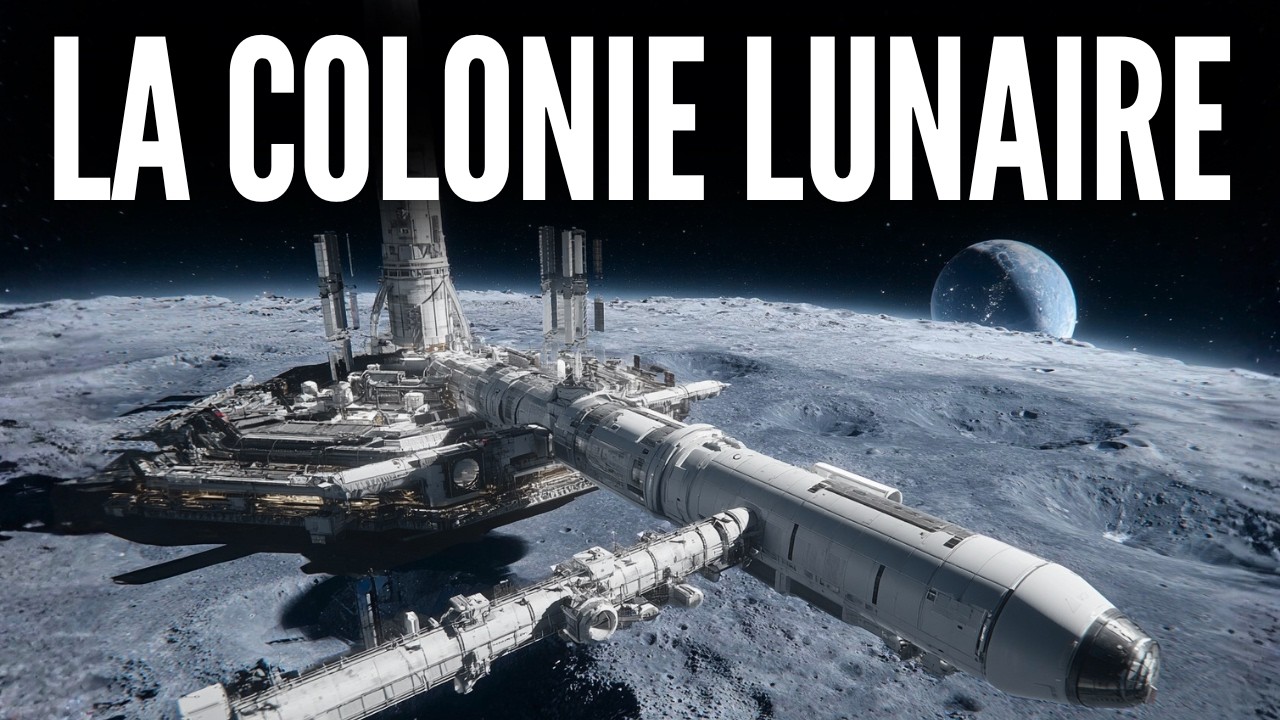
La VRAIE RAISON de notre retour sur la Lune (ce n’est pas la science)
Keywords
Artemis
Moon base
space economy
China space race
Starship
Summary
This video by Christophe Pauly examines the geopolitical and economic motivations behind the renewed human interest in lunar exploration, particularly through NASA's Artemis program. It contrasts the Apollo era, driven by Cold War rivalry, with the current push for a permanent lunar base, emphasizing resource extraction (water, helium-3) and commercial opportunities. The narrative traces the decline of Apollo, the stagnation under the Space Shuttle, the failure of the Constellation program, and the disruptive role of SpaceX. It highlights China's accelerated lunar ambitions as a key driver for the US return. The video argues that science is secondary to strategic and industrial goals, framing the Moon as a new frontier for capitalism and geopolitical competition. While informative, the analysis lacks depth in technical and scientific details, and relies on a single perspective without counterarguments.
Critical Evaluation
The video presents a compelling narrative about the shift from scientific exploration to geopolitical and economic motives in lunar missions. It effectively contextualizes the Artemis program within the history of space exploration, from Apollo to the present, and highlights the role of private companies like SpaceX. However, the scientific rigor is limited: no primary sources are cited, and the discussion of resources like helium-3 is superficial, ignoring the technological challenges of extraction and utilization. The video's strength lies in its accessible storytelling and clear timeline, making it suitable for a general audience. For a university-level audience, it lacks critical engagement with alternative viewpoints, such as the scientific benefits of a lunar base (e.g., astronomy, geology) or the ethical implications of space colonization. The promotional content for Mammouth AI and the book 'Artemis: retour sur la Lune' detracts from objectivity. The comments section (not analyzed in detail) likely reflects polarized views, with some praising the geopolitical analysis and others criticizing the lack of scientific depth. Overall, the video is a useful overview but not a rigorous academic source. It scores moderately on reliability due to the absence of verifiable citations and the author's potential bias as a content creator with commercial interests.
Key Moments
- Introduction: The Moon as a civilizational project again.
- The uncomfortable question: why return after 50 years?
- The last human step and fifty years of silence.
- Apollo as a weapon of the Cold War.
- 400,000 people to win an impossible race.
- Victory achieved and the lunar dream halted.
- The Space Shuttle traps NASA in orbit.
- Constellation collapses, future seems closed.
- SpaceX shakes things up, China accelerates.
- Birth of a lunar economy on-site.
- SLS versus Starship: shift in space model.
- The real reason for our return to the Moon.
Cited Sources
Contribution & Novelties
The video synthesizes existing historical and geopolitical narratives about lunar exploration into a coherent argument that economic and strategic motives dominate over scientific ones. It does not present new research but offers a accessible summary for a general audience, highlighting the role of SpaceX and China in driving the Artemis program.
Radar Profile
The radar profile shows moderate scores across all dimensions, with a slightly higher quantity of information (7) but lower technical level (4) and reliability (5). This indicates a broad but shallow overview suitable for public education, not academic research.
Reliability
/10