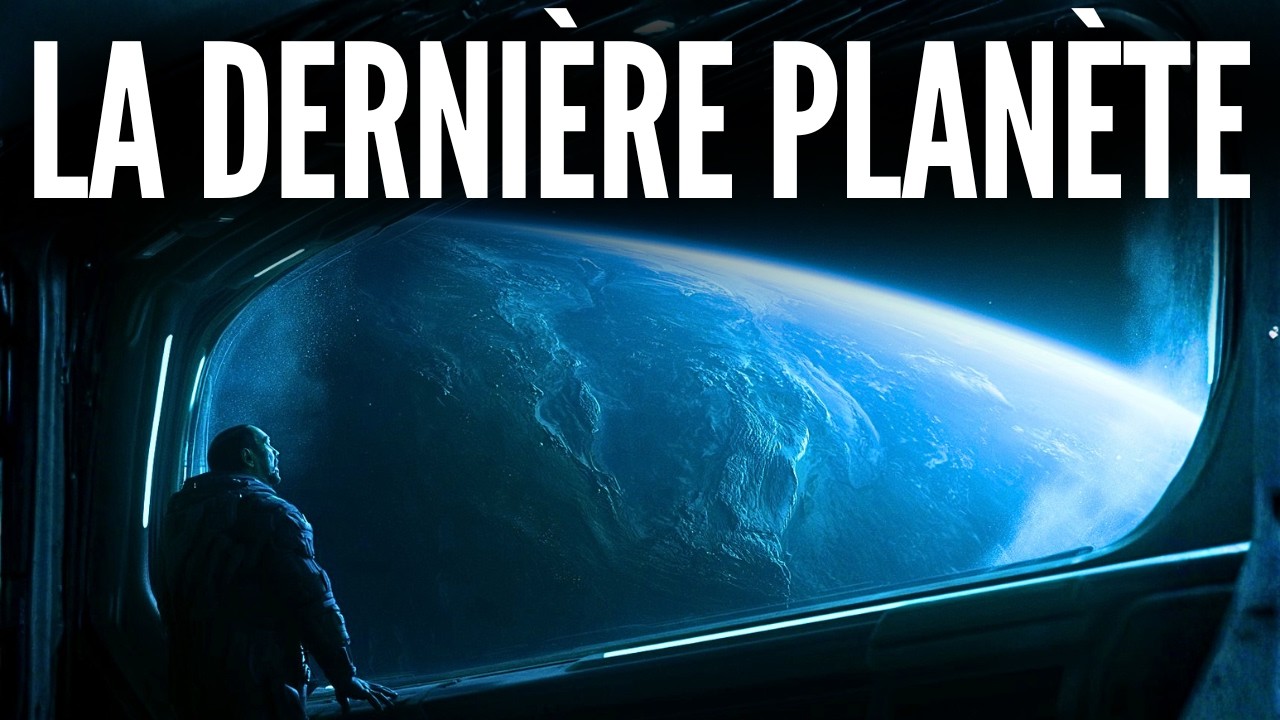
La PREUVE que la TERRE est une ANOMALIE COSMIQUE (et c'est terrifiant)
Keywords
exoplanet
habitable zone
Mars
Proxima b
TRAPPIST-1
Kepler-452b
red dwarf
atmosphere
distance barrier
Earth anomaly
Summary
This documentary-style video explores the possibility of finding a habitable exoplanet as a backup for Earth. It systematically reviews several candidate worlds: Mars, Proxima b, TRAPPIST-1 planets, and Kepler-452b, evaluating their potential to support human life. The video explains key concepts such as the habitable zone, stellar activity of red dwarfs, and atmospheric characterization. It argues that Earth is a cosmic anomaly due to the stringent conditions required for habitability, including plate tectonics, a magnetic field, a large moon, and a stable orbit. The conclusion is that no known exoplanet can fully replicate Earth's conditions, making our planet uniquely suitable for life. The video also discusses the immense distances involved in interstellar travel and the technological challenges of detecting biosignatures. While informative for a general audience, it lacks depth in some scientific details and occasionally uses sensationalist language.
Critical Evaluation
The video provides a comprehensive overview of the search for habitable exoplanets, targeting a general audience with an interest in astronomy. It successfully communicates the complexity of finding a true Earth analog, highlighting factors such as stellar activity, atmospheric composition, and orbital stability. The inclusion of specific exoplanets like Proxima b and TRAPPIST-1 grounds the discussion in current research. However, the scientific rigor is moderate: the video relies on popular science narratives rather than primary literature. For instance, while it mentions the habitable zone, it does not delve into the nuances of tidal locking or the potential for life under red dwarf flares. The sources cited are limited to a book by Trinh Xuan Thuan and an arXiv paper on Proxima b, but these are not critically evaluated. The video's tone is occasionally sensationalist, as indicated by the title and phrases like 'terrifiant' (terrifying), which may undermine its credibility for academic audiences. The production quality is high, with clear visuals and a logical flow. The chapter markers help navigate the content. The video does not engage with counterarguments or alternative hypotheses, such as the possibility of life on icy moons or the potential for terraforming. The comment section (not provided) likely reflects a mix of awe and skepticism, but without direct analysis, it is hard to gauge public reception. For a university-level audience, the video serves as a useful introductory resource but lacks the depth required for advanced study. It would benefit from more quantitative data and references to recent exoplanet discoveries, such as those from the James Webb Space Telescope. Overall, the video is a decent science communication piece but falls short of academic standards due to its sensational framing and limited source verification.
Key Moments
- Introduction of the concept of a Planet B
- Why Mars cannot replace Earth
- Proxima b: the closest exoplanet
- The habitable zone concept explained
- Dangers of red dwarfs
- TRAPPIST-1 system overview
- Kepler-452b: Earth's cousin
- The distance barrier to exoplanets
- List of conditions for habitability
- Conclusion: Earth is unique
Cited Sources
Contribution & Novelties
The video synthesizes existing knowledge on exoplanet habitability for a general audience, emphasizing Earth's uniqueness. It does not present new research but rather compiles known facts into a narrative. Its novelty lies in the accessible presentation of multiple exoplanet candidates and the explicit list of conditions Earth meets that are rarely all present elsewhere.
Radar Profile
The radar profile shows moderate scores across all dimensions, with quantity of information slightly higher than quality and technical level. This indicates a broad but not deep treatment of the topic, suitable for general audiences but lacking the rigor expected in academic contexts.
Reliability
/10