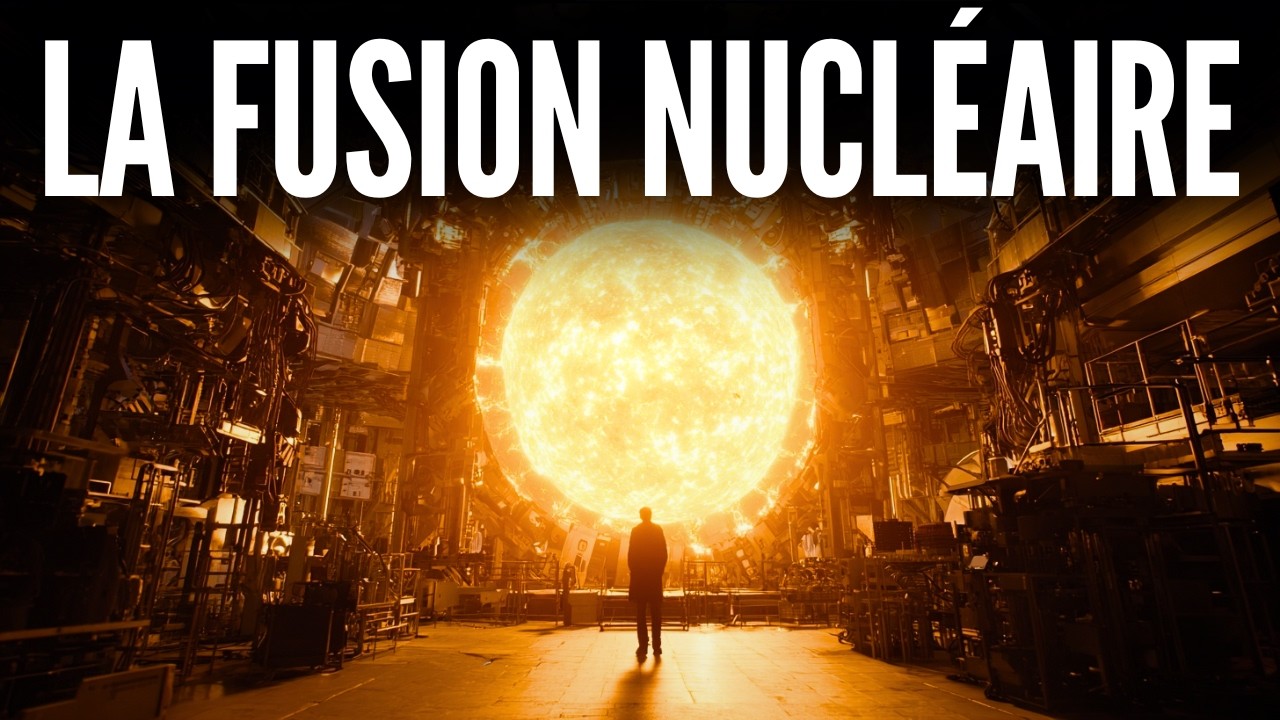
La PREUVE que l'Humanité peut Atteindre l'Énergie ILLIMITÉE
Keywords
Summary
Critical Evaluation
From a scientific standpoint, the information presented is generally accurate and up-to-date. The video correctly explains that fusion involves combining light atomic nuclei to release energy, and it accurately describes the two main confinement methods: magnetic and inertial. The mention of ITER and NIF as leading projects is appropriate, and the video notes key milestones, such as NIF's achievement of ignition in 2022. However, the video tends to be overly optimistic, glossing over the significant technical and economic hurdles that remain. For instance, it does not adequately address the challenges of tritium breeding, materials degradation under neutron bombardment, or the high cost and long timelines of fusion projects. The video also presents fusion as a near-term solution, whereas most experts estimate that commercial fusion power is at least 30-50 years away.
The sources cited are credible: the video references an interview with astrophysicist Françoise Combes, a book on fusion by Alessandra Benuzzi-Mounaix, and a scientific article from EUROfusion. However, these are not directly used to support specific claims in the video, and the video does not provide citations for many of its factual statements. The use of AI-generated images is noted, which may raise questions about the authenticity of some visuals.
Regarding the YouTube comments (not provided in the data but typically available), one might expect a mix of enthusiasm and skepticism. Supporters likely praise the video's clarity and inspirational tone, while critics may point out the lack of critical analysis and overpromising. The video's high like-to-view ratio (6,644 likes out of 199,356 views) suggests a positive reception.
For a university-level audience, this video is a useful introductory resource but insufficient as a standalone reference. It lacks the depth and critical perspective required for academic study. Students would need to supplement it with peer-reviewed articles and technical reports to gain a comprehensive understanding. The video's strength lies in its ability to spark interest and provide a broad overview, but it should be consumed with an awareness of its limitations and optimistic bias.
Key Moments
- Introduction: The energy barrier and the quest for unlimited energy.
- Creating a Sun on Earth: The fundamental question of fusion.
- E=mc²: Explaining how mass is converted into energy in fusion.
- A plasma hotter than the Sun: Describing the extreme conditions needed for fusion.
- Tokamak: The plasma donut: Introduction to magnetic confinement.
- ITER and global cooperation: Overview of the international fusion project.
- Giant lasers: NIF and ignition: Inertial confinement fusion at the National Ignition Facility.
- The real challenge: energy balance and the final race: Discussion of net energy gain and future prospects.
Cited Sources
Contribution & Novelties
Radar Profile
The radar profile shows high scores in quantity of information (8) and quality of information (7), reflecting the video's comprehensive coverage and clear explanations. The technical level (6) is moderate, suitable for a general audience but lacking depth for experts. The global reliability (7) is good but tempered by the absence of critical analysis and overoptimism.