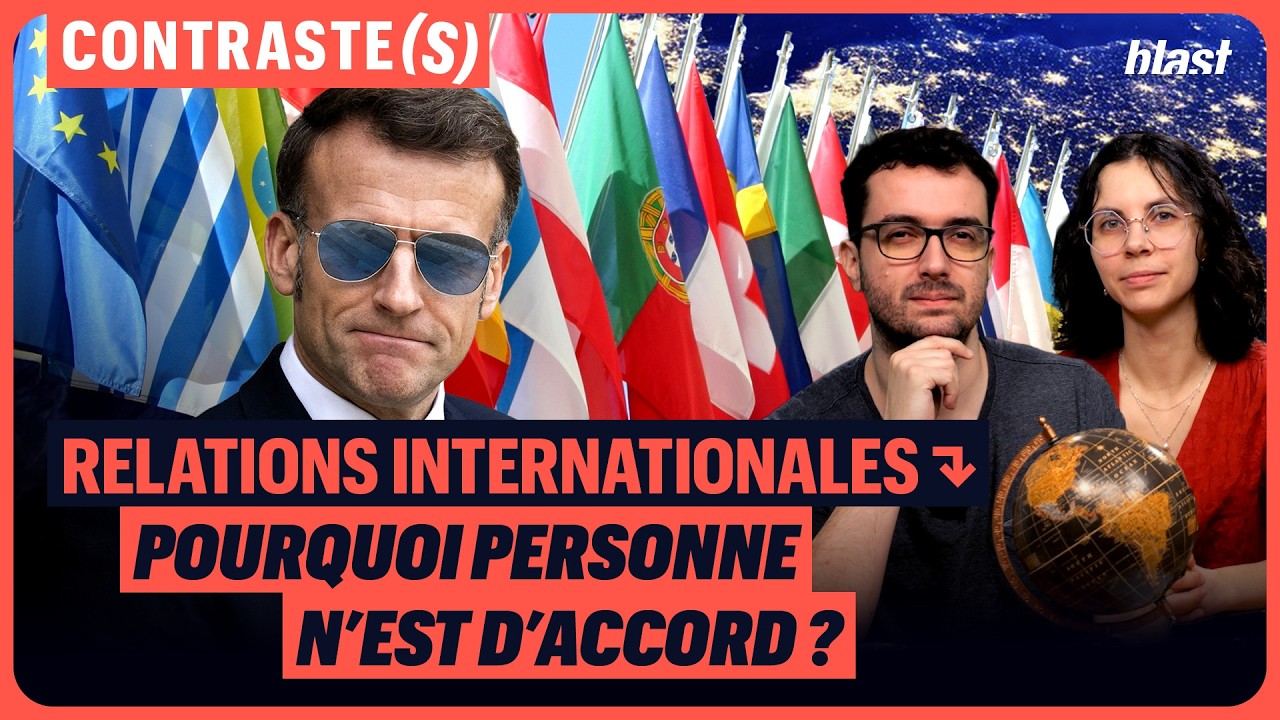
RELATIONS INTERNATIONALES : POURQUOI PERSONNE N’EST D’ACCORD ?
Keywords
Summary
Critical Evaluation
From a scientific standpoint, the video provides a reasonably accurate and balanced overview of mainstream IR theories. It correctly identifies key thinkers such as Morgenthau, Waltz, Keohane, and Wendt, and explains their contributions without oversimplifying to the point of distortion. The discussion of the inter-paradigm debate and the post-positivist turn reflects current scholarly understanding. However, the video lacks explicit citations of specific works or data, which limits its utility for academic referencing. The hosts do not provide a bibliography or mention specific studies, making it difficult to verify claims or follow up on sources. This is a common limitation of educational YouTube videos, but it reduces the video's reliability as a scholarly source.
The video's strength lies in its pedagogical approach: it clarifies why IR is a fragmented discipline, emphasizing that disagreements stem from different ontological and epistemological assumptions. The critique of Eurocentrism is particularly valuable, as it acknowledges the field's historical biases and the need for decolonization. However, the video could have delved deeper into non-Western perspectives or critical theories such as feminism and postcolonialism, which are only briefly mentioned.
Regarding the audience reception, the video has garnered 7,204 likes and likely positive comments (though not analyzed in detail). The high view count (299,411) suggests significant interest. The comments section (not provided) would likely contain discussions about the validity of different theories, reflecting the video's success in stimulating debate.
Overall, the video is a valuable introductory resource for university students or anyone seeking a clear overview of IR theory. It is not a rigorous academic source but serves as an effective primer. The hosts maintain a neutral stance, presenting multiple perspectives without advocating for one. The production quality is high, with good editing and visual aids. For a master's level audience, the video provides a useful refresher but lacks the depth required for advanced research. The main limitation is the absence of cited sources, which undermines its scholarly credibility. Nonetheless, as a piece of science communication, it achieves its goal of making IR accessible and thought-provoking.
Key Moments
- Introduction: what are International Relations? Humorous definition.
- Origins of IR: post-WWI, first chair at Aberystwyth.
- Realism: key assumptions and thinkers (Morgenthau, Waltz).
- Liberalism: cooperation, institutions, democratic peace theory.
- Constructivism: ideas, identities, norms (Wendt).
- Great debates: inter-paradigm debate, post-positivism.
- Critique of Eurocentrism and call for inclusive IR.
Cited Sources
Contribution & Novelties
Radar Profile
The radar profile shows high scores in quality and quantity of information, moderate technical level, and good reliability. This indicates a well-balanced educational video that is informative and reliable, though not highly technical or original. It is suitable for introductory learning but not for advanced research.