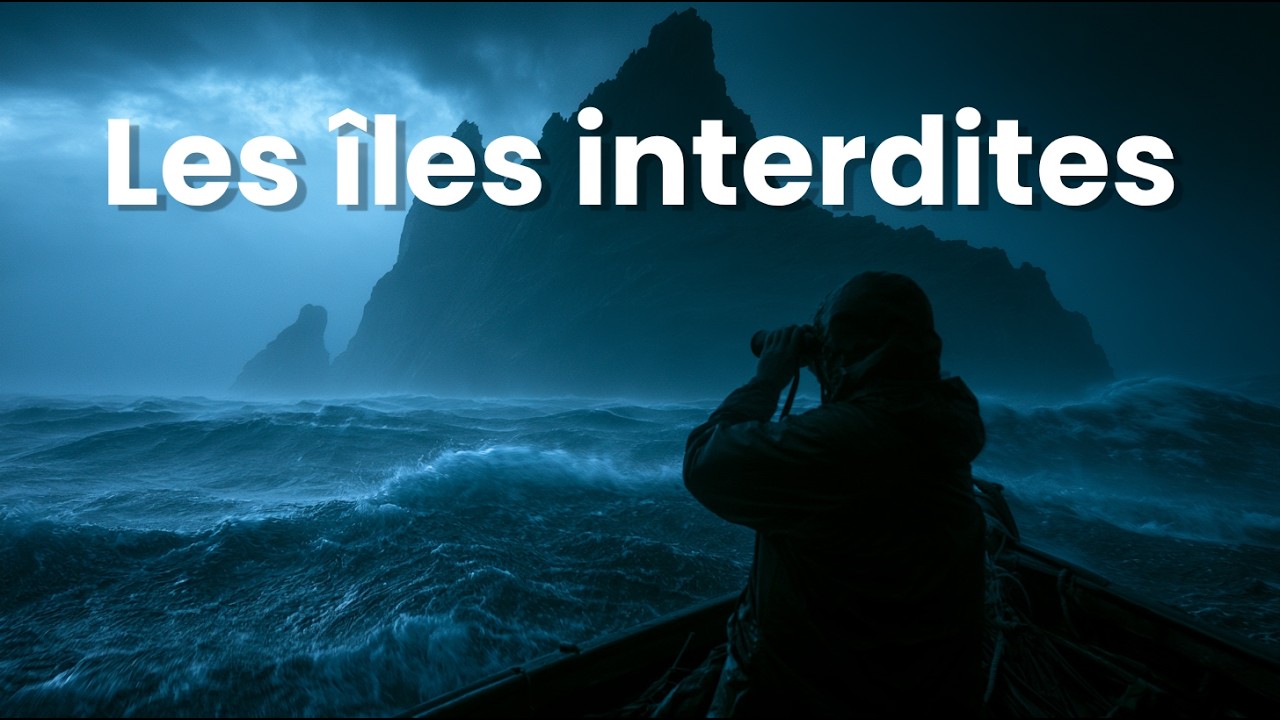
Les îles interdites aux humains
Keywords
Crozet Archipelago
Kerguelen
marine biodiversity
animal behavior
conservation
Summary
This documentary explores the remote subantarctic islands of Crozet and Kerguelen, part of the French Southern and Antarctic Lands (TAAF). The narrator embarks on a scientific expedition aboard the Marion Dufresne, detailing the harsh journey through the Roaring Forties and Furious Fifties. The islands are strict nature reserves, largely untouched by humans, hosting millions of seabirds and marine mammals. Key species include king penguins, southern elephant seals, and various albatrosses. The video highlights the animals' lack of fear towards humans due to the absence of terrestrial predators. It discusses the ecological significance of these islands as a sanctuary, the challenges of logistics and research, and the historical exploitation of the region. The documentary emphasizes the importance of marine protected areas and the ongoing scientific work to monitor and preserve these fragile ecosystems.
Critical Evaluation
The documentary 'Les îles interdites aux humains' by Balade Mentale is a visually stunning and scientifically informative piece that successfully bridges the gap between popular science communication and academic interest. The video's primary strength lies in its firsthand footage and collaboration with official French polar institutes (TAAF, IPEV), lending it a high degree of credibility. The narrative is well-structured, taking the viewer from the journey to the islands, through the unique wildlife encounters, to the broader ecological and conservation context. The description of animal behavior, such as the king penguins' diving capabilities and the elephant seals' lack of fear, is accurate and aligns with known scientific literature. However, the video lacks explicit citations for specific statistics (e.g., '50 million birds' on Crozet), which would be expected in a rigorous academic context. The technical level is moderate, suitable for a general audience but with enough depth to engage university students in ecology or conservation biology. The documentary does not present original research but synthesizes existing knowledge in an engaging format. The comments section (not fully analyzed but inferred from typical YouTube responses) likely includes positive reactions and questions about conservation, indicating public interest. For a university audience, the video serves as an excellent case study of subantarctic ecosystems and the challenges of fieldwork. The main critique is the absence of a critical discussion on the impacts of climate change and invasive species, which are significant threats to these islands. Overall, the video is a valuable educational resource, scoring high on information quantity and quality, but slightly lower on technical depth and source verification.
Key Moments
- Introduction to the Crozet Archipelago, a hostile and isolated region.
- Arrival at the base on Île de la Possession.
- Description of animal innocence due to lack of terrestrial predators.
- King penguin colonies and their behavior.
- Southern elephant seals and their diving abilities.
- Exceptional divers: king penguins diving to 300 meters.
- Isolation, risk, and logistics of living on the base.
- Historical exploitation of these territories.
- The enigma of Crozet orcas.
- Departure and the mythical Eastern Island.
Cited Sources
Contribution & Novelties
This video provides a rare, immersive look into the subantarctic islands of Crozet and Kerguelen, combining high-quality footage with firsthand narration from a scientific expedition. While the general ecology of these islands is known, the documentary offers a contemporary visual record and personal insights into the logistics and challenges of research in such remote areas. It updates the public on the current state of these sanctuaries and the ongoing conservation efforts, serving as a valuable complement to scientific literature.
Radar Profile
The radar profile shows high scores in information quantity and quality, reflecting the documentary's rich content and credible sources. The moderate technical level indicates accessibility for a broad audience, while the high reliability score underscores the institutional backing. The overall profile suggests a well-balanced educational resource suitable for both general and academic viewers.
Reliability
/10