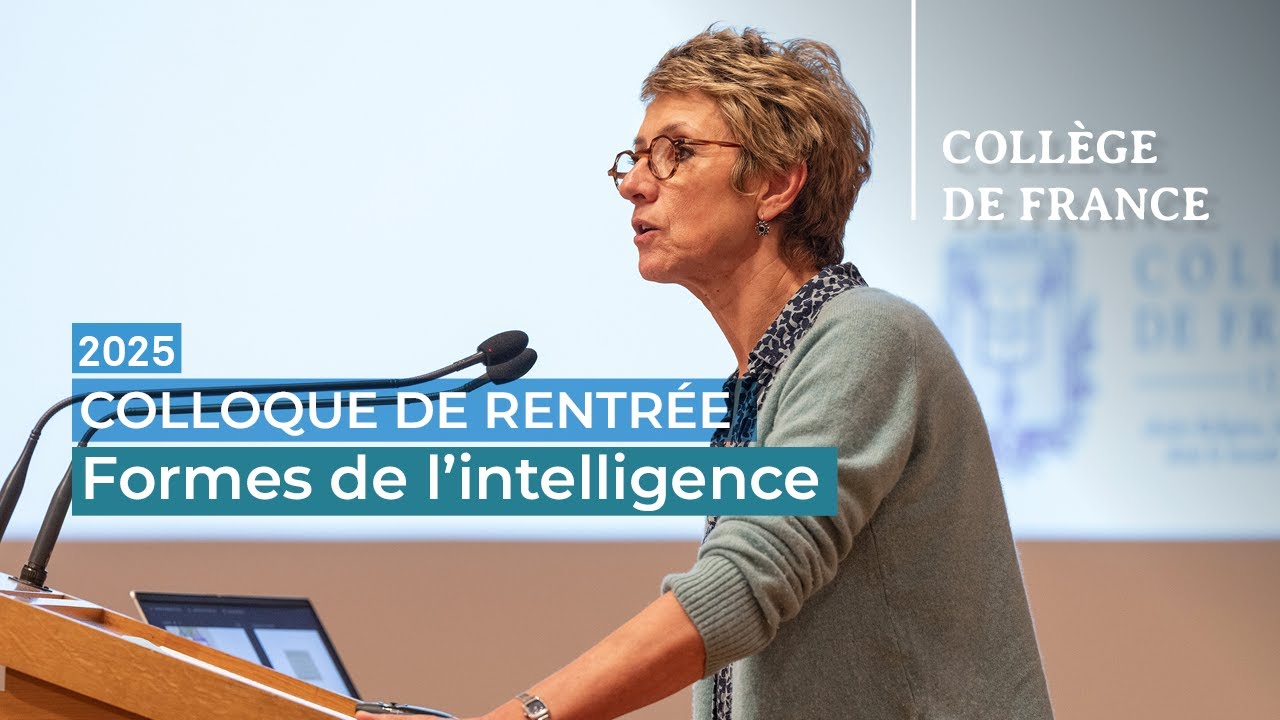
Les Grecs et leur « miracle » : ce que l’intelligence fait à l’histoire et retour
Keywords
Summary
201 words
Critical Evaluation
The lecture offers a nuanced and well-informed critique of the ‘Greek miracle’ narrative, drawing on a rich historiographical tradition. Pirenne-Delforge demonstrates a deep familiarity with the scholarship, from the pioneering work of Ventris and Chadwick to the more recent contributions of Josiah Ober. She effectively deconstructs the idea of a singular Greek ‘genius’ by highlighting the plurality of forms of intelligence in ancient Greek culture, such as ‘mètis’ (cunning intelligence) and divine intelligence. The argument is solid and well-supported by references to specific works and authors. However, the lecture is relatively brief and does not delve deeply into the primary sources; it relies heavily on secondary literature. The speaker’s own contribution, particularly the analysis of archaic poetry, is suggestive but not fully developed. The sources cited are authoritative, but the lecture does not provide a systematic review of all relevant scholarship. The title is apt, and the content is well-structured. The main strength is the critical perspective that challenges long-held assumptions, making it a valuable contribution to the field. The main weakness is the lack of depth in the analysis of the poetic texts, which could have been more extensive. Overall, the lecture is of high quality, but it is more of an overview than a groundbreaking study.
208 words
Title / Content Match
The title accurately reflects the content: the lecture critically examines the notion of a 'Greek miracle' and its implications for the history of intelligence.
Quality & Reliability
8/10
The speaker is a professor at the Collège de France, and the talk is part of an academic colloquium. The content is well-structured, references historical scholarship, and is delivered in a formal academic setting. However, it is an opinion/expert talk rather than a peer-reviewed publication, and some claims are not exhaustively sourced in the video.
Key Moments
Markers derived by PSI from the transcript: the creator did not define chapters.
- Introduction: The speaker sets the stage by referencing the decipherment of Linear B in 1952 and the book by Ventris and Chadwick.
- Discussion of the preface by Alan Wace, who expressed the idea that Greeks were too intelligent to forget literacy.
- Introduction of the concept of the 'Greek miracle' and its historiographical impact.
- Examination of the works of Jacqueline de Romilly and Jean-Pierre Vernant, and their views on Greek rationality.
- Discussion of Vernant's later shift towards plural rationalities and the concept of 'mètis'.
- Reference to Christian Meier's idea of 'autonomous intelligence' and its relation to the polis.
- Mention of Josiah Ober's work and the French translation title 'The Greek Enigma'.
- Transition to the second part: the representation of intelligence in archaic poetry.
- Concluding remarks on the plurality of intelligence and its relevance to modern discussions.
Cited Sources
- Collège de France - Colloque de rentrée 2025 — Official page of the colloquium where this lecture was given.
- Collège de France — Institutional website of the Collège de France.
- Fondation du Collège de France — Foundation supporting the Collège de France.
Concurring Sources
- The Rise and Fall of Classical Greece — Josiah Ober's book, which the lecture cites as a recent reinterpretation of Greek achievements.
Dissenting Sources
- The Greek Miracle: A Critical History — While the lecture critiques the 'Greek miracle', this Wikipedia article provides a broader perspective, including some defenses of the concept.
External References
Contribution & Novelties
The lecture provides a critical historiographical overview of the ‘Greek miracle’ and its impact on the study of intelligence. It synthesizes recent scholarship and offers a nuanced perspective that challenges the traditional narrative. The speaker’s emphasis on the plurality of intelligence in ancient Greek culture, including ‘mètis’ and divine intelligence, is a valuable contribution to the field.
Pour aller plus loin :
- The Greek Miracle: A Critical History — Wikipedia article providing an overview of the concept and its critiques.
- Mètis: The Greek Concept of Cunning Intelligence — Wikipedia article on Mètis, the goddess of wisdom and cunning, relevant to the lecture’s discussion.
- Josiah Ober’s ‘The Rise and Fall of Classical Greece’ — Author’s page with information on his work, which the lecture references.
- Jean-Pierre Vernant — Wikipedia article on the French historian and anthropologist, whose work is central to the lecture.
142 words
Radar Profile
The radar profile shows high scores in quality of information and reliability, reflecting the academic rigor of the lecture. The quantity of information is moderate, and the technical level is accessible to a general audience, making it a balanced presentation.