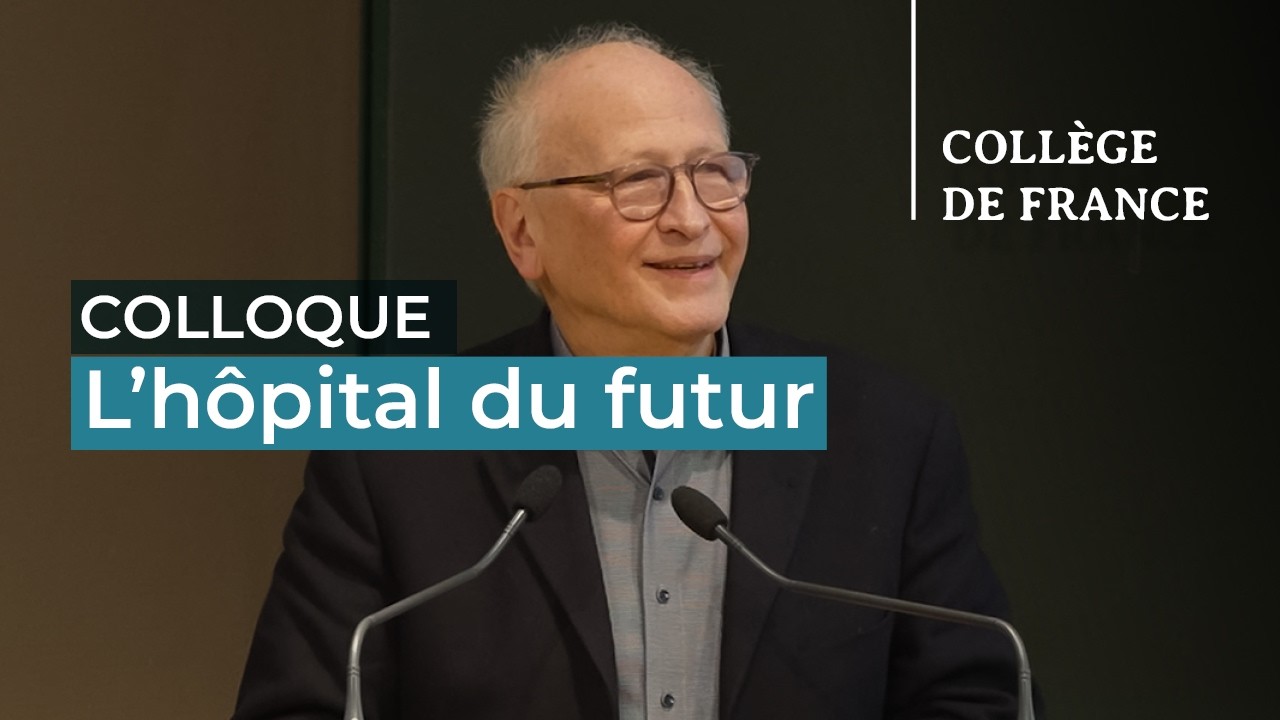
L’hôpital du futur (21) - 2025-2026
Keywords
Summary
158 words
Critical Evaluation
The presentation by Alain Fischer is a valuable expert opinion on the state and future of gene and cell therapies. Fischer, a pioneer in gene therapy for immunodeficiencies, brings authoritative knowledge and experience. He provides a clear and balanced overview, covering scientific, clinical, economic, and regulatory aspects. The talk is well-structured, starting with the current landscape, then discussing future possibilities, and finally addressing the implications for hospitals and France. He correctly notes that while there are many promising therapies, only a few have reached the market, and the costs are substantial. He also highlights the importance of hospital-based platforms for research and production to maintain sovereignty and reduce dependency on industry. The argumentation is solid, based on his expertise and recent data, such as the number of patients treated in Paris and the projected number of new drugs. However, the talk lacks specific citations and detailed references, which would enhance its scientific rigor. The title ‘L’hôpital du futur’ is somewhat broad, but the content fits well within the context of the conference on the future of hospitals. Overall, the presentation is informative and thought-provoking, but it could benefit from more concrete examples and data. The audience seems to be professionals and academics, but the talk is accessible to a wider public. No comments were provided, so no analysis of public reception is possible.
223 words
Title / Content Match
The title is broad and matches the content, which focuses on the future of hospitals in the context of advanced therapies.
Quality & Reliability
8/10
Presentation by a renowned expert (Alain Fischer, professor at Collège de France, member of the Academy of Sciences) with a clear overview of gene and cell therapies, their current status, and future prospects. The talk is based on established scientific knowledge and recent data, but lacks detailed citations and specific references. The content is reliable but general.
Key Moments
Markers derived by PSI from the transcript: the creator did not define chapters.
- Introduction by the session chair, presenting Alain Fischer.
- Fischer begins his talk, explaining that he will not use slides.
- Discussion of biotherapies and the proportion of new drugs that are not chemical molecules.
- Explanation of gene therapy concepts and the two main approaches: in vivo and ex vivo.
- List of genetic diseases treated with gene therapy, including blood disorders and retinal diseases.
- Introduction of CAR-T cell therapy for cancer and its applications.
- Discussion of cell therapy, including skin grafts and mesenchymal stem cells.
- Future prospects: CRISPR, new vectors, xenotransplantation, and induced pluripotent stem cells.
- Economic implications: projected number of new gene therapies and costs.
- Requirements for hospital platforms: research, expertise, logistics, and production capabilities.
- Challenges: regulatory rigidity, need for training, and the current situation in France.
- Conclusion: France's position is not excellent, but there is potential to improve.
Cited Sources
- Collège de France - Avenir Commun Durable — Initiative under which the conference is organized.
- Collège de France - L'hôpital du futur — Event page with recordings and presentation text.
- YouTube Playlist - L'hôpital du futur — Playlist containing recordings of the conference.
- Fondation du Collège de France - Charte éthique — Ethical charter of the foundation supporting the initiative.
Concurring Sources
- Collège de France - Avenir Commun Durable — Initiative supporting the conference, aligning with the theme of sustainable future.
External References
Contribution & Novelties
The talk provides a comprehensive overview of gene and cell therapies, emphasizing the need for hospital-based platforms to ensure sovereignty and patient access. It highlights the current state and future potential, including CRISPR and iPS cells, and discusses economic and regulatory challenges. The presentation is original in its focus on the role of hospitals in developing these therapies, rather than relying solely on industry.
Pour aller plus loin :
- Gene therapy - Wikipedia — Overview of gene therapy concepts and history.
- CAR T-cell therapy - Wikipedia — Detailed explanation of CAR-T therapy.
- CRISPR gene editing - Wikipedia — Introduction to CRISPR and its applications.
- Induced pluripotent stem cells - Wikipedia — Explanation of iPS cells and their potential.
118 words
Radar Profile
The radar profile shows high scores in quality and reliability, reflecting the expert status of the speaker and the solid scientific basis. The quantity of information is moderate, and the technical level is accessible to a broad audience. The overall reliability is strong, but the lack of specific citations slightly reduces the score.