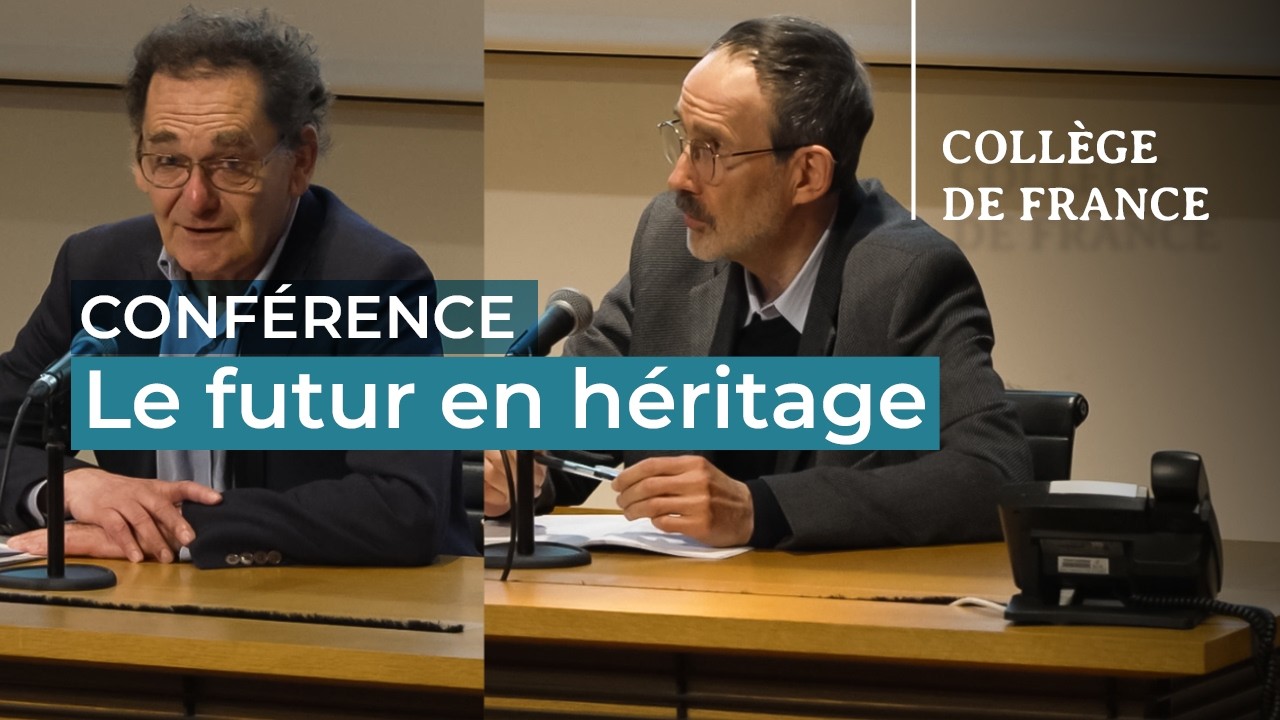
Le futur en héritage (8) - 2025-2026
Keywords
Summary
212 words
Critical Evaluation
The video provides a high-quality, expert-led discussion on climate economics and social justice. The speakers, Christian de Perthuis and Marc Fleurbaey, are highly credible, with extensive academic backgrounds and direct involvement in policy-relevant research. The content is well-structured, starting with a clear introduction of paradoxes and then delving into specific questions. The arguments are nuanced, acknowledging the complexity of issues such as carbon taxation and the monetization of nature. For instance, de Perthuis candidly discusses his role in introducing the French carbon tax and the failure to implement redistribution, which led to the ‘gilets jaunes’ protests. This adds a practical, real-world perspective. Fleurbaey brings a strong theoretical foundation, linking social justice and environmental economics, and referencing the IPCC’s fifth assessment report. The discussion is balanced, with both speakers agreeing on the need for equitable solutions but differing on specific approaches. The sources cited, including the IPCC and Esther Duflo’s work, are reputable and relevant. However, the video is a debate, not a peer-reviewed study, so some claims are presented without detailed evidence. The adéquation between the title and content is weak, as the title is generic and does not hint at the specific topic. Overall, the video is intellectually stimulating and provides valuable insights, but it may require prior knowledge to fully appreciate the economic concepts discussed.
217 words
Title / Content Match
The title 'Le futur en héritage (8) - 2025-2026' is generic and does not clearly indicate the specific topic of poverty, nature, and resilience, but it is part of a series.
Quality & Reliability
8/10
The video features two established economists (Christian de Perthuis and Marc Fleurbaey) from reputable institutions, discussing climate economics and social justice. The content is grounded in academic research and references IPCC reports and Nobel laureate Esther Duflo. The discussion is balanced and critical, with clear explanations of economic concepts. However, as a debate, it lacks the rigor of a peer-reviewed study, and some claims are not fully sourced.
Key Moments
Markers derived by PSI from the transcript: the creator did not define chapters.
- Introduction of the topic and paradoxes by student moderators.
- Discussion on the shift from nature as a resource stock to nature as regulatory functions.
- Christian de Perthuis discusses carbon pricing and the French carbon tax experience.
- Marc Fleurbaey on integrating social justice into environmental economics.
- Debate on whether to monetize nature and the role of ecosystem services.
- Discussion on resilience as a political concept and its implications.
- Q&A session with the audience and concluding remarks.
Cited Sources
- Avenir Commun Durable — Initiative supporting the conference series.
- Le futur en héritage 2026 — Event page for the conference.
- Collège de France — Institutional website.
Concurring Sources
- IPCC Fifth Assessment Report — Referenced by Marc Fleurbaey as a basis for his work on climate economics.
- Esther Duflo's Nobel Prize — Mentioned in the introduction regarding insurance mechanisms for the poor.
Dissenting Sources
- No discordant sources identified — The speakers largely agree on the need for equitable climate policies, with minor differences in emphasis.
External References
Contribution & Novelties
The video offers a unique interdisciplinary perspective by bringing together economists to discuss the intersection of poverty, nature, and resilience. It provides concrete examples, such as the French carbon tax and the ‘gilets jaunes’ crisis, to illustrate the challenges of implementing climate policies equitably. The discussion also highlights the need to shift from viewing nature as a resource to recognizing its regulatory functions, which is a contemporary paradigm shift in environmental economics.
Pour aller plus loin :
- IPCC Fifth Assessment Report — Relevant for understanding the scientific basis of climate change and the concept of common but differentiated responsibilities.
- Esther Duflo’s work on poverty and insurance — Directly related to the discussion on how the poor lack insurance mechanisms.
- Carbon pricing and social equity — Provides an overview of carbon pricing mechanisms and their distributional effects.
- Ecosystem services concept — Foundational for understanding the valuation of nature’s contributions to human well-being.
151 words
Radar Profile
The radar profile shows high scores in information quantity and quality, reflecting the depth and expertise of the discussion. The technical level is moderately high, indicating that some prior knowledge is beneficial. Overall, the video is reliable and informative, with a strong focus on economic and social dimensions of climate change.
💬 No comments were provided for analysis.