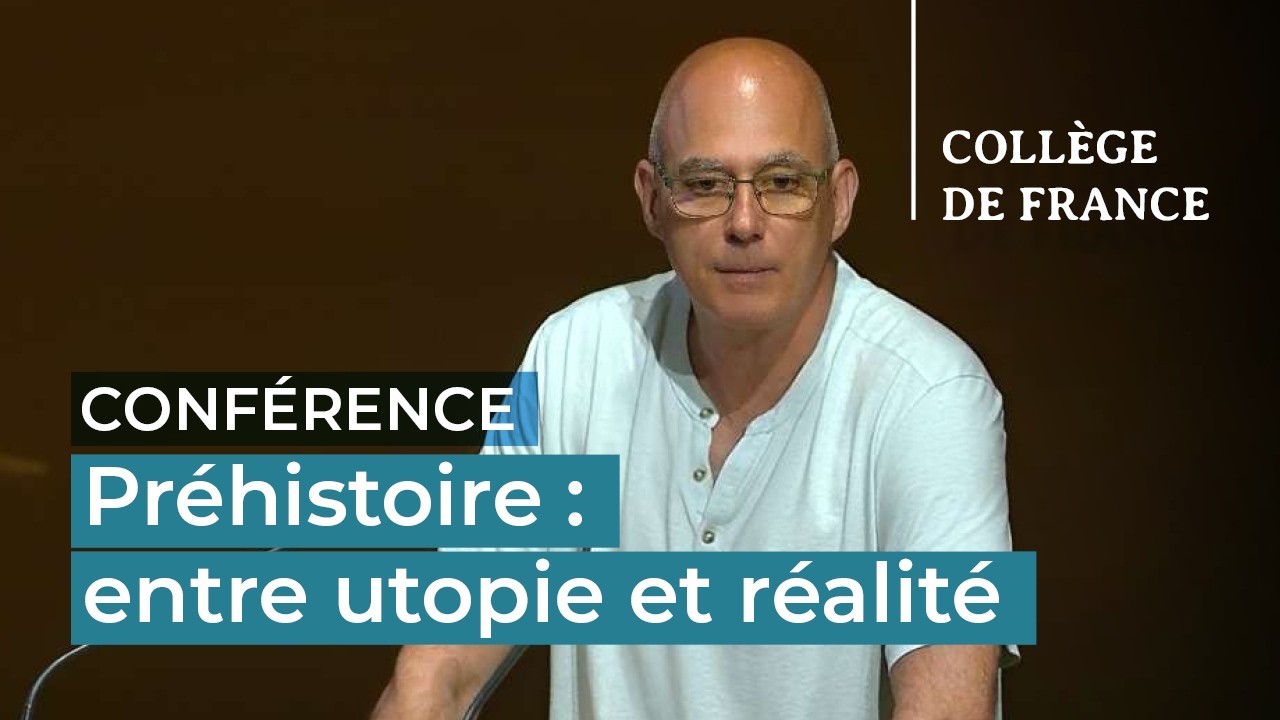
Préhistoire : entre utopie et réalité (5) - 2026
Keywords
Summary
190 words
Critical Evaluation
The lecture provides a rigorous and well-argued critique of recent claims about prehistoric women hunters. Darmangeat grounds his argument in the Ethnographic Atlas, a large cross-cultural dataset, and he carefully distinguishes between different types of hunting. He acknowledges exceptions and nuances, showing that the division of labor is not absolute but follows strong statistical trends. His argumentation is solid, and he effectively dismantles the idea that the traditional view is merely a stereotype. He also places the discussion within the broader context of the sexual division of labor, which strengthens his analysis. However, the lecture is primarily based on ethnographic analogy, which has limitations when applied to the deep past. He does not delve deeply into the archaeological evidence, and he does not address some recent studies that have suggested female hunting based on skeletal remains or isotopic analysis. While he mentions that these claims are not based on new discoveries, he could have engaged more with specific examples. Additionally, the lecture is an opinion piece, and while it is informed by research, it is not a systematic review. The quality of the sources is high, as he references the Ethnographic Atlas and the classic volume ‘Man the Hunter.’ The title accurately reflects the content, and the lecture is well-structured and accessible. Overall, it is a valuable contribution to the debate, but it would benefit from a more balanced consideration of all available evidence.
234 words
Title / Content Match
The title accurately reflects the content, which is part of a series on prehistory and focuses on the specific topic of women and hunting.
Quality & Reliability
8/10
The speaker is a researcher in social anthropology, and the presentation is based on established ethnographic data (Ethnographic Atlas) and published literature. The talk is well-structured and nuanced, but it is an opinion/expert lecture rather than a peer-reviewed study.
Key Moments
Markers derived by PSI from the transcript: the creator did not define chapters.
- Introduction to the topic and the controversy surrounding women and hunting in prehistory.
- Presentation of the Ethnographic Atlas data on hunting activities by sex.
- Discussion of the distinction between different types of hunting (large vs. small game, aquatic vs. terrestrial).
- Examples of the sexual division of labor in other activities (gathering, honey, stone tools, pottery, water).
- Discussion of exceptions and nuances in the ethnographic record.
- Critique of recent claims about female hunters and their lack of solid evidence.
- Implications for understanding gender roles in prehistory and contemporary debates.
Cited Sources
- Ethnographic Atlas — Base de données ethnographiques utilisée pour les statistiques sur la division sexuée du travail.
- Man the Hunter — Ouvrage de référence issu d'un colloque sur les chasseurs-cueilleurs.
- Conférences Préhistoire : entre utopie et réalité — Programme des conférences du cycle.
- Entretiens avec Jean-Jacques Hublin — Série d'entretiens avec le professeur du Collège de France.
Concurring Sources
- Ethnographic Atlas — Data supporting the statistical patterns of division of labor.
- Man the Hunter — Classic work that established the consensus on male hunting.
Dissenting Sources
- Recent studies on female hunters — Some recent archaeological studies have suggested that women may have hunted large game, based on skeletal evidence and isotopic analysis, which contradicts the ethnographic pattern.
External References
Contribution & Novelties
The lecture provides a critical examination of recent claims about prehistoric women hunters, emphasizing the importance of ethnographic data and the need to distinguish between different types of hunting. It challenges the idea that the traditional view is merely a stereotype and highlights the statistical regularities in the division of labor by sex.
Pour aller plus loin :
- Ethnographic Atlas — A key resource for cross-cultural data on division of labor.
- Man the Hunter — The classic symposium volume that shaped the study of hunter-gatherers.
- Sexual division of labour — Concept central to the lecture’s argument.
96 words
Radar Profile
The radar profile shows high scores in information quantity, quality, and reliability, with a slightly lower score in technical level, indicating a well-researched and accessible lecture.