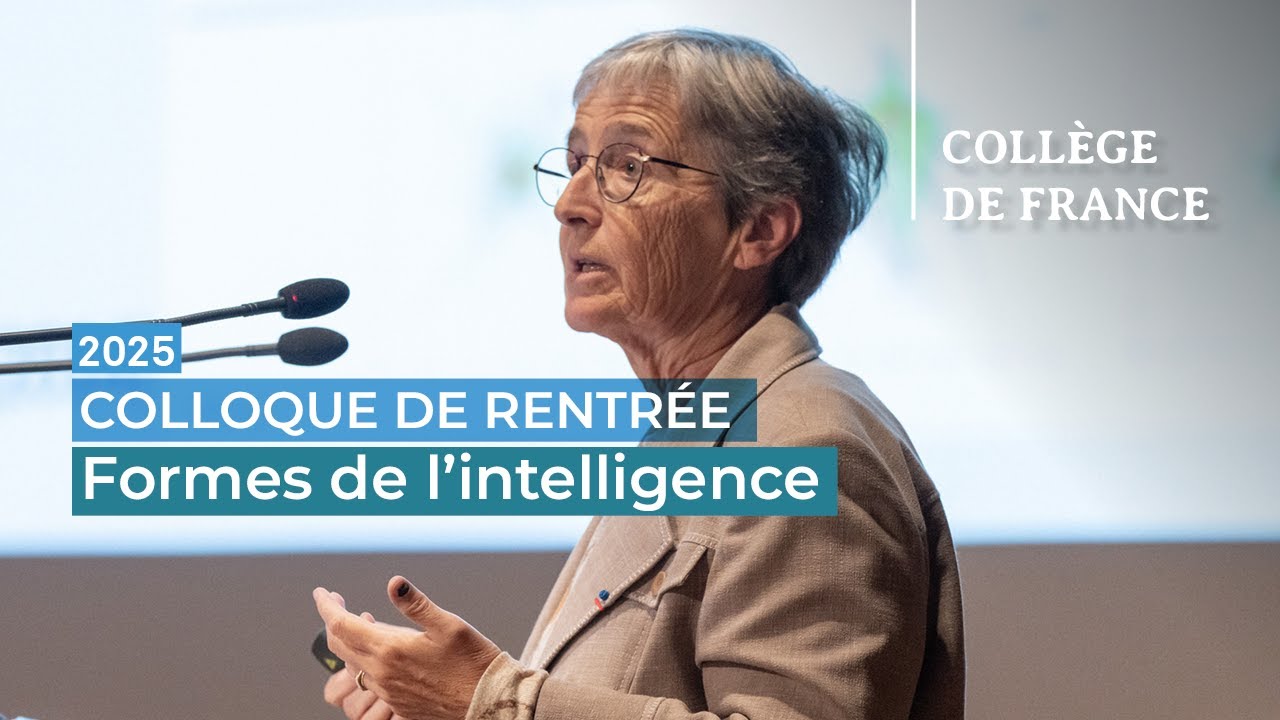
L’intelligence du geste : du scalpel au robot
Keywords
Summary
161 words
Critical Evaluation
The talk provides a valuable and authoritative overview of computer-assisted medical interventions, drawing on the speaker’s extensive experience in the field. The content is well-structured, following a logical progression from the rationale for assistance to specific technologies and future challenges. The speaker effectively explains complex concepts in an accessible manner, making the talk suitable for a broad audience while still offering depth for those familiar with the domain.
The scientific rigor is high, as the speaker consistently emphasizes the need for clinical validation and safety, not just technical novelty. She correctly points out that many augmented reality and robotic systems are still in the feasibility stage, with limited clinical adoption, which reflects the current state of the field. The discussion of organ deformation and the need for real-time model updating highlights a key research challenge.
However, the talk is more of a general overview than a deep dive into specific methods or results. While the speaker mentions various applications, she does not provide detailed examples or quantitative outcomes, which would strengthen the evidence base. The lack of citations to specific studies or publications is a limitation, though the talk is intended as a high-level introduction rather than a systematic review.
The title accurately reflects the content, and the talk successfully bridges the gap between human skill and technological augmentation. The speaker’s credibility is unquestionable, given her position and contributions to the field.
Overall, this is a high-quality presentation that offers a solid foundation for understanding the field, but it could benefit from more concrete examples and references to support its claims.
261 words
Title / Content Match
The title accurately reflects the content, focusing on the evolution from manual surgical gestures to robotic assistance.
Quality & Reliability
8/10
The speaker is a senior CNRS researcher with decades of experience in computer-assisted medical interventions. The talk is based on established research and clinical practice, but it is a general overview without detailed citations or peer-reviewed references.
Key Moments
Markers derived by PSI from the transcript: the creator did not define chapters.
- Introduction to the talk and the field of computer-assisted medical interventions.
- Explanation of the complexity of modern surgery and the need for assistance.
- Overview of applications across surgical specialties and interventional radiology.
- Discussion of information fusion and the perception-decision-action loop.
- Introduction to surgical navigation systems, the 'GPS' for surgeons.
- Augmented reality in surgery, including challenges and limited clinical adoption.
- Robotics in the operating room, including examples and advantages.
- Discussion of organ deformation and real-time model updating.
- Future directions: miniaturization, flexible robotics, and clinical validation.
- Conclusion and emphasis on synergy between human and machine.
Cited Sources
- Collège de France - Colloque 'Formes de l'intelligence' — Official page for the symposium where this talk was given.
- Collège de France — Institution website providing access to resources and information.
Concurring Sources
- Collège de France — Institutional source supporting the credibility of the talk.
External References
Contribution & Novelties
The talk provides a comprehensive synthesis of the field of computer-assisted medical interventions, emphasizing the integration of perception, decision, and action. It highlights the importance of clinical validation and the challenges of real-time adaptation to organ motion. The speaker’s perspective as a senior researcher adds authority.
Pour aller plus loin :
- Image-guided surgery — Overview of the field and its techniques.
- Surgical robot — General information on robotic systems in surgery.
- Augmented reality in surgery — Applications and challenges.
- Computer-assisted surgery — Broader context and history.
86 words
Radar Profile
The radar profile shows high scores in quality and reliability, reflecting the speaker's expertise and the institutional backing. The quantity of information is moderate, as the talk is a broad overview rather than a detailed technical exposition. The technical level is accessible, making it suitable for a general audience.