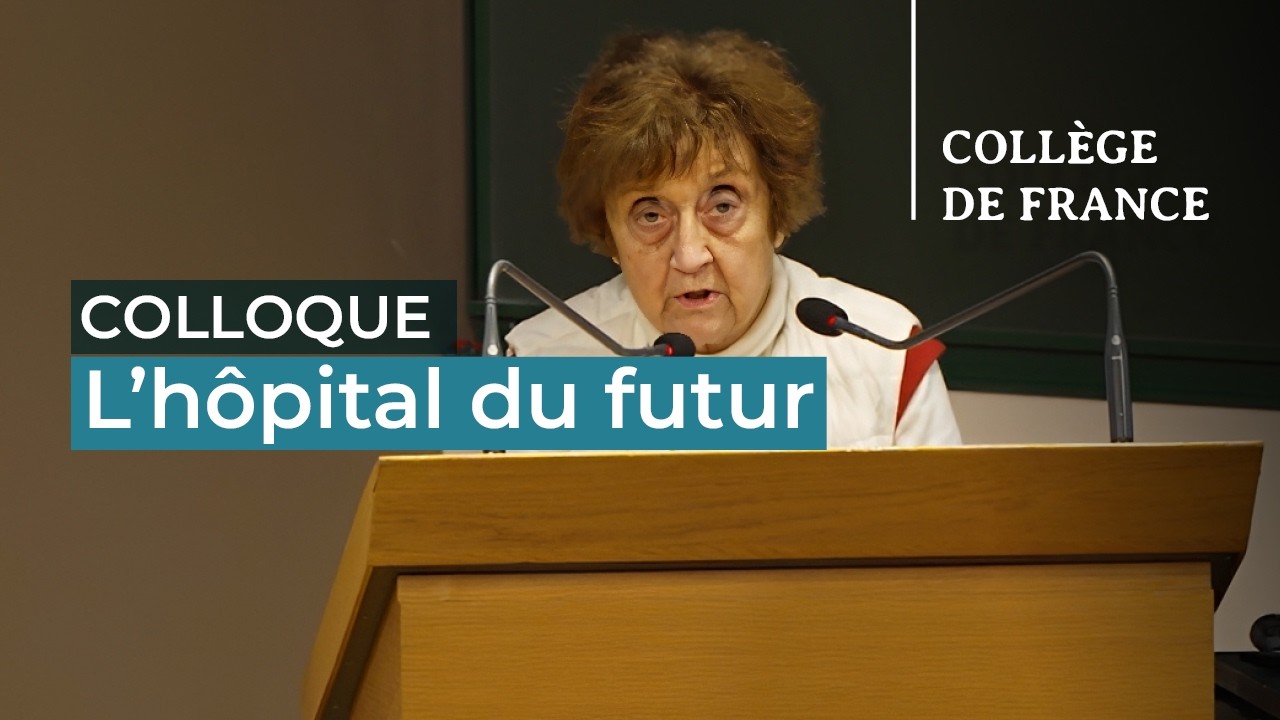
L’hôpital du futur (6) - 2025-2026
Keywords
Summary
135 words
Critical Evaluation
The lecture provides a rich, erudite analysis of the word ‘hôpital’, drawing on historical linguistics and philosophy. Armelle Debru demonstrates deep knowledge of the subject, referencing Benveniste’s ‘Le vocabulaire des institutions indo-européennes’ and Derrida’s seminars on hospitality. The argument is well-structured, moving from the current state of the word to its ancient roots and then to its conceptual implications for the future. The use of etymology to illuminate contemporary issues is both original and insightful. However, the talk is primarily an opinion piece, and while it cites authoritative sources, it does not engage with counterarguments or alternative perspectives. The connection to the future of hospitals is somewhat indirect, as the focus remains on the word rather than practical aspects. Nevertheless, the lecture offers valuable historical context and philosophical depth, making it a thought-provoking contribution to the colloquium. The quality of the presentation is high, with clear articulation and logical flow. The sources cited are credible, though not exhaustively referenced. Overall, this is a compelling and intellectually stimulating talk, though it may not appeal to those seeking concrete predictions about hospital design or technology.
183 words
Title / Content Match
The title 'L’hôpital du futur' suggests a forward-looking discussion, but the talk focuses on the etymology and historical evolution of the word 'hôpital', with implications for its future. This is a slight mismatch, but the content does address the future of the concept.
Quality & Reliability
8/10
The speaker is a professor emeritus of history of medicine, and the content is based on historical and linguistic analysis, referencing established scholars like Benveniste and Derrida. The presentation is well-structured and grounded in academic sources, though it is an opinion piece rather than a systematic review.
Key Moments
Markers derived by PSI from the transcript: the creator did not define chapters.
- Introduction by the chair, presenting Armelle Debru.
- Debru introduces her topic: the word 'hôpital' and whether it should be saved.
- Discussion on the current health of the word, its common usage, and acronyms.
- Exploration of the etymology, referencing Benveniste's work on Indo-European roots.
- Analysis of the dual meaning of 'host' and 'enemy', and Derrida's concept of hospitality.
- Application of two forms of hospitality to the hospital's two entrances.
- Conclusion on the importance of preserving the word's symbolic value.
Cited Sources
- Collège de France - Avenir Commun Durable — Initiative under which the colloquium is organized.
- Collège de France - L’hôpital du futur — Page for the colloquium, including recordings and presentation text.
- YouTube playlist of the colloquium — Playlist containing the audio and video recordings of the colloquium.
- Charte éthique de la Fondation du Collège de France — Ethical charter of the foundation supporting the initiative.
Concurring Sources
- Collège de France - Avenir Commun Durable — The initiative supports the colloquium, aligning with the theme of sustainable future.
External References
Contribution & Novelties
The lecture offers a unique perspective by focusing on the etymology and semantic evolution of the word ‘hôpital’, linking it to philosophical concepts of hospitality. It provides a historical and linguistic framework that is often missing in discussions about the future of healthcare institutions.
Pour aller plus loin :
- Émile Benveniste - Le vocabulaire des institutions indo-européennes — Essential reference for the etymological analysis.
- Jacques Derrida - De l’hospitalité — Derrida’s seminar on hospitality, which builds on Benveniste’s work.
- Michel Foucault - Naissance de la clinique — Relevant for understanding the historical transformation of medical institutions.
96 words
Radar Profile
The radar profile shows high scores in quality and reliability, reflecting the speaker's expertise and the academic context. The quantity of information is moderate, and the technical level is moderate, indicating a balance between depth and accessibility.
💬 No comments were provided for analysis.