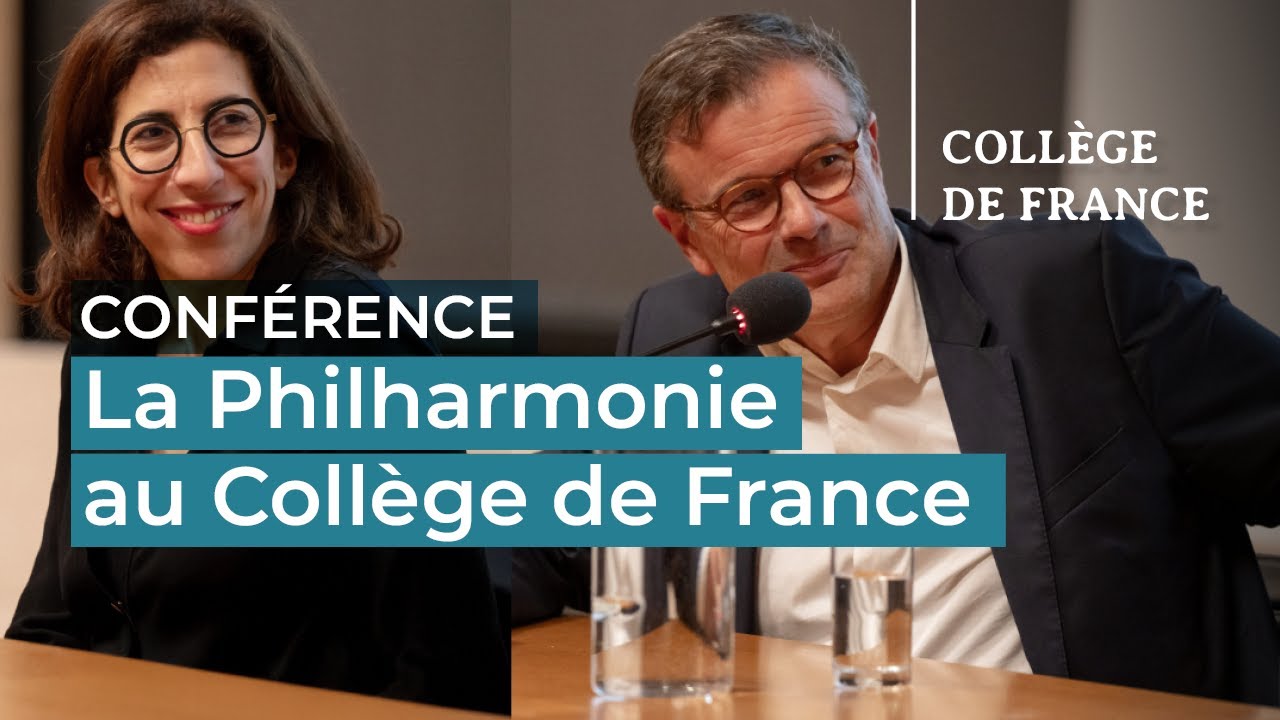
Musique ! La Philharmonie au Collège de France (1) - 2025-2026
Keywords
Summary
175 words
Critical Evaluation
The video presents a high-level panel discussion on cultural democratization in music, featuring credible experts. The value of the information is substantial, as it combines empirical data (e.g., audience statistics) with theoretical insights from sociology. The argumentation is solid, with speakers building on each other’s points and providing concrete examples. The scientific rigor is adequate for a public lecture, though it lacks detailed methodological explanations. The sources cited are primarily institutional and personal experiences, with references to studies (e.g., audience surveys) but without specific citations. The title accurately reflects the content, as it is the first of a series on music. The discussion is well-moderated and maintains a coherent thread. However, the depth of analysis is limited by the format, and some claims could benefit from more evidence. Overall, the content is reliable and informative, suitable for a general audience interested in cultural policy and sociology.
146 words
Title / Content Match
The title accurately reflects the content, as it is the first lecture of a series on music at Collège de France.
Quality & Reliability
8/10
The discussion features high-level experts (director of Philharmonie, former culture minister, sociology professor) and is hosted by a prestigious institution. The content is well-structured, with references to studies and statistics, though some claims lack precise citations.
Key Moments
Markers derived by PSI from the transcript: the creator did not define chapters.
- Introduction by the administrator of Collège de France, Thomas Römer, welcoming the audience and presenting the cycle.
- Olivier Mantei introduces the Philharmonie's audience statistics: 1.5 million visitors, 45% under 28 or families.
- Discussion on the historical fears about the Philharmonie's location in eastern Paris and the actual audience geography.
- Pierre-Michel Menger discusses the sociology of classical music audiences and the non-linear effects of innovation.
- Rima Abdul-Malak shares her perspective on cultural policy and the importance of education in broadening audiences.
- Debate on the role of digital technology and new listening habits in attracting younger audiences.
- Conclusion and announcement of upcoming sessions in the series.
Cited Sources
- Collège de France - Philharmonie program — Official program of the lecture series.
- Collège de France official website — General information about the institution and its resources.
- Fondation du Collège de France — Support page for the Collège de France.
Concurring Sources
- Philharmonie de Paris official website — Provides information about the institution's mission and activities, consistent with the discussion.
External References
Contribution & Novelties
This video provides an insightful discussion on the challenges and strategies of cultural democratization in classical music, highlighting the Philharmonie de Paris as a case study. It offers a unique perspective by combining the views of a cultural institution director, a former minister, and a sociologist. The discussion emphasizes the importance of not lowering artistic standards but improving access, and it presents recent audience data that challenges common assumptions.
Pour aller plus loin :
- Cultural democratization — Provides a general overview of the concept.
- Pierre Bourdieu’s theory of cultural capital — Relevant to understanding the social dimensions of cultural access.
- Philharmonie de Paris official website — For more information on the institution and its programs.
115 words
Radar Profile
The radar profile shows high scores in quality of information and reliability, reflecting the expertise of the speakers and the institutional backing. The quantity of information is moderate, as the discussion is broad but not exhaustive. The technical level is moderate, suitable for a general audience.