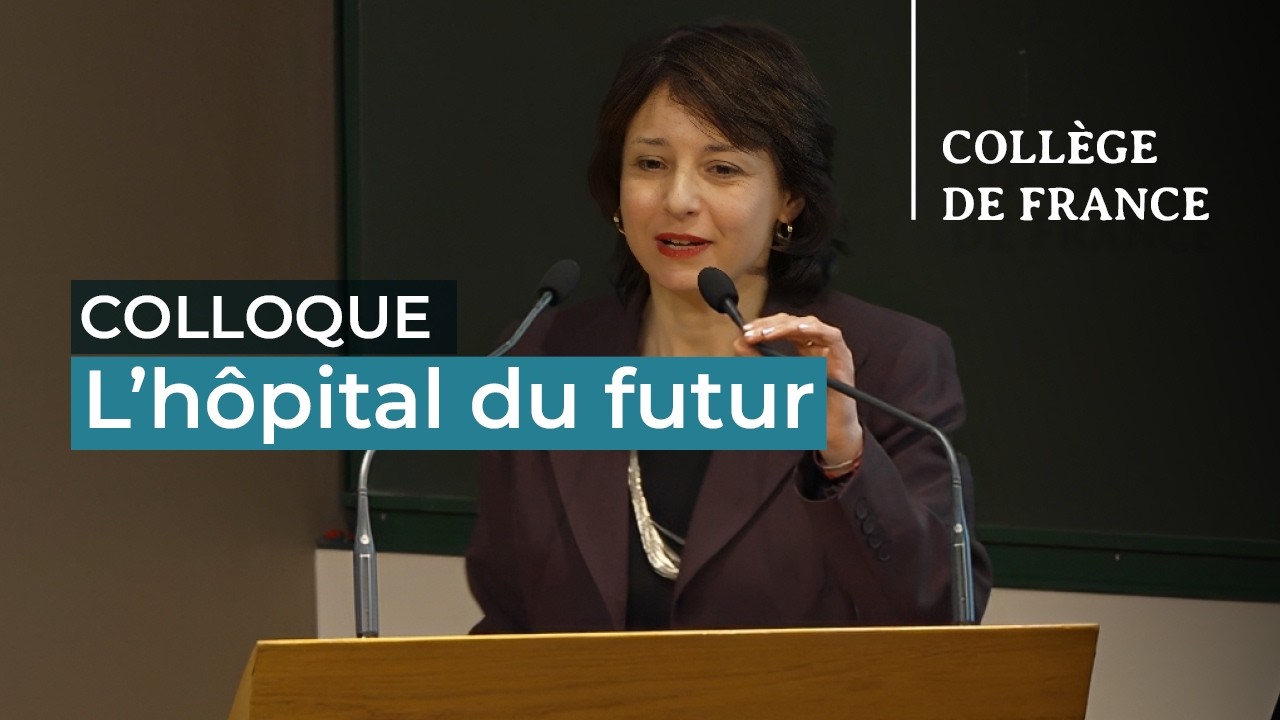
L’hôpital du futur (11) - 2025-2026
Keywords
Summary
142 words
Critical Evaluation
The lecture provides a comprehensive and insightful overview of psychiatric care from a historical and epidemiological perspective. Maria Melchior effectively uses Foucault’s analyses to frame the evolution of psychiatric institutions, highlighting the enduring relevance of power dynamics and the social construction of madness. Her discussion of the French sector system is informative, explaining its strengths and weaknesses in the context of current challenges. The talk is well-structured, moving from history to present-day organization and future perspectives. However, it is primarily an expert opinion rather than a systematic review, and some claims could benefit from more explicit citations. The emphasis on epidemiological methods is valuable, but the talk could have delved deeper into specific data or studies. The title is well-matched, as the content directly addresses the future of hospitals in psychiatric care. Overall, the lecture is rigorous and thought-provoking, offering a balanced view that acknowledges both progress and persistent issues. The speaker’s expertise is evident, and the content is accessible to a broad audience without oversimplifying complex topics. The inclusion of historical context enriches the analysis, and the call for a more community-based and data-informed approach is timely. The talk would have been enhanced by more concrete examples of innovative hospital models or specific epidemiological findings. Nonetheless, it serves as an excellent introduction to the topic and stimulates further reflection on the future of psychiatric care.
226 words
Title / Content Match
The title accurately reflects the content, which addresses the future of hospitals in the context of psychiatric care, with a historical and epidemiological perspective.
Quality & Reliability
8/10
The talk is delivered by a recognized epidemiologist (Maria Melchior) in a prestigious institutional setting (Collège de France). It draws on historical and epidemiological evidence, referencing Foucault's works and French psychiatric history. The content is well-structured and balanced, though it is an expert opinion rather than a systematic review.
Key Moments
Markers derived by PSI from the transcript: the creator did not define chapters.
- Introduction to the lecture and the topic of psychiatric diseases in hospitals.
- Discussion of Michel Foucault's work on the history of madness and its relevance.
- Historical overview of asylums and the role of Pinel and Esquirol.
- Explanation of the French sector system for psychiatric care.
- Discussion of current challenges, including inequalities and the impact of COVID-19.
- Future perspectives: community-based care, patient-centered approaches, and data-driven methods.
- Conclusion and call for integrating epidemiological methods into psychiatric research.
Cited Sources
- Collège de France - Avenir Commun Durable — Initiative under which the conference is organized.
- Collège de France - L'hôpital du futur — Event page with recordings and presentation text.
- YouTube Playlist - L'hôpital du futur — Playlist of the conference recordings.
- Fondation du Collège de France - Charte éthique — Ethical charter of the foundation supporting the initiative.
Concurring Sources
- Collège de France - Avenir Commun Durable — Initiative supporting the conference, aligning with the talk's themes.
External References
Contribution & Novelties
The lecture provides a historical and epidemiological perspective on psychiatric care, emphasizing the evolution of hospital roles and the need for a population-based approach. It highlights the relevance of Foucault’s analyses and the French sector system, offering insights into future directions.
Pour aller plus loin :
- Michel Foucault - Histoire de la folie à l’âge classique — Foundational work on the history of madness.
- French psychiatric sector system — Overview of the French sector-based organization.
- Epidemiology in psychiatry — Introduction to the field and its methods.
86 words
Radar Profile
The radar profile shows high scores in quality of information and reliability, reflecting the speaker's expertise and the institutional context. The quantity of information is moderate, and the technical level is accessible, making the talk suitable for a broad audience.