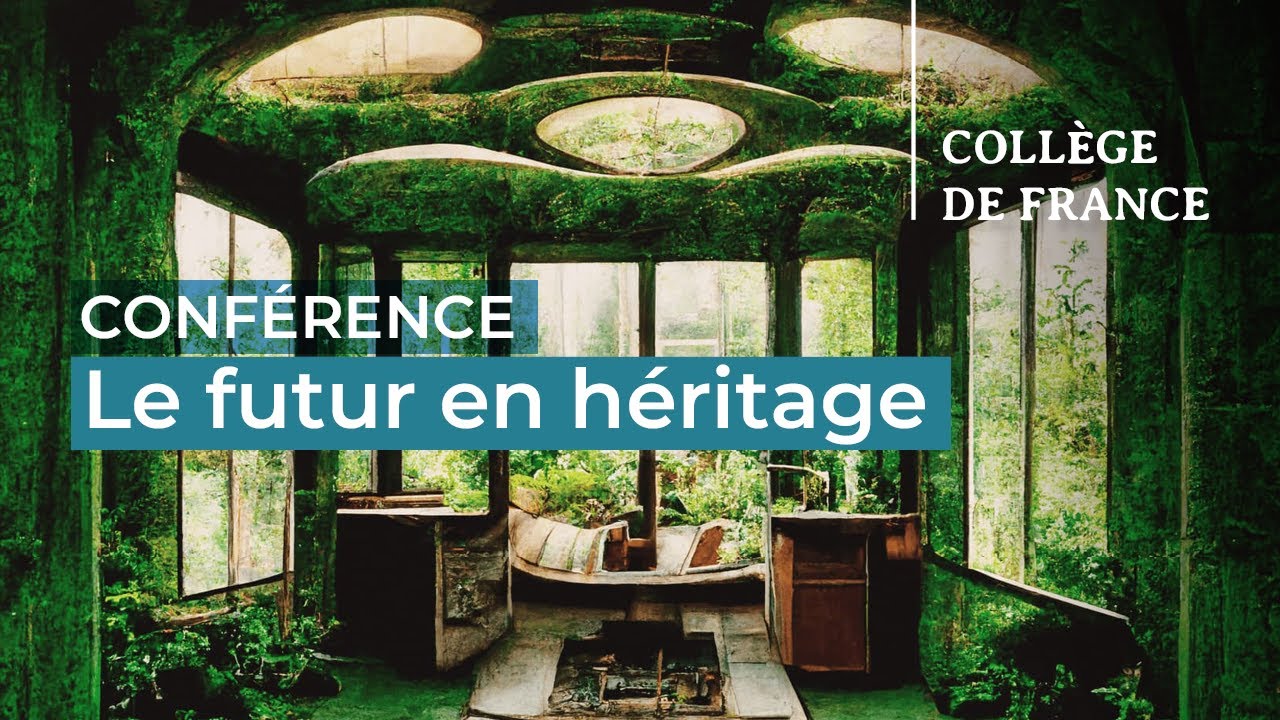
Le futur en héritage (3) - 2025-2026
Keywords
Summary
177 words
Critical Evaluation
The conference provides a thoughtful and nuanced exploration of the intersection between science fiction and climate change. The speakers, Simon Bréan and Irène Langlet, are established scholars in contemporary literature, lending credibility to the discussion. They effectively argue that science fiction is not merely escapist but serves as a cognitive tool for exploring alternative futures and challenging our assumptions. The historical overview, from Lucian of Samosata to modern solarpunk, is well-researched and provides a solid foundation for the discussion. The distinction between dystopian and utopian narratives is particularly insightful, as it highlights the potential of science fiction to both warn and inspire. The speakers also address the practical applications of science fiction, such as its use in military foresight and its potential for climate communication. However, the discussion is primarily theoretical and literary, with limited concrete examples of how science fiction has directly influenced policy or public action. Some claims, such as the influence of specific works on scientific innovation, are presented without detailed evidence. The format, a roundtable discussion, allows for a dynamic exchange but occasionally lacks depth on certain points. The inclusion of student participation from Alma Mater adds a valuable generational perspective, emphasizing the urgency of climate issues for younger audiences. Overall, the conference is intellectually stimulating and relevant, though it may not offer immediate practical solutions. The title accurately reflects the content, and the discussion is well-structured. The absence of a formal Q&A session limits audience engagement, but the speakers’ expertise and the thoughtful moderation compensate for this. The conference successfully bridges literary analysis and environmental concerns, making a compelling case for the importance of imaginative narratives in addressing real-world challenges.
275 words
Title / Content Match
The title 'Le futur en héritage (3) - 2025-2026' is broad but accurately reflects the series' focus on future challenges; the subtitle 'Récits de science-fiction et futurs climatiques' is more specific and matches the content well.
Quality & Reliability
8/10
The conference features established academics from prestigious institutions (Collège de France, Sorbonne Nouvelle, Gustave Eiffel) discussing the role of science fiction in addressing climate futures. The content is well-structured, grounded in literary history, and avoids sensationalism. However, it is primarily a debate and not peer-reviewed research, and some claims about specific works are presented without detailed citation.
Key Moments
Markers derived by PSI from the transcript: the creator did not define chapters.
- Introduction by Collège de France representative, emphasizing the role of students and the importance of science fiction in imagining futures.
- Student moderator introduces the topic, tracing science fiction from Lucian of Samosata to contemporary climate fiction.
- Simon Bréan discusses the concept of uchronia and the inferential nature of reading science fiction, using 'The Man in the High Castle' as an example.
- Irène Langlet explores the cognitive value of science fiction, emphasizing its ability to make 'steps aside' and imagine alternative worlds.
- Discussion on the history of climate fiction, including J.G. Ballard's early warnings and the emergence of solarpunk as an optimistic movement.
- Debate on whether science fiction should alarm or reassure, and its potential as a tool for climate foresight, referencing the Red Team program.
- Speakers address the role of science fiction in democratizing debates about the future and making scientific data emotionally engaging.
- Conclusion summarizing key insights and the importance of imaginative narratives in addressing climate change.
Cited Sources
- Alma Mater journal — Mentioned as the student journal co-organizing the event.
- Collège de France - Avenir commun durable — Referenced as the initiative supporting the conference series.
- Collège de France - Event page — Official page for the event series.
Concurring Sources
- Collège de France — Institution hosting the conference, known for academic rigor.
External References
Contribution & Novelties
The conference offers a fresh perspective on the role of science fiction in climate communication, emphasizing its cognitive and emotional value. It bridges literary analysis with environmental concerns, highlighting the potential of utopian narratives like solarpunk to inspire action. The discussion also touches on the practical use of science fiction in military foresight, suggesting a model for climate adaptation.
Pour aller plus loin :
- Solarpunk — A genre of speculative fiction that imagines sustainable futures, directly relevant to the discussion.
- Climate fiction — Overview of the genre and its evolution, providing context for the examples discussed.
- The Man in the High Castle — Philip K. Dick’s novel, used as an example of uchronia and inferential reading.
116 words
Radar Profile
The radar profile shows high scores in information quantity and quality, reflecting the rich content and academic expertise. The technical level is moderate, indicating accessibility to a general audience. Overall reliability is high, consistent with the institutional setting.
💬 No comments were provided for analysis.