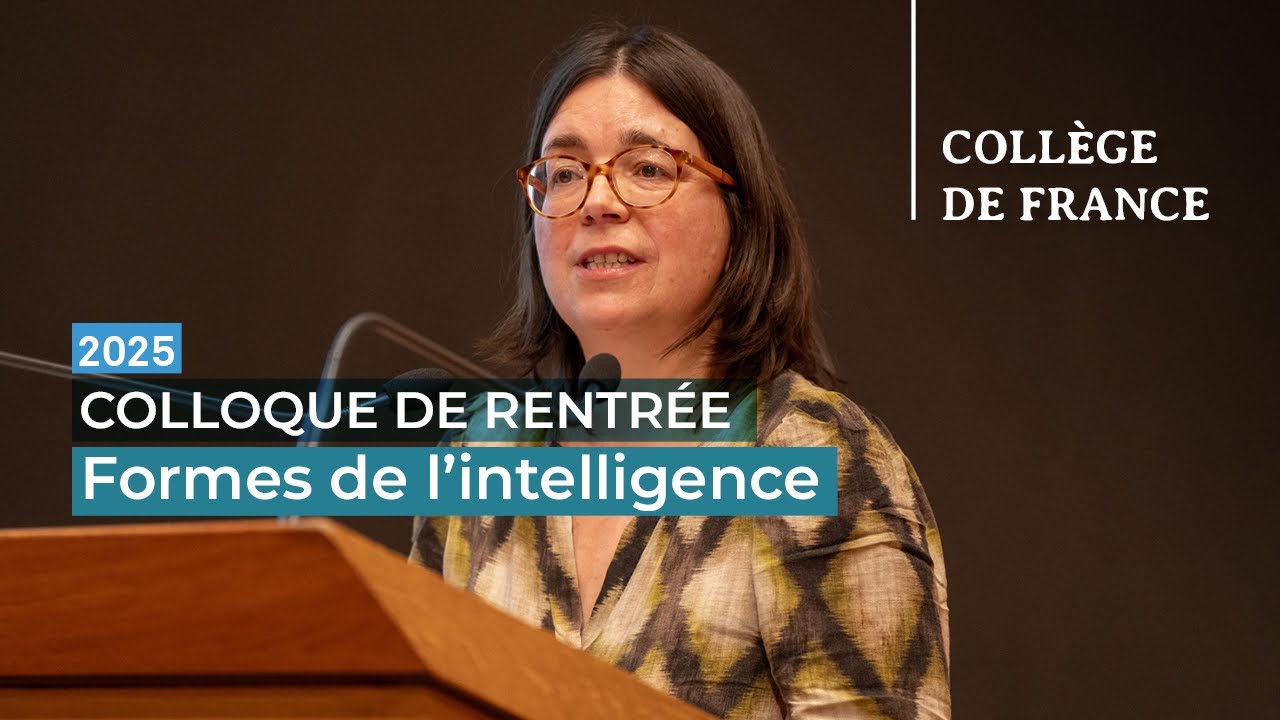
Comment étudier les formes de l’intelligence ? Les questions d'Alfred Binet (1857-1911) - S. Dupouy
Keywords
Summary
152 words
Critical Evaluation
The lecture provides a rigorous historical analysis of the concept of intelligence, drawing on primary sources and situating Binet’s work within broader intellectual currents. Dupouy demonstrates a deep familiarity with the philosophical and scientific debates of the 19th century, particularly the instinct-intelligence dichotomy and the critique of phrenology. The argumentation is solid, with clear explanations of how Binet’s approach was innovative yet constrained by contemporary assumptions. The lecture is well-structured, moving from the etymology of the term to its scientific institutionalization. However, it is an oral presentation, so some nuances may be lost, and the depth of analysis is limited by the time constraint. The sources cited are historical texts, and the lecture does not engage with modern critiques of intelligence testing, which could be seen as a limitation. The title accurately reflects the content, and the lecture offers valuable insights into the history of psychology. Overall, it is a high-quality contribution to the understanding of intelligence as a scientific and social construct.
163 words
Title / Content Match
The title accurately reflects the content, which focuses on Binet's approach to studying intelligence.
Quality & Reliability
8/10
The lecture is given by a specialist in epistemology and history of human sciences, based on historical sources and scholarly work. The content is well-structured and referenced, though it is an oral presentation without peer review.
Key Moments
Markers derived by PSI from the transcript: the creator did not define chapters.
- Introduction and presentation of the lecture's structure.
- Discussion on the etymology and common usage of the term 'intelligence'.
- Charles-Georges Leroy's 'Letters on the Intelligence and Perfectibility of Animals' and the secularization of the concept.
- Pierre Flourens' opposition between instinct and intelligence, and the unity of intelligence.
- Critique of phrenology and the defense of the unity of intelligence.
- Binet's project of an experimental psychology of intelligence and its methodological innovations.
- The development of the Binet-Simon scale in response to social demand.
- Discussion on the conceptual shifts that made intelligence measurable.
- Conclusion and reflections on the legacy of Binet's work.
Cited Sources
- Collège de France - Colloque Formes de l'intelligence — Official page of the conference where this lecture was given.
- Collège de France - Official Website — Institutional website providing access to lectures and resources.
Concurring Sources
- Collège de France - Colloque Formes de l'intelligence — The conference program and related resources align with the lecture's themes.
External References
Contribution & Novelties
The lecture offers a nuanced historical account of how the concept of intelligence became a scientific object, emphasizing the role of animal behavior studies and the critique of phrenology. It highlights Binet’s methodological innovations and the social context that led to the creation of the first intelligence scale.
Pour aller plus loin :
- Alfred Binet - Wikipedia — Overview of Binet’s life and work.
- Intelligence quotient - Wikipedia — History and controversies of IQ testing.
- Phrenology - Wikipedia — Background on the doctrine critiqued by Flourens.
86 words
Radar Profile
The radar profile shows high scores in information quantity, quality, technical level, and reliability, indicating a well-researched and informative lecture. The balance across dimensions suggests a comprehensive treatment of the topic.
💬 No comments were provided for analysis.