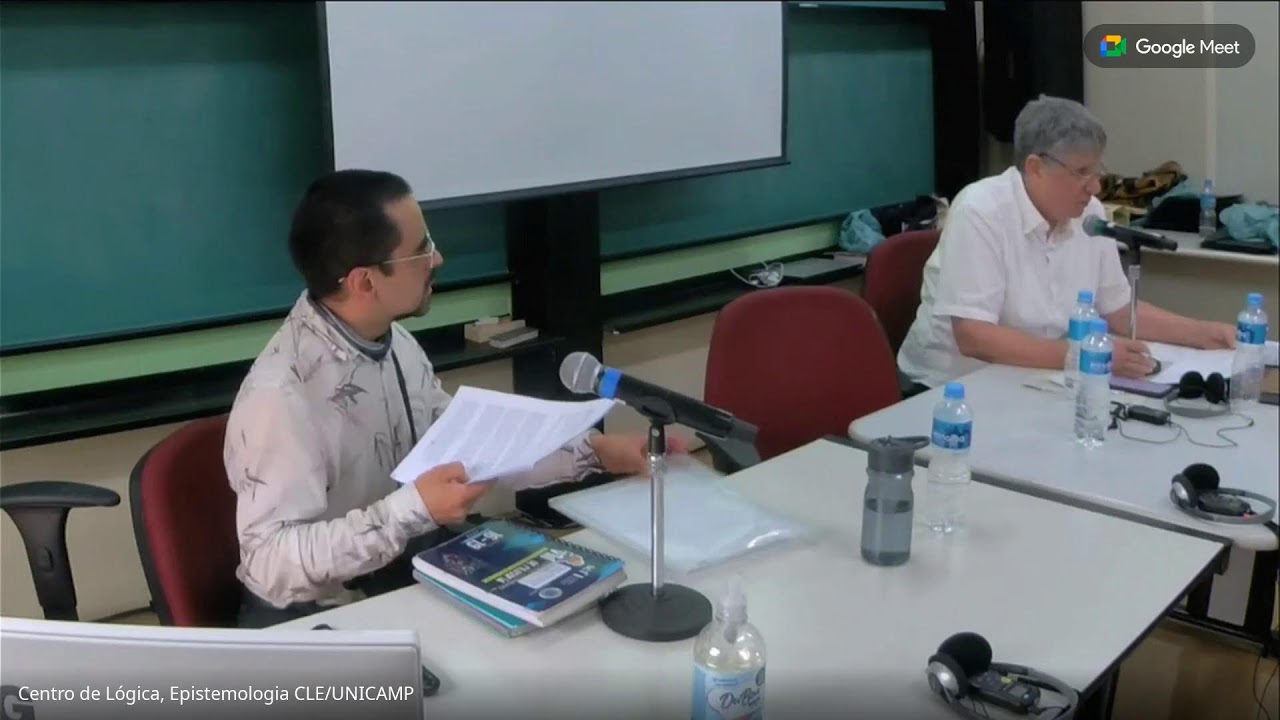
XI COLÓQUIO INTERNACIONAL DE FILOSOFIA ORIENTAL DA UNICAMP – Manhã 16/09
Keywords
Summary
240 words
Critical Evaluation
Value of the Information & Strength of the Argument
The value of the information lies in its documentation of an academic event, providing insights into the institutional context and the state of Oriental philosophy studies in Brazil. The opening remarks offer a historical perspective on CLE and the development of interdisciplinary research at UNICAMP. The keynote lecture by Professor Sinedino introduces the topic of ancient Chinese logic, but due to time constraints, it provides only a general overview rather than a detailed argumentation. The discussion is more descriptive than analytical, focusing on the historical and cultural significance of Chinese logic. The argumentation is solid within the academic framework, but the lecture’s brevity limits its depth.
Scientific Rigor, Source Quality, Title Accuracy
The scientific rigor is high, given the academic setting and the credentials of the speakers. The sources cited are primarily institutional and historical, with references to the founding of CLE and its publications. The title accurately reflects the content, as the video is indeed the morning session of the colloquium. The adequacy between title and content is strong. No specific external sources are cited in the video, but the institutional context provides a reliable foundation. The video does not include a detailed bibliography, but the speakers’ expertise lends credibility to the content.
213 words
Title / Content Match
The title accurately reflects the content: the opening morning of the 11th International Colloquium on Oriental Philosophy at UNICAMP.
Quality & Reliability
7/10
The video is an academic event opening session with institutional presentations and a keynote lecture by a recognized scholar. The content is scholarly, but the recording is a live event with occasional technical issues and informal remarks. The reliability is high due to the academic context, but the format limits depth.
Key Moments
Markers derived by PSI from the transcript: the creator did not define chapters.
- Opening remarks by Professor Florentino, welcoming participants and introducing the event.
- Introduction of the opening table members: Professor Ronaldo, Professor Ítala, and Professor Fábio.
- Professor Fábio discusses the partnership between CLE and the Brazil-China Center.
- Professor Ítala provides a historical overview of CLE and its contributions to logic.
- Professor Ítala expresses solidarity with the Palestinian people and condemns the Israeli government.
- Professor Ronaldo, director of IFCH, shares personal memories and enthusiasm for the colloquium.
- Announcements about schedule changes and introduction of the first keynote speaker, Professor Giorgio Sinedino.
- Professor Sinedino begins his lecture on the discovery of ancient Chinese logic.
- Discussion of the book 'The Book of Master' and its significance in Chinese logic.
- Conclusion of the lecture and transition to Q&A or next session.
Cited Sources
- Manuscrito - Revista de Filosofia — Mentioned by Professor Ítala as a key publication of CLE since 1978.
- Cadernos de História e Filosofia da Ciência — Mentioned as a journal being resumed under the editorial coordination of Professor Daniel.
- The Book of Master (Mozi) — Referenced by Professor Sinedino as the focus of his lecture on ancient Chinese logic.
Concurring Sources
- Stanford Encyclopedia of Philosophy - Chinese Logic — Provides scholarly context for the lecture's topic.
Contribution & Novelties
The video provides a unique record of the opening of a significant academic event in Brazil, highlighting the institutional efforts to promote Oriental philosophy. It offers insights into the history of CLE and the creation of the Brazil-China Center, which are valuable for understanding the academic landscape. The keynote lecture introduces the topic of ancient Chinese logic, but due to its brevity, it serves more as an introduction than a deep analysis. The main novelty is the documentation of this event, which may be useful for researchers interested in the institutional development of Oriental studies in Brazil.
Pour aller plus loin :
- Mozi — The foundational text of Mohist logic, central to the lecture.
- Chinese Logic — Stanford Encyclopedia of Philosophy entry on Chinese logic, providing a comprehensive overview.
- Center for Logic, Epistemology and History of Science (CLE) — Official website of CLE, offering resources on logic and philosophy.
149 words
Radar Profile
The radar profile shows a balanced distribution across the four dimensions, with slightly higher scores in information quality and reliability, reflecting the academic nature of the content. The quantity of information is moderate, and the technical level is appropriate for a general academic audience.
💬 No comments were provided for analysis.