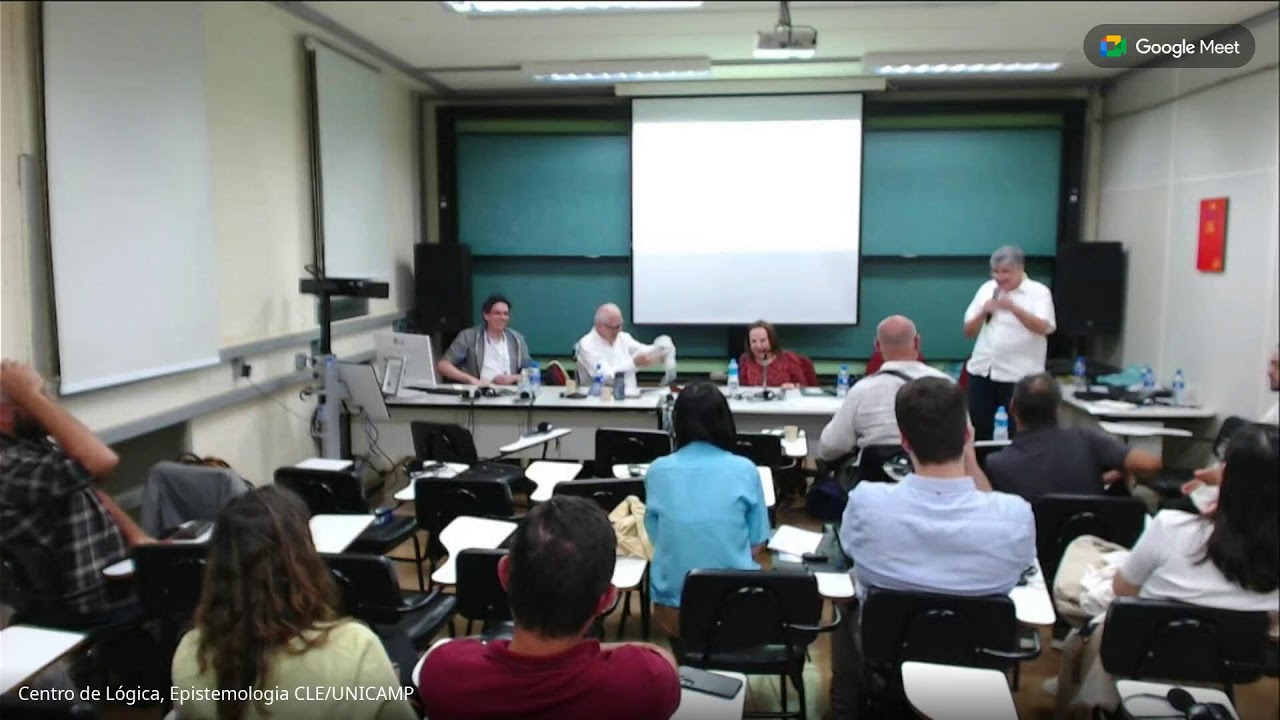
XI COLÓQUIO INTERNACIONAL DE FILOSOFIA ORIENTAL DA UNICAMP - Tarde 16/09 - pt2
Keywords
Summary
179 words
Critical Evaluation
Value of the Information & Strength of the Argument
The lecture provides valuable insights into Heschel’s philosophy and its relevance for interfaith and intercultural dialogue. The argument is well-structured, moving from specific textual examples to broader philosophical implications. Leone effectively uses analogies, such as binocular vision, to illustrate how contradictory views can generate depth. However, the argumentation is primarily expository and does not engage critically with potential counterarguments or alternative interpretations. The speaker’s expertise is evident, but the presentation is more suggestive than rigorously analytical.
Scientific Rigor, Source Quality, Title Accuracy
The lecture demonstrates scholarly rigor in its use of primary sources, such as the Babylonian Talmud (Eruvin 13b, Hagigah 3b) and Heschel’s works. However, no specific editions or secondary literature are cited, and the presentation is not peer-reviewed. The title is accurate, though it could be more specific. The content is well-aligned with the title, focusing on Eastern philosophy and Jewish thought.
153 words
Title / Content Match
The title accurately reflects the content: a lecture on Eastern philosophy, specifically focusing on Jewish thought in dialogue with Eastern traditions.
Quality & Reliability
7/10
The speaker is a recognized scholar in Jewish philosophy, with a PhD and rabbinic ordination. The content is well-structured and draws on classical texts, but it is an oral presentation without peer review or citations. The argument is coherent but relies on personal interpretation.
Key Moments
Markers derived by PSI from the transcript: the creator did not define chapters.
- Introduction of the speaker, Alexandre Leone, by the chair.
- Leone introduces his topic: Heschel's 'Torah min ha-Shamayim' and its dialogue with Eastern philosophy.
- Discussion of the dialectic between Halakha and Aggadah, and the value of controversy in rabbinic tradition.
- Talmudic story of the schools of Hillel and Shammai, and the concept of 'elu ve-elu divrei Elohim hayyim'.
- Parallels with Chinese philosophy: Yin and Yang, Confucianism and Taoism.
- Addressing the objection of relativism and the idea of unity in depth.
- Conclusion: the relevance of this model for intercultural philosophy and pluralism.
- Q&A session begins; audience questions and discussion.
Cited Sources
- Torah min ha-Shamayim — Heschel's major work on rabbinic theology, cited as the basis of the lecture.
- Babylonian Talmud, Eruvin 13b — Story of the schools of Hillel and Shammai, and the divine voice declaring both views are the words of the living God.
- Babylonian Talmud, Hagigah 3b — Echo of the idea that all words are given by one Shepherd, supporting the plurality of interpretations.
Concurring Sources
- Heschel, Abraham Joshua. Torah min ha-Shamayim — Primary source for the lecture's argument.
- Babylonian Talmud — Primary source for rabbinic debates and the concept of controversy.
Contribution & Novelties
The lecture offers a fresh perspective on Heschel’s thought, highlighting its relevance for contemporary intercultural philosophy. It bridges Jewish and Eastern philosophical traditions, suggesting that the rabbinic model of controversy can serve as a paradigm for pluralistic dialogue.
Pour aller plus loin :
- Abraham Joshua Heschel — Overview of Heschel’s life and works.
- Torah min ha-Shamayim — Article on Heschel’s book.
- Yin and Yang — Concept of complementary opposites in Chinese philosophy.
- Taoism — Philosophical and religious tradition emphasizing harmony with the Tao.
- Confucianism — Ethical and philosophical system based on the teachings of Confucius.
95 words
Radar Profile
The radar profile shows high scores in information quality and reliability, moderate in quantity and technical level. This indicates a well-informed but not overly technical presentation, suitable for an academic audience.