XI COLÓQUIO INTERNACIONAL DE FILOSOFIA ORIENTAL DA UNICAMP - Tarde 18/09
Keywords
Summary
176 words
Critical Evaluation
Value of the Information & Strength of the Argument
The video provides valuable insights into paraconsistent logic and its connection to Eastern philosophies, offering a clear explanation of complex logical concepts. The argumentation is solid, with Professor Ítala presenting a well-structured historical and conceptual overview. The subsequent presentations on Indian and Confucian philosophies add depth, though they are less detailed due to time constraints. The book launch discussion effectively argues for the legitimacy of Eastern philosophy, countering common objections with historical and logical reasoning.
Scientific Rigor, Source Quality, Title Accuracy
The scientific rigor is high, particularly in the exposition on paraconsistent logic, which is grounded in established academic work. The sources mentioned include works by Newton da Costa and references to relevant logical systems. The title accurately reflects the content. The video does not provide a list of sources in the description, but the speakers reference key texts and authors. The adequacy between title and content is strong, as the session indeed covers topics related to Oriental philosophy and logic.
170 words
Title / Content Match
The title accurately describes the event: the afternoon session of the XI International Colloquium on Oriental Philosophy at UNICAMP, held on September 18.
Quality & Reliability
7/10
The video is a recording of an academic colloquium with presentations by established scholars, including a detailed exposition on paraconsistent logic by a leading expert. The content is scholarly, but the recording quality and informal setting may affect precision. The claims are well-argued and grounded in academic discourse, though not all sources are explicitly cited.
Key Moments
Markers derived by PSI from the transcript: the creator did not define chapters.
- Introduction and opening remarks by the moderator.
- Professor Ítala begins her talk on paraconsistent logic.
- Explanation of the three Aristotelian principles and their historical context.
- Discussion on the emergence of non-classical logics and Newton da Costa's contributions.
- Connection between paraconsistent logic and Eastern philosophies.
- Introduction of the first speaker on Indian philosophies.
- Presentation on 'Beyond Binaries: Exploring Epistemologies of Classical Indian Philosophies'.
- Introduction of the second speaker on Confucian humanism.
- Presentation on 'A More Complete Humanism: A Confucian Alternative to the Liberal Capitalist Subject'.
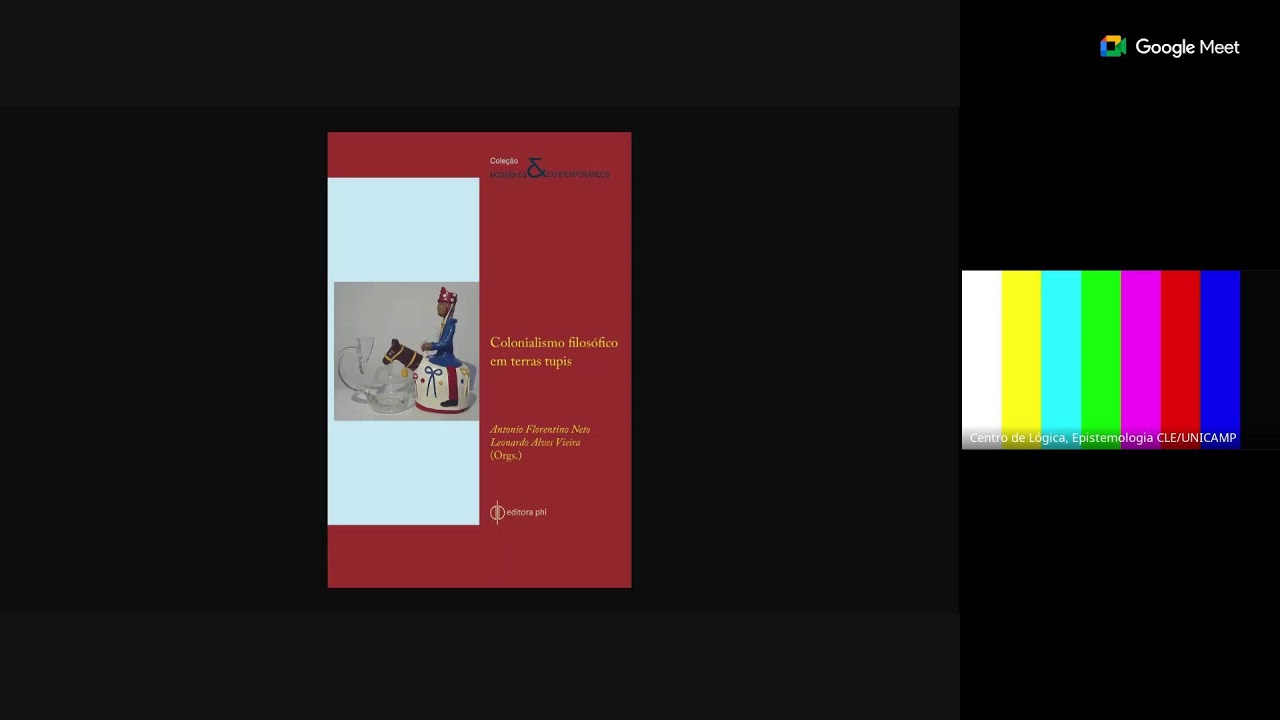
- Book launch discussion on 'Colonialismo e Filosofia em Terras Tupis'.
Cited Sources
- Newton da Costa's works on paraconsistent logic — Mentioned as the founder of paraconsistent logic and key contributor to the field.
- Nagarjuna's 'Fundamental Verses on the Middle Way' — Referenced in the discussion about the existence of Eastern philosophy.
- Hegel's 'Lectures on the History of Philosophy' — Cited as the source of arguments against Eastern philosophy.
Concurring Sources
- Stanford Encyclopedia of Philosophy: Paraconsistent Logic — Provides a comprehensive academic overview of paraconsistent logic, supporting the video's explanations.
Dissenting Sources
- Marco Aurélio Werle's critique of Eastern philosophy — The video discusses a professor who argues that Eastern philosophy does not exist, which is the main opposing viewpoint addressed.
Contribution & Novelties
The video offers a unique perspective by linking paraconsistent logic to Eastern philosophical traditions, suggesting that many Eastern systems of thought are inherently paraconsistent. This connection is not commonly explored in mainstream philosophy. The discussion also addresses the ongoing debate about the legitimacy of Eastern philosophy, providing a contemporary response to critiques.
Pour aller plus loin :
- Paraconsistent logic — Overview of paraconsistent logic and its history.
- Newton da Costa — Biography and contributions of the Brazilian logician.
- Nagarjuna — Key figure in Madhyamaka philosophy, central to the discussion.
- Confucianism — Background on Confucian thought and its relevance to the presentation.
101 words
Radar Profile
The radar profile shows high scores in quantity and quality of information, with a moderate level of technical depth and reliability. This indicates a content-rich video that is academically sound but may require some background knowledge to fully appreciate.
💬 No comments were provided for analysis.