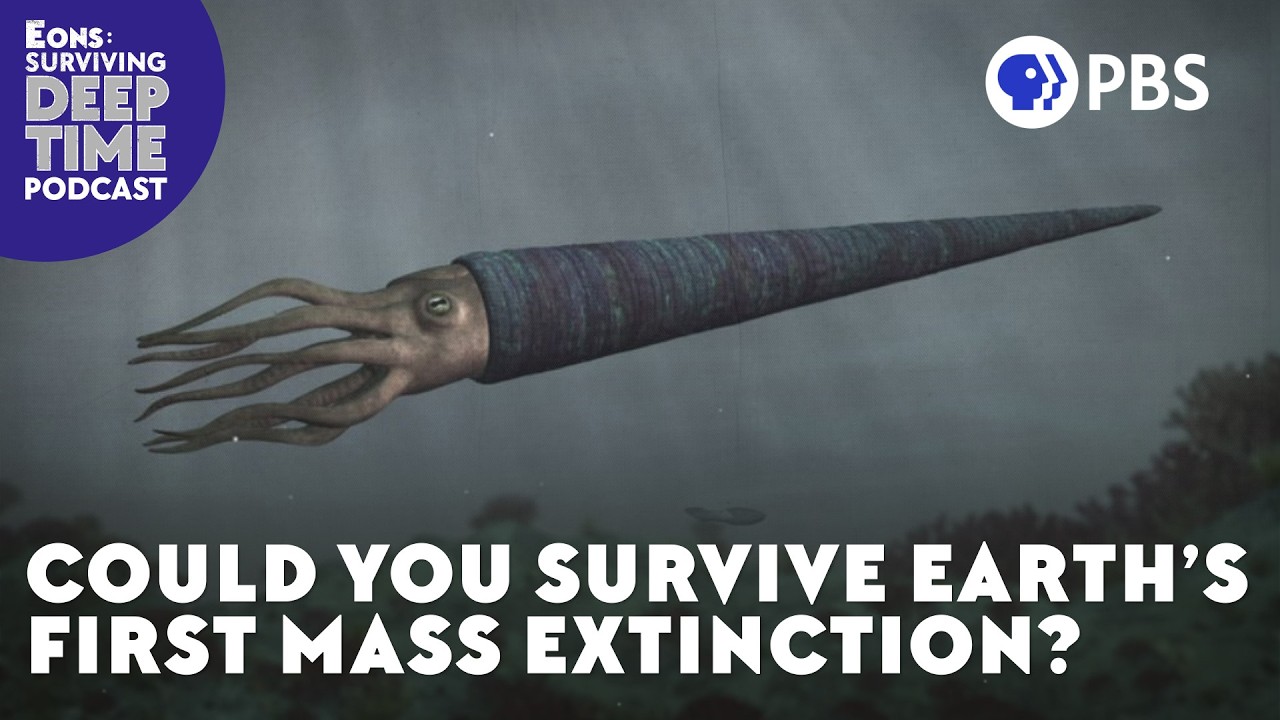
Could You Survive The Ordovician Period?
Keywords
Summary
188 words
Critical Evaluation
Value of the Information & Strength of the Argument
The value of the information lies in its synthesis of paleontological knowledge into a practical survival scenario, making complex scientific concepts accessible. The hosts present multiple hypotheses for the extinction causes, such as volcanism and climate change, and acknowledge uncertainties, which strengthens the argumentation. They use specific examples like the sea scorpion Pentecopterus and the trilobite Isotelus rex to illustrate the fauna. The discussion is well-structured, moving from food and water to hazards, and includes practical considerations like cooking and shelter. However, the argumentation is conversational and not deeply technical, but it is grounded in scientific consensus.
Scientific Rigor, Source Quality, Title Accuracy
The scientific rigor is high for a science communication podcast. The hosts reference specific species and events, and the episode includes a link to a Google Doc with references, indicating a commitment to sourcing. The title accurately reflects the content, which is a hypothetical survival guide. The podcast is part of PBS Eons, known for its educational quality. The content is up-to-date as of 2024, and the hosts are experienced science communicators. The main limitation is the lack of direct citation within the audio, but the provided references mitigate this. The title is engaging and matches the content’s focus on survival.
213 words
Title / Content Match
The title accurately reflects the content, which explores the challenges of surviving the Ordovician period, focusing on the aftermath of the End-Ordovician extinction.
Quality & Reliability
8/10
The episode is produced by PBS Eons, a reputable science communication channel with a track record of consulting experts and providing references. The content is based on current scientific understanding of the Ordovician period, including the End-Ordovician extinction, and is presented with appropriate caveats about uncertainty. The podcast format includes a detailed narrative and discussion, but it is not a peer-reviewed source.
Key Moments
Markers derived by PSI from the transcript: the creator did not define chapters.
- Introduction: dramatic reading of the aftermath of the End-Ordovician extinction, setting the scene.
- Discussion of the Ordovician period and the first mass extinction, including the 'Big Five'.
- Food and water priorities: sea scorpions, nautiloids, and the availability of fresh water.
- Discussion of edible plants and the toxicity of mosses.
- Animal hazards: sea scorpions, giant cephalopods, and trilobites.
- Environmental and geological hazards: volcanic activity, climate oscillations, and landmass geography.
- The role of sponges in the aftermath and their importance as refugia.
- Survival strategies: cooking, shelter, and avoiding predators.
- Conclusion: summary of survival prospects and final thoughts.
Cited Sources
- References for this episode — The description provides a link to a Google Doc with references for the episode.
Concurring Sources
- Ordovician period — General information on the Ordovician period, including climate and life.
- Late Ordovician mass extinction — Details on the extinction event discussed in the episode.
External References
Contribution & Novelties
The episode offers a unique perspective by framing paleontological knowledge as a survival guide, which is engaging and educational. It synthesizes information about the Ordovician period, including the extinction event and the resilience of sponges, into a narrative that is both informative and entertaining. The discussion of specific species and their potential as food or threats adds practical depth.
Pour aller plus loin :
- Ordovician period — Provides a comprehensive overview of the geological period, including its climate and life.
- End-Ordovician extinction — Details the causes and effects of the first of the ‘Big Five’ mass extinctions.
- Sea scorpions (Eurypterids) — Information on these arthropods, including their size and ecology.
- Sponges (Porifera) — Overview of sponge biology and their role in marine ecosystems.
123 words
Radar Profile
The radar profile shows high scores in quantity and quality of information, and reliability, with a moderate technical level. This indicates a well-researched and accessible science communication piece, suitable for a general audience interested in paleontology.
💬 Très positif. Sur les 30 commentaires analysés, la majorité exprime un enthousiasme pour le format podcast et la narration, avec des appréciations sur le contenu scientifique et l'humour, et peu de critiques.