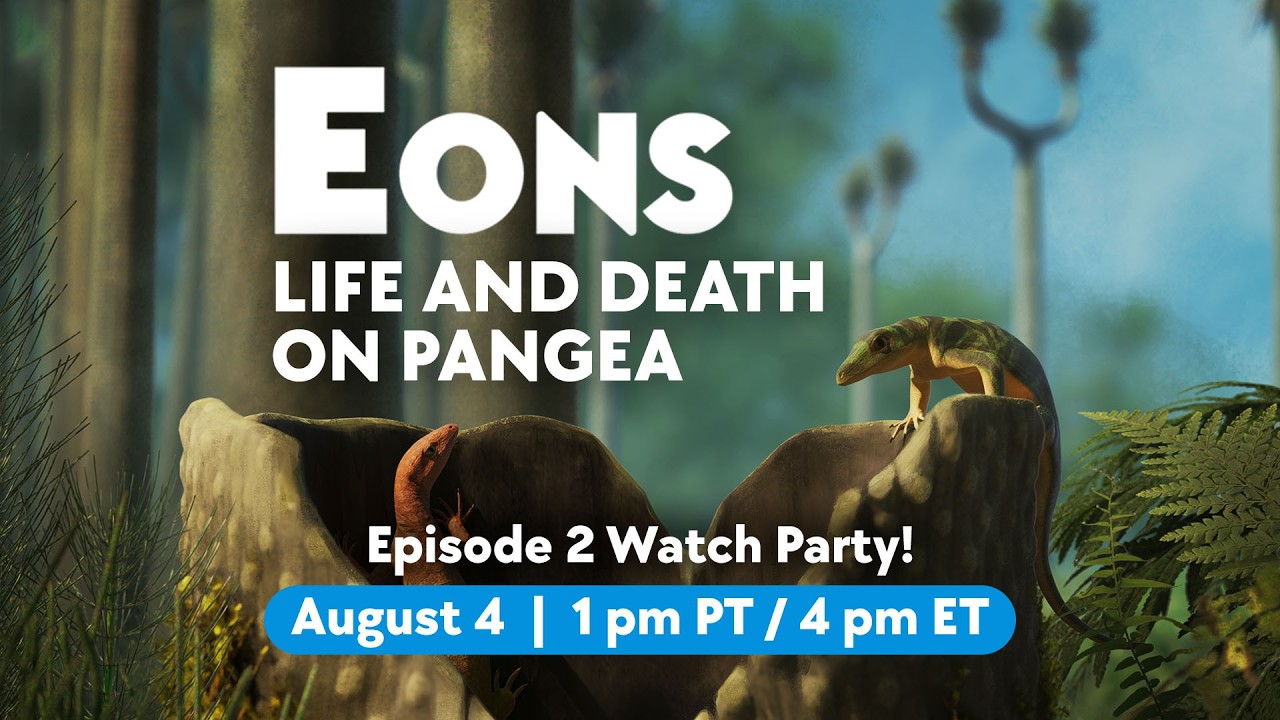
Watch Party and Q&A: Life and Death on Pangea Episode 2
Keywords
Summary
156 words
Critical Evaluation
Value of the Information & Strength of the Argument
The value of the information lies in the expert insights provided by the hosts, who are actively involved in paleontology and science communication. They offer behind-the-scenes perspectives on the making of a documentary, including the scientific process of fossil hunting and the challenges of filming. The argumentation is solid, as the hosts base their statements on scientific knowledge and acknowledge uncertainties, such as the function of sails in pelycosaurs. They also clarify the informal use of the term ‘pelycosaur’ in the literature. The discussion is well-structured, moving from casual anecdotes to substantive scientific explanations, and the hosts effectively engage with audience questions, providing clear and accurate answers.
Scientific Rigor, Source Quality, Title Accuracy
The scientific rigor is high, as the hosts are professionals with expertise in paleontology and geology. They reference the Whiteside Museum and its paleontologists, and they discuss scientific concepts with appropriate nuance, such as the convergent evolution of sails and the informal nature of the term ‘pelycosaur’. The sources mentioned are the PBS app and pbs.org, which are reliable platforms for science content. The title accurately reflects the content, which is a watch party and Q&A session. The hosts do not provide formal citations, but they reference the museum and the series itself, which adds credibility. The audience comments are not analyzed in this stream, but the hosts respond to questions, indicating engagement with the audience.
238 words
Title / Content Match
The title accurately describes the content: a watch party and Q&A session for the second episode of the series.
Quality & Reliability
8/10
The content is a live Q&A with hosts who are professional paleontologists and science communicators. They discuss the making of a documentary episode and answer audience questions with scientific accuracy, acknowledging uncertainties. The information is reliable but presented in an informal, conversational manner.
Key Moments
Markers derived by PSI from the transcript: the creator did not define chapters.
- Introduction of hosts and overview of the watch party format.
- Recap of episode one and introduction to episode two on plant-eating.
- Discussion about the mystery of pelycosaur decline and the function of sails.
- Countdown and start of the episode watch.
- Post-episode Q&A begins, discussing behind-the-scenes moments.
- Discussion about the Whiteside Museum and the process of fossil hunting.
- Q&A on early land vertebrates' diet and the term 'pelycosaur'.
- Closing remarks and shout-out to the Whiteside Museum.
Cited Sources
- PBS App — Link to watch the full series on the free PBS App.
- PBS Watch Party — Link to watch the episode on the web, especially for viewers outside the U.S.
Concurring Sources
- PBS Eons YouTube Channel — The channel hosting the series and related content.
Contribution & Novelties
The video provides a unique behind-the-scenes look at the production of a paleontology documentary, offering insights into the scientific process and the challenges of filming. It also clarifies common misconceptions, such as the informal use of ‘pelycosaur’ and the mystery of sail function. The Q&A format allows for direct engagement with experts, providing accessible explanations of complex topics.
Pour aller plus loin :
- Pelycosaur - Wikipedia — Provides an overview of the informal group and its members.
- Dimetrodon - Wikipedia — Details on the sail-backed synapsid and its ecology.
- Permian Period - Britannica — Context on the geological period and its significance.
- Whiteside Museum of Natural History — The museum featured in the episode, known for its Permian fossils.
119 words
Radar Profile
The radar profile shows high scores in quality of information and reliability, reflecting the expert hosts and accurate scientific content. The quantity of information is moderate, as the stream focuses on a specific episode and Q&A, while the technical level is accessible to a general audience.
💬 Sur les 0 commentaires analysés, aucune tendance n'a pu être dégagée.