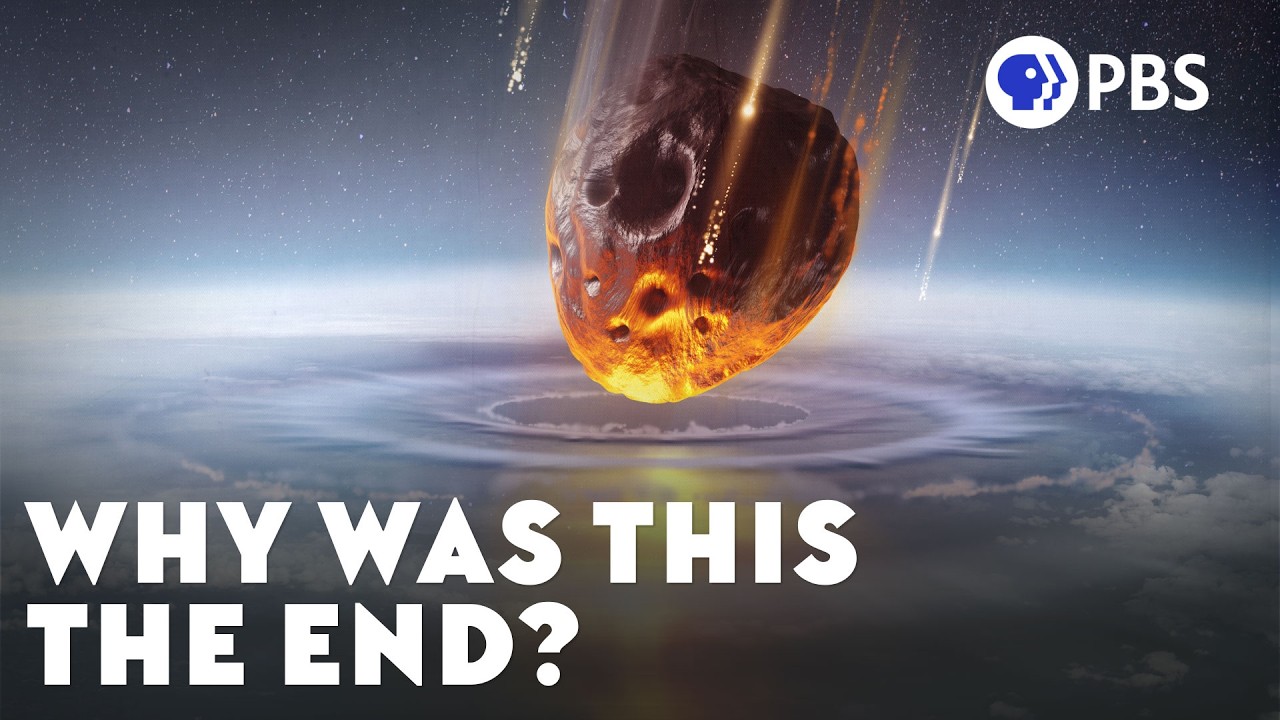
Why Wasn't There A Second Age of Reptiles?
Keywords
Summary
139 words
Critical Evaluation
Value of the Information & Strength of the Argument
The video provides a clear and engaging explanation of a relatively obscure hypothesis. It effectively argues for the plausibility of FIMS by linking known facts about fungal ecology, mammalian physiology, and evolutionary pressures. The argumentation is logical, systematically building from the impact event to the fungus bloom, then to the differential susceptibility of reptiles and mammals. While it acknowledges the hypothesis’s speculative nature, it presents the evidence coherently and encourages viewers to consider overlooked factors like pathogens in shaping deep history. The use of accessible analogies and clear narration strengthens the explanatory value.
Scientific Rigor, Source Quality, Title Accuracy
The scientific rigor is high for a popular science video. It references a Google Doc with detailed references, ensuring traceability. The video distinguishes between established facts (the K-Pg extinction, the fungal spike) and the speculative FIMS hypothesis, and clearly states that the hypothesis is not widely accepted. The title is appropriate and accurately reflects the content. The channel has a reputation for accurate and well-researched content, which is reflected here. No significant source discrepancies were noted.
184 words
Title / Content Match
The title poses a question about reptile dominance and the content directly addresses it by exploring the fungal hypothesis as a potential explanation.
Quality & Reliability
8/10
The video presents a scientific hypothesis with clarity, discusses supporting evidence and limitations, and is produced by a reputable educational channel. It clearly distinguishes between established facts and speculative elements, and references external sources.
Key Moments
Markers derived by PSI from the transcript: the creator did not define chapters.
- Introduction: the familiar story of mammalian triumph after the asteroid impact and the question of why mammals, not reptiles.
- Impact and extinction: description of the K-Pg event, global catastrophe, and the ecological collapse.
- Fungal bloom: the flourishing of fungi in the aftermath, the fossil spike, and the unlikely advantage.
- Presentation of FIMS hypothesis: the logic behind why fungi harmed reptiles more than mammals.
- Evidence and arguments: energy needs, reproduction, and vigilance; the role of temperature and immune response.
- Implications: disease as an overlooked factor, and the notion that the Age of Mammals might have started with a fungal era.
- Conclusion and endorsement of further exploration, with a mention of the Eons podcast.
Cited Sources
- Eons References Document — Detailed list of scientific references supporting the video's claims.
- Eons podcast: Surviving Deep Time — Promotion for the podcast, exploring similar paleontology topics.
- Support PBS Eons — Donation link for supporting the channel, presented at the end.
Contribution & Novelties
This video adds value by bringing a little-known but fascinating hypothesis to a broad audience. It demonstrates how creative hypotheses can emerge from connecting disparate fields (paleontology, mycology, immunology). The episode encourages viewers to think critically about why certain groups dominate after mass extinctions, emphasizing that chance and environmental factors may be more significant than innate superiority.
Pour aller plus loin :
- Cretaceous–Paleogene extinction event — Provides geological context and evidence for the mass extinction.
- Endothermy in mammals — Discusses how warm-blooded physiology affects susceptibility to pathogens.
- Fungal infection — Overview of fungal pathogens and their impact on different animal groups.
- Fungal bloom — While not a standalone page, related concepts of fungal decomposition and spore proliferation can be explored via Fungi .
123 words
Radar Profile
The radar scores are high on quality, reliability, and information, reflecting a well-researched and clearly presented video. The technical level is moderate, making it accessible to a general audience while still providing substantive scientific content. The overall profile suggests a high-quality educational piece.
💬 positif