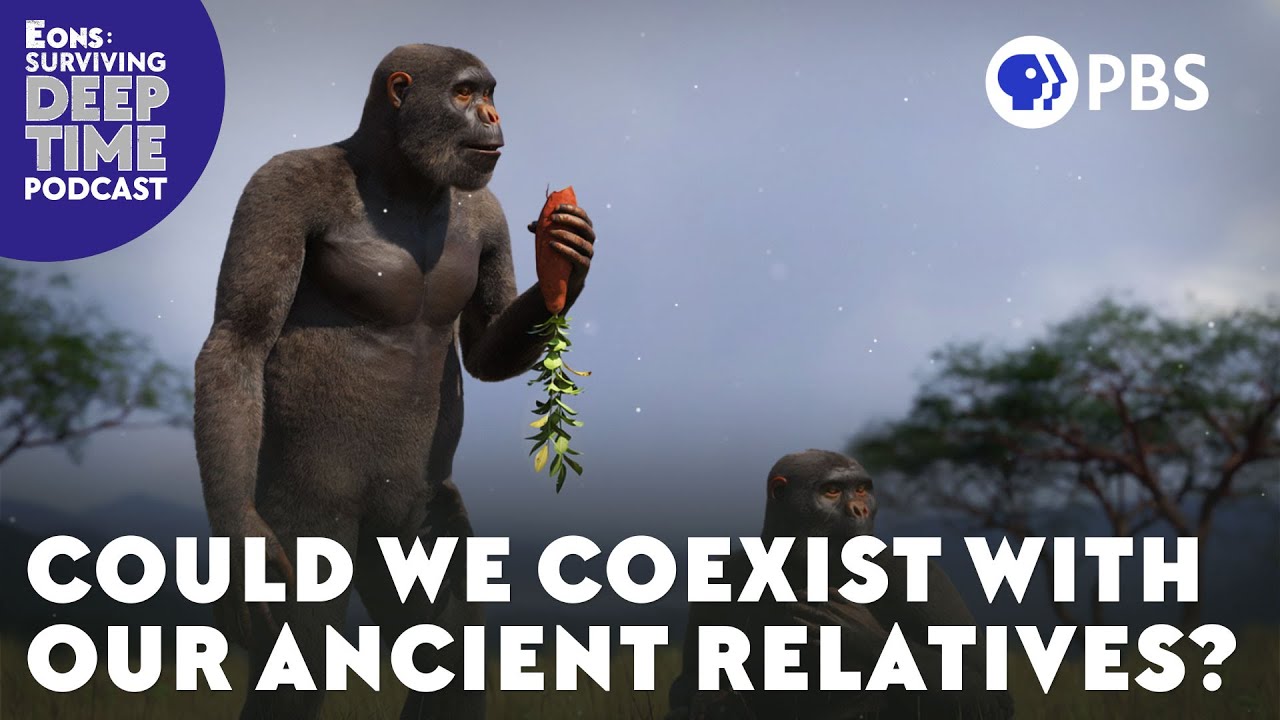
Could You Survive Living With Other Hominin Species?
Keywords
Summary
137 words
Critical Evaluation
Value of the Information & Strength of the Argument
The value of the information lies in its accessible presentation of paleoanthropological knowledge, including specific fossil evidence and behavioral inferences. The hosts effectively argue that behavioral flexibility, particularly in diet and tool use, was crucial for Homo’s survival, while Paranthropus’s specialization may have contributed to its extinction. The argumentation is solid, grounded in cited research, though the speculative nature of the survival scenario introduces some uncertainty. The discussion is well-structured, moving from environmental hazards to food and water, and finally to social interactions, providing a comprehensive overview.
Scientific Rigor, Source Quality, Title Accuracy
The scientific rigor is high, with references to specific fossil sites and studies, such as the evidence of fire use at Koobi Fora and the identification of diseases like yaws in ancient hominins. The sources are credible, primarily from peer-reviewed research, though the podcast format limits the depth of citation. The title accurately reflects the content, which is a hypothetical survival scenario rather than a purely factual account. The hosts maintain a balance between entertainment and education, ensuring that the scientific content is not compromised.
187 words
Title / Content Match
The title accurately reflects the content, which explores the hypothetical survival of a modern human among early Pleistocene hominins.
Quality & Reliability
8/10
The hosts are knowledgeable and reference scientific studies, but the format is a speculative discussion with some informal banter, limiting the depth of verification.
Key Moments
Markers derived by PSI from the transcript: the creator did not define chapters.
- Introduction to the early Pleistocene setting and the presence of multiple hominin species.
- Discussion of animal hazards, including giant baboons and large carnivores.
- Exploration of food and water sources, including the use of fire.
- Consideration of diseases and parasites that could be transmitted from other hominins.
- Hypothetical interactions with other hominins, including communication through song and dance.
- Analysis of the adaptability of Homo versus the specialization of Paranthropus.
- Discussion of the importance of behavioral flexibility for survival.
- Final thoughts on the likelihood of survival and the legacy of early hominins.
Cited Sources
- References for Eons: Surviving Deep Time — The episode's reference list, containing scientific sources for the discussed topics.
- PBS Donation Page — Support page for PBS Member Stations, mentioned in the episode.
Concurring Sources
- Homo erectus — General information on Homo erectus, supporting the discussion of its adaptability.
- Paranthropus boisei — Details on Paranthropus boisei, supporting the discussion of its specialized diet.
Contribution & Novelties
The episode provides a unique perspective by combining scientific facts with a speculative survival scenario, making paleoanthropology more relatable. It highlights the diversity of hominin species and the challenges they faced, offering a fresh angle on human evolution.
Pour aller plus loin :
- Homo erectus — Key species discussed, known for its adaptability and long survival.
- Paranthropus boisei — Specialized hominin with robust jaws, contrasting with Homo’s flexibility.
- Koobi Fora — Archaeological site with evidence of early fire use and hominin activity.
82 words
Radar Profile
The radar profile shows high scores in information quantity and quality, with moderate technical level and reliability. This indicates a well-informed discussion that is accessible to a general audience, though it may not delve deeply into technical details.
💬 Très positif. Sur les 30 commentaires analysés, les auditeurs expriment un fort enthousiasme pour le format long et les échanges entre les animateurs, tout en appréciant la profondeur des informations et l'aspect spéculatif.