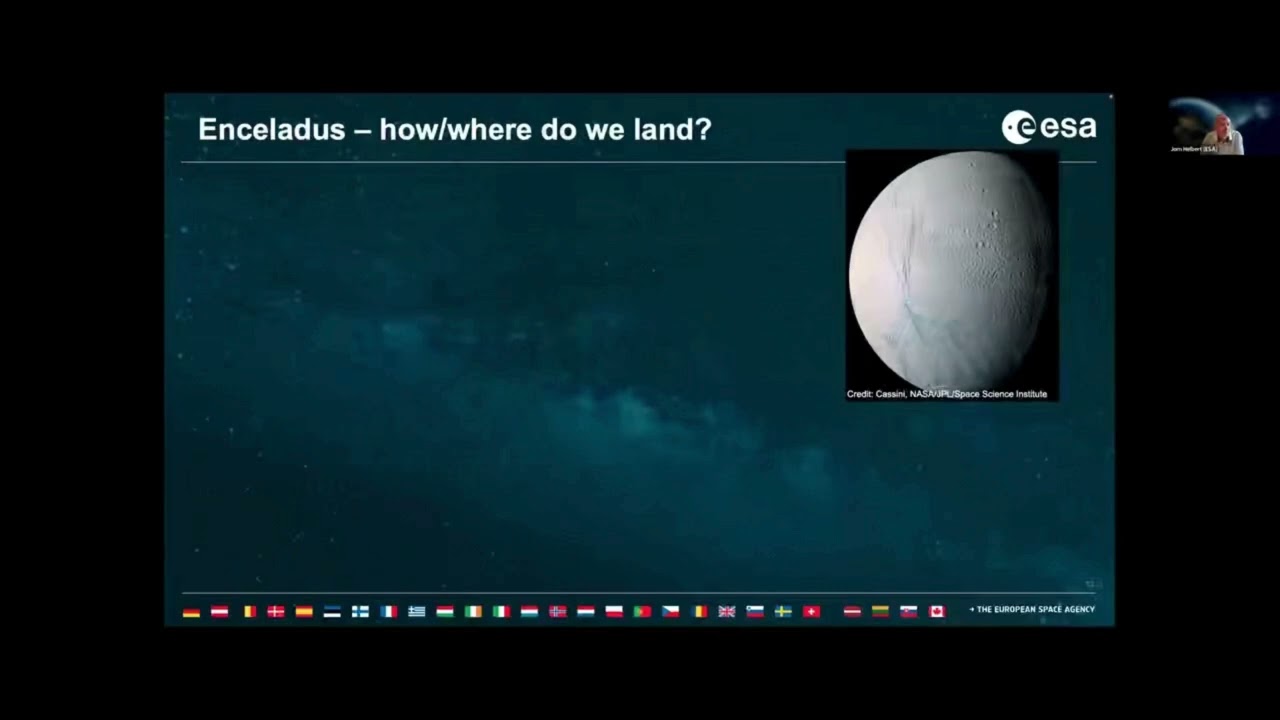
The Mission to Enceladus – The ESA L4 mission
Keywords
Summary
165 words
Critical Evaluation
Value of the Information & Strength of the Argument
The presentation provides valuable insights into the scientific rationale and mission architecture for a flagship mission to Enceladus. It clearly argues for the importance of exploring ocean worlds and directly sampling the plumes to assess habitability. The argumentation is solid, building on Cassini’s findings and the assessment of an expert committee. The feasibility is supported by two independent industry studies, and the speaker emphasizes the need for early technology development. The presentation is persuasive and well-structured, though it lacks detailed scientific data or comparisons with alternative mission concepts.
Scientific Rigor, Source Quality, Title Accuracy
The scientific rigor is high, as the presentation is based on established knowledge from the Cassini mission and ongoing ESA mission studies. However, no specific sources are cited, and the claims are not backed by external references. The title accurately reflects the content, and the presentation is consistent with known ESA plans. The speaker’s expertise adds credibility, but the lack of citations limits the ability to verify specific claims.
172 words
Title / Content Match
The title accurately reflects the content, which focuses on the ESA L4 mission to Enceladus.
Quality & Reliability
8/10
Presentation by a senior ESA scientist, based on ongoing mission studies and expert committee assessments. Claims are plausible and consistent with known mission planning processes, but no external sources are cited.
Key Moments
Markers derived by PSI from the transcript: the creator did not define chapters.
- Introduction to Voyage 2050 and the selection of Enceladus as the target.
- Discussion of the expert committee's assessment and the scientific questions.
- Overview of the Saturnian system and the importance of Enceladus.
- Cassini's discoveries and the significance of the plumes.
- Mission architecture: orbiter, lander, and dual-launch concept.
- Landing challenges and technology development.
- Timeline and milestones, including adoption and launch dates.
- Current work on payload and technology maturation.
- Q&A on cost, power, and community involvement.
Contribution & Novelties
The presentation provides an up-to-date overview of the ESA L4 mission to Enceladus, highlighting the mission’s ambitious architecture and the need for early technology development. It emphasizes the unique opportunity to directly sample the subsurface ocean via the plumes, which is a key novelty compared to previous missions. The presentation also discusses the feasibility studies and the timeline, offering a realistic perspective on the mission’s development.
Pour aller plus loin :
- Enceladus - Wikipedia — Provides background on the moon and its plumes.
- Cassini-Huygens - NASA — Overview of the Cassini mission that discovered the plumes.
- Voyage 2050 - ESA — ESA’s long-term plan for space science missions.
108 words
Radar Profile
The radar profile shows high scores in information quantity, quality, and reliability, with a slightly lower technical level. This indicates a well-informed and credible presentation that is accessible to a broad audience, though it may not delve deeply into technical details.