The ESA Science Program
Keywords
Summary
129 words
Critical Evaluation
Value of the Information & Strength of the Argument
The talk provides valuable insights into the strategic planning and execution of ESA’s science missions, emphasizing the importance of long-term funding and international collaboration. Mundell’s argumentation is solid, based on her direct experience and concrete examples of mission successes and challenges. She effectively demonstrates the scientific and technological value of the program, though the presentation is more descriptive than analytical, lacking deep technical details or critical evaluation.
Scientific Rigor, Source Quality, Title Accuracy
The presentation is scientifically rigorous, with information drawn from official ESA missions and data. However, specific sources are not cited in the talk, and the description provides no links. The title accurately reflects the content, which is a broad overview of the ESA Science Program. The talk is an expert opinion, and while it is authoritative, it does not include peer-reviewed references or detailed data analysis.
148 words
Title / Content Match
The title accurately reflects the content, which is a comprehensive overview of the ESA Science Program.
Quality & Reliability
8/10
Presentation by the ESA Director of Science, providing authoritative insights into the agency's science program, missions, and strategic priorities. The information is based on direct involvement and official data, but lacks detailed citations and is delivered in a conference talk format.
Key Moments
Markers derived by PSI from the transcript: the creator did not define chapters.
- Introduction to ESA's 50th anniversary and the mandatory science program.
- Overview of iconic missions: Rosetta, XMM-Newton, Mars Express, and Planck.
- Discussion of upcoming missions: Smile, Plato, Ariel, and Comet Interceptor.
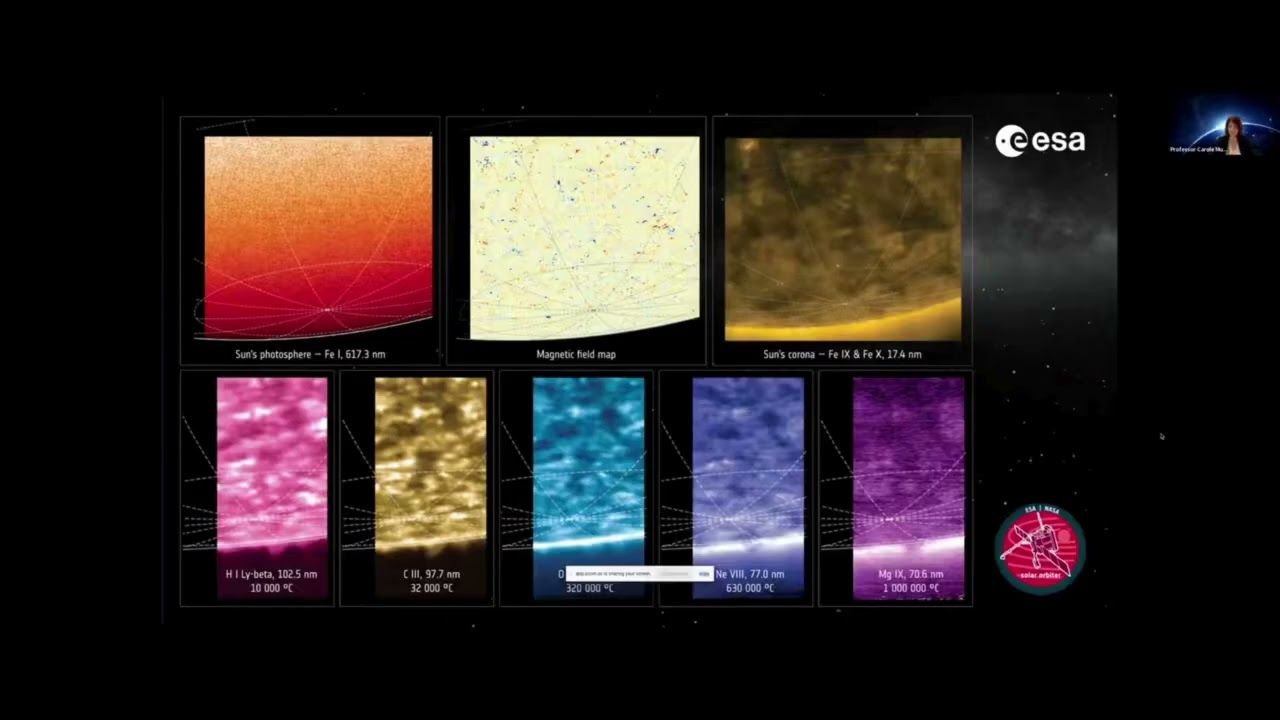
- Focus on Solar Orbiter and its recent polar views of the Sun.
- BepiColombo mission challenges and Mercury flyby science.
- JUICE mission and the Earth-Moon gravity assist flyby.
- Gaia mission's end and its contributions to solar system science.
Contribution & Novelties
The talk provides an authoritative, up-to-date overview of ESA’s science program, highlighting recent achievements and future missions. It offers unique insights into the strategic and operational aspects of space science, particularly the importance of long-term funding and international collaboration. The presentation also underscores the serendipitous science that arises from well-designed missions, such as Gaia’s contributions to solar system studies.
Pour aller plus loin :
- ESA Science Programme — Official ESA page detailing the science program and missions.
- Solar Orbiter — ESA mission page for Solar Orbiter.
- BepiColombo — ESA mission page for BepiColombo.
- JUICE — ESA mission page for JUICE.
- Comet Interceptor — ESA mission page for Comet Interceptor.
109 words
Radar Profile
The radar profile shows high scores in information quantity, quality, and reliability, reflecting the authoritative and comprehensive nature of the talk. The technical level is moderate, indicating accessibility to a general scientific audience. The overall profile suggests a well-rounded, informative presentation.