Elements of the future space program of ESA and NASA
Keywords
Summary
120 words
Critical Evaluation
Value of the Information & Strength of the Argument
The talk provides valuable insider perspectives on the scientific priorities and programmatic processes of ESA and NASA. Coustenis effectively argues for the importance of international collaboration, citing specific examples of mission synergies and potential barriers. Her argumentation is based on her extensive experience and knowledge of the decadal survey and Voyage 2050, making it credible. However, the talk is more of a personal reflection than a rigorous scientific argument, with some anecdotal elements.
Scientific Rigor, Source Quality, Title Accuracy
The speaker is a highly credible scientist, and the content aligns with official programmatic documents (Voyage 2050, Decadal Survey). However, specific sources are not cited in the video, and the talk is based on personal knowledge. The title accurately reflects the content. No comments were provided for analysis.
136 words
Title / Content Match
The title accurately reflects the content, which discusses future ESA and NASA missions and programmatic elements.
Quality & Reliability
8/10
The speaker is a senior planetary scientist with direct involvement in major missions (Cassini-Huygens) and in the decadal survey process. The content is based on personal experience and knowledge of official programmatic documents (Voyage 2050, Decadal Survey). However, the talk is an opinion/perspective piece, not a peer-reviewed study, and some statements are anecdotal.
Key Moments
Markers derived by PSI from the transcript: the creator did not define chapters.
- Introduction and context of the talk.
- Mention of ESA's Voyage 2050 and NASA's Decadal Survey.
- Discussion of the Decadal Survey's recommendation for Uranus Orbiter and Probe.
- Emphasis on Enceladus as a priority target.
- Personal reflections on career and inspiration from Carl Sagan.
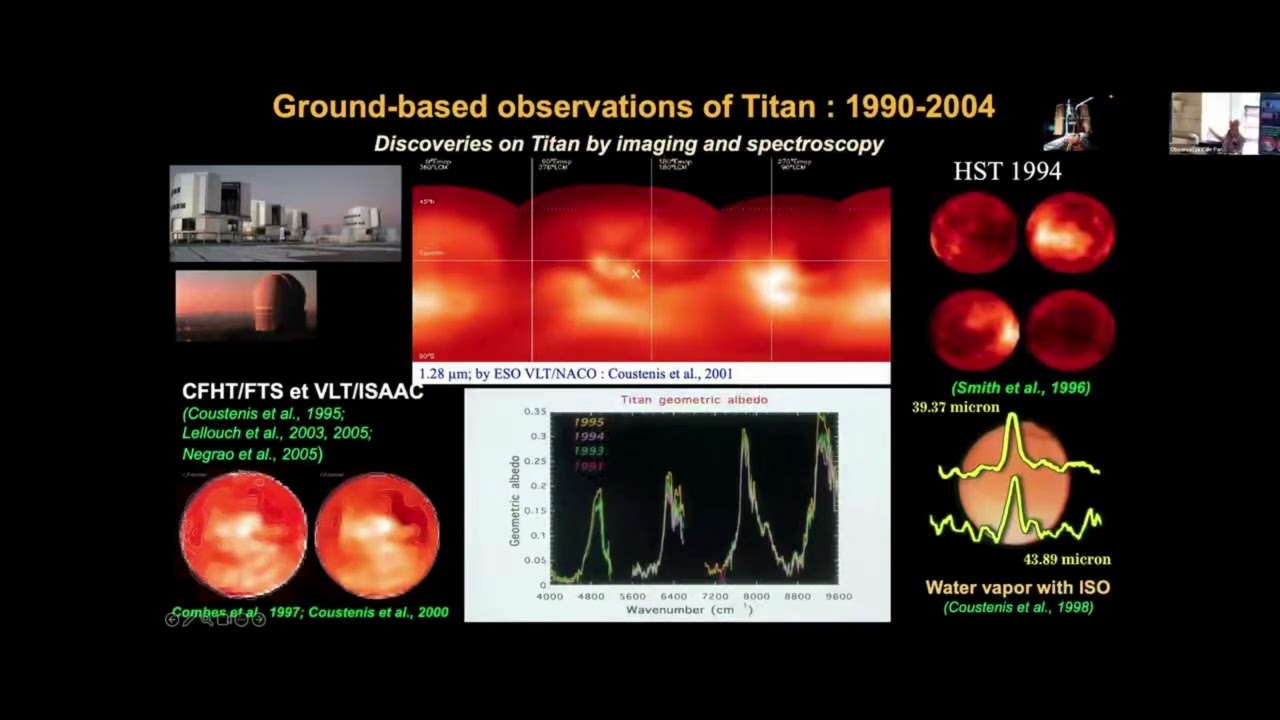
- Discussion of ground-based observations and adaptive optics.
- Memories of Cassini-Huygens mission and team.
- Mention of Titan mission concepts and TSSM.
- Discussion of international collaboration benefits and barriers.
- Concluding remarks and tribute to Carl Sagan.
Cited Sources
- Voyage 2050 — Mentioned as ESA's long-term plan for space science missions.
- Origins, Worlds, and Life: A Decadal Strategy for Planetary Science and Astrobiology 2023-2032 — Referenced as the NASA Decadal Survey that recommended Uranus Orbiter and Probe.
Concurring Sources
- Voyage 2050 — ESA's plan includes themes that align with the talk's emphasis on icy moons and ice giants.
- Origins, Worlds, and Life: A Decadal Strategy for Planetary Science and Astrobiology 2023-2032 — The decadal survey recommends Uranus Orbiter and Probe and Enceladus missions, matching the talk's content.
Contribution & Novelties
The talk provides a unique personal perspective on the convergence of ESA and NASA future plans, highlighting the importance of international collaboration. It offers insights into the scientific rationale for exploring icy moons and ice giants, and underscores the value of ground-based observations. The speaker’s career anecdotes add a human element to the discussion of space exploration.
Pour aller plus loin :
- Voyage 2050 — Official ESA page for the Voyage 2050 program.
- Origins, Worlds, and Life: A Decadal Strategy for Planetary Science and Astrobiology 2023-2032 — The full decadal survey report.
- Cassini-Huygens mission — NASA overview of the Cassini-Huygens mission.
101 words
Radar Profile
The radar profile shows high scores in quality and reliability, reflecting the speaker's expertise and credible content. The quantity of information is moderate, and the technical level is accessible to a broad audience. The overall balance indicates a reliable and informative talk.