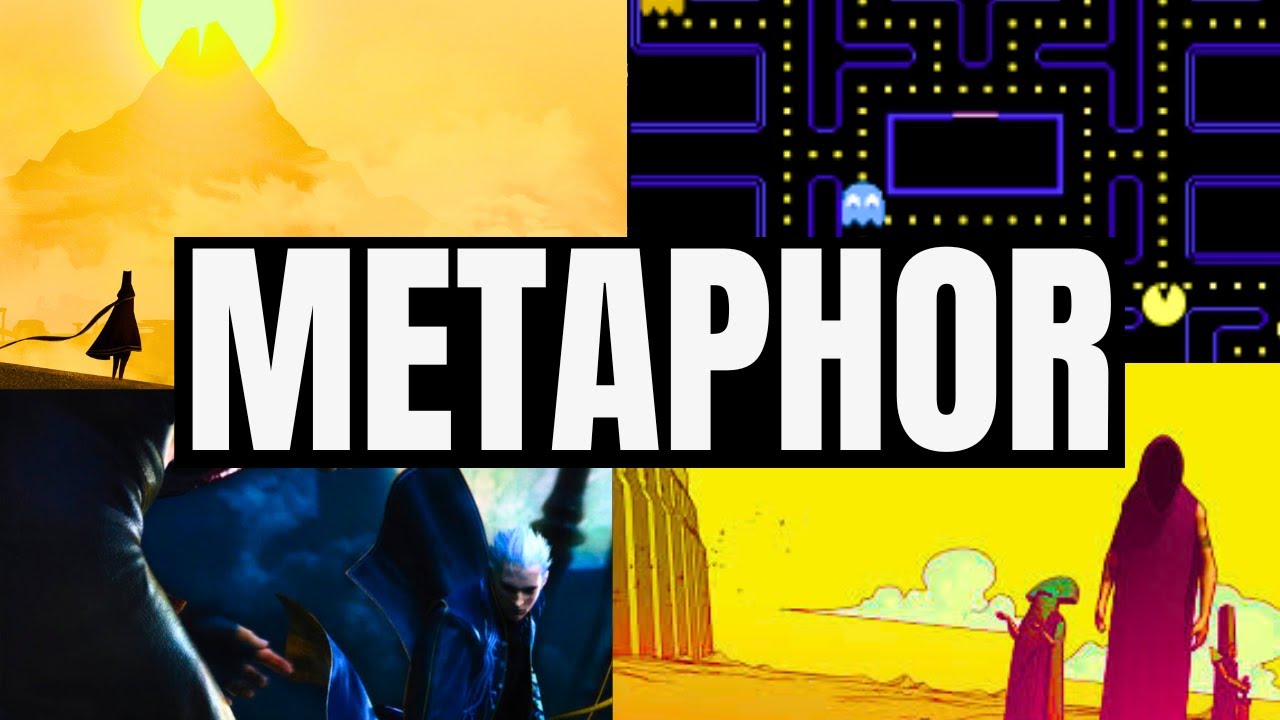
How Games use Metaphors to Convey Meaning | Symbolism and Allegory through Play
Keywords
Summary
139 words
Critical Evaluation
Value of the Information & Strength of the Argument
The video provides valuable insights into the use of metaphor in games, synthesizing academic theories and applying them to concrete examples. The argumentation is solid, building a coherent case for the importance of metaphorical analysis in understanding game meaning. It acknowledges counterarguments, such as Miguel Sicart’s critique of proceduralism, and incorporates them into a nuanced perspective. The analysis of Devil May Cry 3 is particularly compelling, demonstrating how gameplay mechanics can reinforce thematic elements.
Scientific Rigor, Source Quality, Title Accuracy
The video demonstrates strong scientific rigor by referencing established academic works and providing citations. The sources are relevant and credible, including books by Brenda Laurel, Janet Murray, Ian Bogost, and others. The title accurately reflects the content, and the video stays on topic throughout. The inclusion of a critical perspective (Sicart) enhances its credibility. The video does not include any advertising or sponsored content.
153 words
Title / Content Match
The title accurately reflects the content, which focuses on how games use metaphors, symbolism, and allegory to convey meaning.
Quality & Reliability
8/10
The video provides a well-structured and academically informed analysis, citing key works in game studies and literary theory. The arguments are coherent and supported by examples, though some interpretations are subjective and not empirically verified.
Chapters
- Metaphors , symbolism and procedural rhetoric in games
- How games create meaning : Semiotics, Human computer interaction and the history of metaphor discourse
- Game Design and Metaphorical meaning
- How Play is a Metaphor for Culture
- A Theory of Allegory for Games : On Allegorithms and ambiguous meaning
- The Player as Trickster : A Metaphorical analysis of Devil may cry 3
Cited Sources
- Against Procedurality — Cited as a response to proceduralism, arguing that meaning resides in player-driven dynamics.
- Games and Metaphor - A critical analysis of the metaphor discourse in game studies — Referenced for its analysis of metaphor in game studies and the distinction between internal and external metaphors.
Concurring Sources
- Computers as Theater — Referenced for the idea that games are a form of theater.
- Hamlet on the Holodeck — Referenced for introducing the term 'procedural' and discussing Tetris as a metaphor.
- Persuasive Games — Referenced for coining 'procedural rhetoric'.
Dissenting Sources
- Against Procedurality — Sicart argues that meaning in games is not solely in the rules but in player interpretation, challenging the proceduralist view.
Contribution & Novelties
The video offers a comprehensive synthesis of existing theories on metaphor in games, bridging procedural rhetoric, semiotics, and literary allegory. It introduces the concept of ‘allegorithm’ and applies it to a detailed analysis of Devil May Cry 3, demonstrating how gameplay mechanics can embody allegorical meaning. The discussion of the player as trickster adds a novel perspective on player agency and interpretation.
Pour aller plus loin :
- Procedural Rhetoric — Overview of Ian Bogost’s concept.
- Semiotics — Foundational theory of signs and symbols.
- Allegory — Literary device discussed in the video.
- Trickster — Archetype explored in the analysis.
98 words
Radar Profile
The radar profile shows high scores in information quantity, quality, and technical level, indicating a well-researched and detailed analysis. The overall reliability is also high, reflecting the use of credible academic sources. The video is strong in all dimensions, with no significant weaknesses.