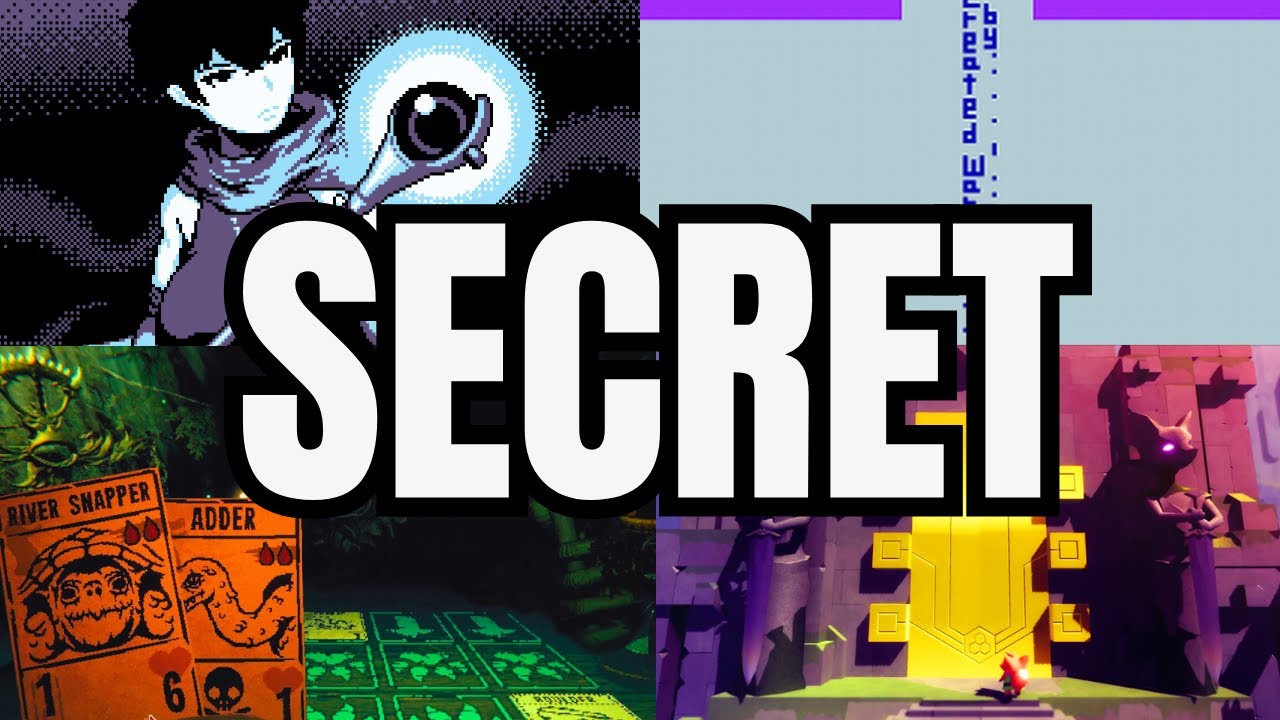
The Mysterious Art of Secrets in Game Design
Keywords
Summary
138 words
Critical Evaluation
Value of the Information & Strength of the Argument
The video provides valuable insights into the design and cultural significance of secrets in games. It effectively argues that secrets are not just superficial additions but can be integral to a game’s meaning and player experience. The argumentation is solid, supported by references to academic literature and developer talks. However, some claims are subjective and could benefit from more concrete examples or empirical evidence.
Scientific Rigor, Source Quality, Title Accuracy
The video demonstrates strong scientific rigor by citing academic books and GDC talks, which are credible sources in the field. The sources are relevant and well-integrated into the argument. The title accurately reflects the content, and the video stays focused on its thesis. The inclusion of spoiler warnings and timestamps shows consideration for the audience.
134 words
Title / Content Match
The title accurately reflects the content, which explores the role and design of secrets in games.
Quality & Reliability
8/10
The video presents a well-structured analysis grounded in academic references and GDC talks, but relies heavily on subjective interpretation and lacks empirical data.
Chapters
- Secrets, Easter Eggs and Cheats
- Designing for Secrets
- How Secrets are Used by Culture
- Void Stranger and the Riddle of Labyrinths
- Genre Transcending Secrets
- Inscryption and the Divinity of Randomness
- Inscryption Spoilers
- The "Real" Meaning of a game
- Tunic and the Legacy of Secrets
- Tunic Spoilers
- The Secret of Secrets
Cited Sources
- GDC 2014: A Fun Time in Which — Yoko Taro's GDC talk on concealing elements from players.
- Interactive Fiction: The Computer Storygame 'Adventure' — Mary Ann Buckles' academic work on Colossal Cave Adventure.
- TUNIC: This Was Here — GDC talk on Tunic's design and secrets.
- Occult Game Design: An Initiation — Jeff Howard's talk on occult game design and secrets.
- A Fun Time in Which — Yoko Taro's GDC talk on hiding elements in games.
Concurring Sources
- The Puzzle Instinct — Danesi's book on puzzles and their role in human cognition.
- Homo Ludens — Huizinga's work on the play element in culture.
- The Ambiguity of Play — Sutton-Smith's analysis of play's various meanings.
Contribution & Novelties
The video offers a comprehensive synthesis of existing theories on secrets in games, connecting them to broader cultural and historical contexts. It provides a novel framework for understanding secrets as a form of communication between designer and player, akin to riddles. The analysis of specific games like Void Stranger and Tunic illustrates these concepts in practice.
Pour aller plus loin :
- The Puzzle Instinct — Explores the human affinity for puzzles and their cultural significance.
- Homo Ludens — Huizinga’s foundational work on the play element in culture.
- The Ambiguity of Play — Sutton-Smith’s examination of play’s multiple meanings.
98 words
Radar Profile
The radar profile shows high scores in information quantity and quality, with moderate technical level and reliability. This indicates a well-researched and informative video, though it may rely more on interpretation than hard data.