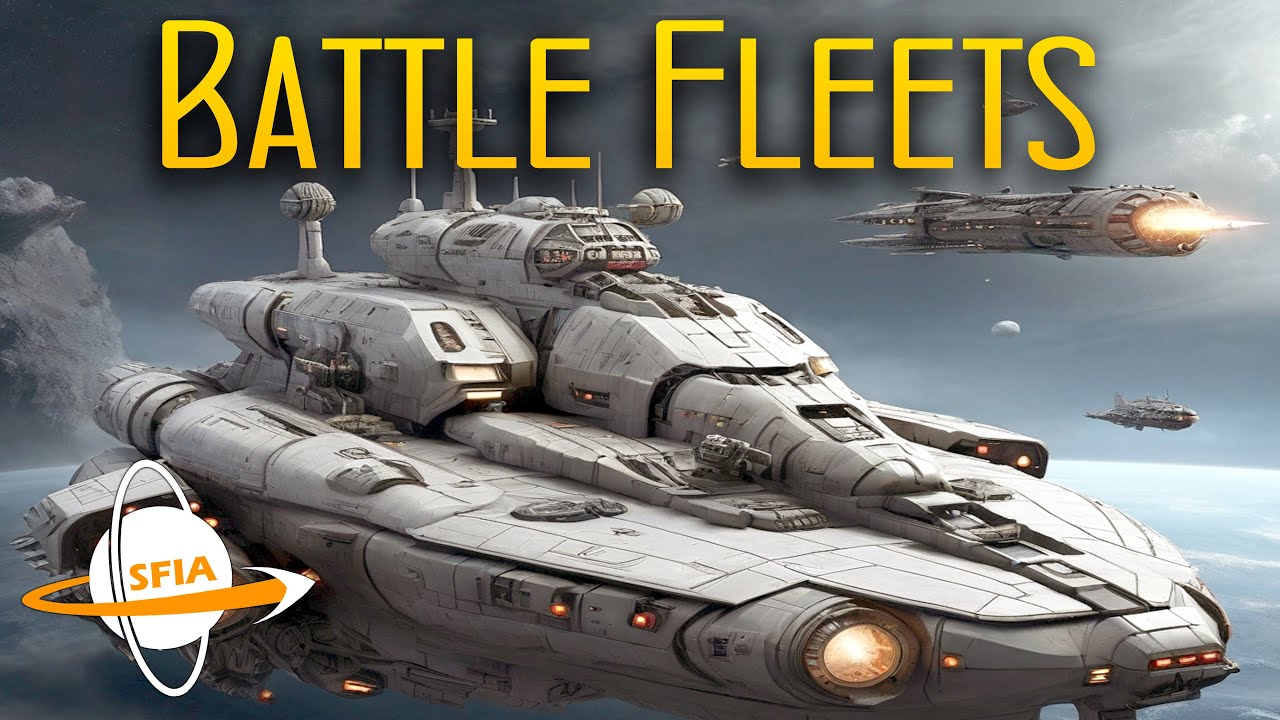
Battlefleets
Keywords
Summary
148 words
Critical Evaluation
Value of the Information & Strength of the Argument
The video provides a high value of information by systematically analyzing the physical constraints of space combat and applying them to fleet design and strategy. Arthur’s argumentation is solid, as he consistently grounds his speculations in known physics and historical military principles. He effectively challenges common science fiction tropes, such as the effectiveness of vaporization weapons and the practicality of planetary bombardment, by using quantitative reasoning. The discussion on engagement times and the ’ecosystem’ model of fleet composition is particularly insightful, offering a nuanced perspective that goes beyond simple naval analogies.
Scientific Rigor, Source Quality, Title Accuracy
The video demonstrates scientific rigor by clearly distinguishing between established physics and speculative future technology. Arthur references his own background in physics and military service to establish credibility, and he mentions works by authors like Robert Heinlein and David Weber as sources of inspiration, though he does not provide formal citations. The title ‘Battlefleets’ accurately reflects the content, which is a focused exploration of fleet composition and strategy. The video’s speculative nature is acknowledged, and Arthur is careful to note that many factors could change the outcome, maintaining a balanced and honest tone.
199 words
Title / Content Match
The title accurately reflects the content, which focuses on the composition, strategy, and technology of future space battlefleets.
Quality & Reliability
8/10
The video is a well-researched speculative analysis grounded in physics and military history, presented by a creator with relevant background (physics degree, military service). It clearly distinguishes speculation from established science, and while it lacks formal citations, it references credible sources and concepts.
Key Moments
Markers derived by PSI from the transcript: the creator did not define chapters.
- Introduction to the concept of space as not an ocean, debunking naval analogies.
- Discussion on the importance of engagement times and light-speed delays in space combat.
- Analysis of weapon types: lasers, projectiles, and missiles, and their roles in space warfare.
- Exploration of fleet composition, including the role of carriers, drones, and diverse ship classes.
- Discussion on the economics of building and maintaining fleets, and the concept of 'no free lunch'.
- Examination of planetary defenses and the strategic value of fortified systems.
- Consideration of AI and automation in future warfare, and the limits of conscious minds in combat.
- Discussion on the potential for relativistic projectiles and the dangers of debris in space combat.
- Conclusion summarizing key principles and the uncertainty of future space warfare.
Cited Sources
- Isaac Arthur's Website — Official website for the show, providing additional resources and episode archives.
- Nebula Exclusive Video: Jupiter Brains & Mega Minds — Promoted as an exclusive video on Nebula, likely related to megastructures and AI.
- Nebula Subscription Link — Link to subscribe to Nebula with a discount, supporting the channel.
- Nebula Lifetime Membership — Link to purchase a lifetime membership to Nebula.
- Reddit Community — Subreddit for fans to discuss episodes and topics.
- Subscribestar Support — Platform for supporting the channel financially.
- Epidemic Sound — Music licensing service used for the episode's soundtrack.
Concurring Sources
- Children of a Dead Earth (game) — A game that simulates realistic orbital mechanics and space combat, aligning with the video's emphasis on physics-based warfare.
- The Expanse (TV series) — A series known for its realistic depiction of space combat, including the use of railguns and PDCs, consistent with the video's themes.
Dissenting Sources
- Star Wars (franchise) — Depicts space battles with naval analogies, dogfights, and sound in space, which the video argues are unrealistic.
Contribution & Novelties
The video offers a comprehensive and scientifically grounded exploration of future space battlefleets, synthesizing physics, military history, and speculative technology. It provides a novel framework for thinking about fleet composition as an ecosystem, and it challenges common sci-fi tropes with quantitative reasoning. The discussion on engagement times and the role of AI in combat is particularly insightful.
Pour aller plus loin :
- Relativistic Kill Vehicles — A concept directly related to the discussion of high-velocity projectiles in space combat.
- O’Neill Cylinder — A space habitat concept that could serve as a basis for large spacecraft or space stations, relevant to the discussion of ship sizes.
- Project Orion (nuclear propulsion) — A real concept for nuclear pulse propulsion, which could be relevant to the propulsion systems of future warships.
128 words
Radar Profile
The radar profile shows high scores in information quantity and technical level, indicating a dense and technically rich content. The quality and reliability scores are also high, reflecting the video's grounded approach. The overall balance suggests a well-rounded and informative piece.
💬 Très positif. Sur les 30 commentaires analysés, les spectateurs expriment une forte appréciation pour la qualité du contenu, la voix de l'animateur, et la profondeur des sujets abordés, avec quelques références à des œuvres de science-fiction.