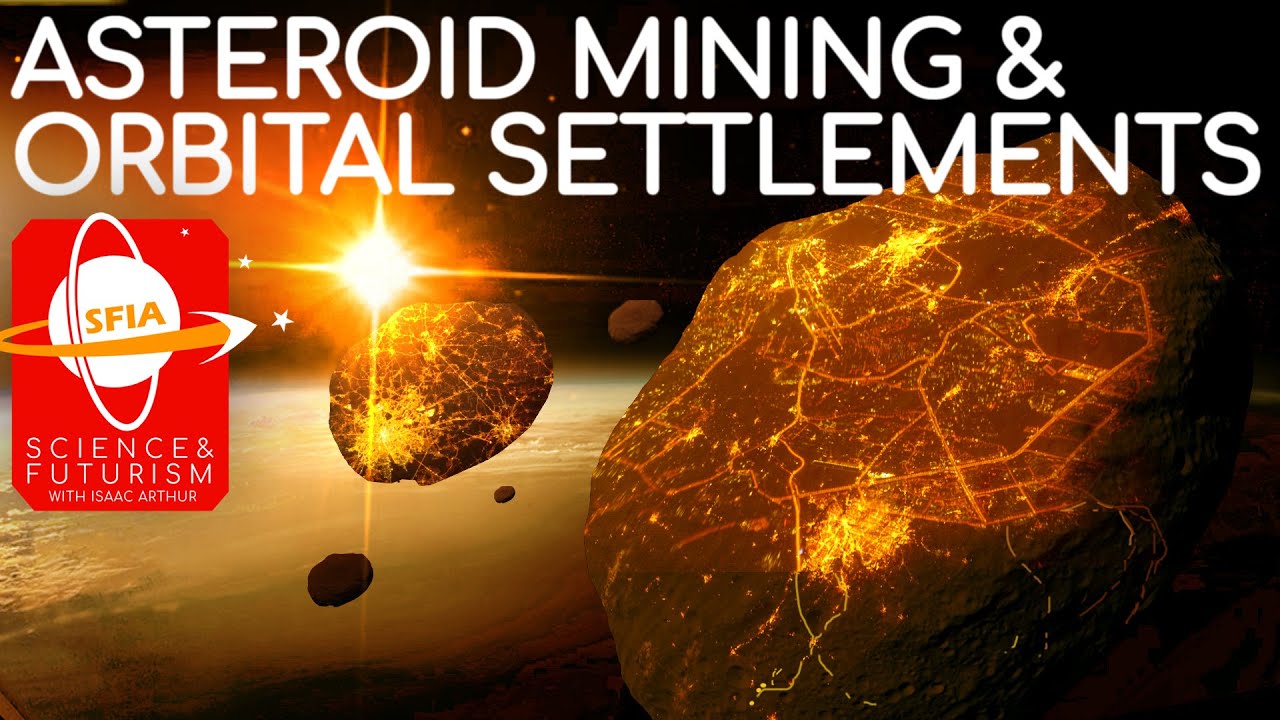
Asteroid Mining & Orbital Settlements
Keywords
Summary
171 words
Critical Evaluation
Value of the Information & Strength of the Argument
The video provides substantial value by synthesizing a wide range of concepts related to space colonization, from delta-v considerations to the economics of resource extraction. It argues convincingly that asteroid mining is a logical step in space development, supported by clear reasoning about the costs of lifting materials from gravity wells and the abundance of resources in near-Earth objects. The argumentation is solid, building on established principles and referencing specific missions like NASA’s Psyche probe. The presentation is forward-looking but grounded in current technological trajectories, making it a valuable resource for understanding the potential pathways to interplanetary settlement.
Scientific Rigor, Source Quality, Title Accuracy
The video demonstrates scientific rigor by referencing the National Space Society’s roadmap and specific missions, and by explaining technical concepts accurately. The quality of sources is good, with the NSS roadmap being a credible reference, though the video relies primarily on the narrator’s expertise rather than citing multiple academic sources. The title accurately reflects the content, and the video’s structure is coherent, moving from general principles to specific examples and future scenarios. The inclusion of a sponsorship segment is clearly marked and does not detract from the scientific content.
202 words
Title / Content Match
The title accurately reflects the content, which focuses on the utilization of asteroids for resources and as sites for orbital settlements, with a clear connection to the broader theme of space colonization.
Quality & Reliability
8/10
The video presents a well-structured, technically informed discussion of asteroid mining and orbital settlements, grounded in established concepts (e.g., delta-v, O'Neill cylinders, NSS roadmap). It avoids speculative claims without caveats and clearly distinguishes between current missions (e.g., Psyche) and future possibilities. The presentation is consistent with known scientific and engineering principles, though it remains a popular science overview rather than a peer-reviewed source.
Key Moments
Markers derived by PSI from the transcript: the creator did not define chapters.
- Introduction to the series and the topic of asteroid mining and orbital settlements.
- Discussion of Milestone 26: robotic characterization of near-Earth asteroids.
- Explanation of Milestone 27: utilization of asteroids for resources and shielding.
- Consideration of bringing asteroids to Earth orbit and the associated risks.
- Expansion of asteroids into hollowed-out habitats and cycler spacecraft.
- Focus on colonizing the asteroid belt and the potential of minor planets.
- Case study of 16 Psyche: its metallic composition and economic potential.
- Discussion of building habitats on and around Psyche, including space towers and mass drivers.
- Vision of a solar system filled with orbital settlements and cycler routes.
- Conclusion and preview of future episodes on life as a space colonist.
Cited Sources
- NSS Roadmap to Space Settlement (3rd Edition) — Referenced as the guide for the series and the source of milestones 26-28.
- CuriosityStream — Sponsor link mentioned in the video.
- Nebula — Streaming service mentioned for exclusive content.
- Isaac Arthur's Website — Mentioned as a source for support and additional content.
- SpaceHabs (Bryan Versteeg) — Graphics credit for the video.
- Epidemic Sound — Music credit for the video.
Concurring Sources
- NASA's Psyche Mission — The video mentions the upcoming NASA mission to 16 Psyche, which aligns with its discussion of asteroid exploration.
- O'Neill Cylinder Concept — The video discusses O'Neill cylinders as a form of orbital settlement, and this source provides background.
External References
Contribution & Novelties
The video offers a comprehensive and accessible synthesis of asteroid mining and orbital settlement concepts, integrating technical details with economic and strategic considerations. It presents a compelling vision of a solar system populated by millions of minor planets, each potentially becoming a habitat or industrial hub, which goes beyond the common focus on Mars or the Moon. The discussion of converting asteroids into cycler spacecraft and the emphasis on the economic logic of resource extraction are particularly insightful.
Pour aller plus loin :
- O’Neill cylinder — A key concept for orbital habitats, directly relevant to the video’s discussion of spin-gravity stations.
- 16 Psyche — The metallic asteroid featured as a case study; provides background on its composition and the NASA mission.
- Delta-v — Fundamental to understanding the economic arguments about moving materials in space.
- National Space Society Roadmap — The framework used in the video; offers a detailed plan for space settlement.
152 words
Radar Profile
The radar profile shows high scores in quantity of information and technical level, indicating a content-rich and moderately technical presentation. The quality and reliability scores are also strong, reflecting the video's solid grounding in established concepts. The overall profile suggests a well-balanced and informative piece, with slight emphasis on the breadth of information over deep technical detail.
💬 Très positif. Sur les 30 commentaires analysés, la grande majorité exprime de l'enthousiasme pour le contenu et de l'appréciation pour le travail d'Isaac Arthur, avec de nombreux hommages à son chat Prospero et des discussions sur les implications futures de la colonisation spatiale.