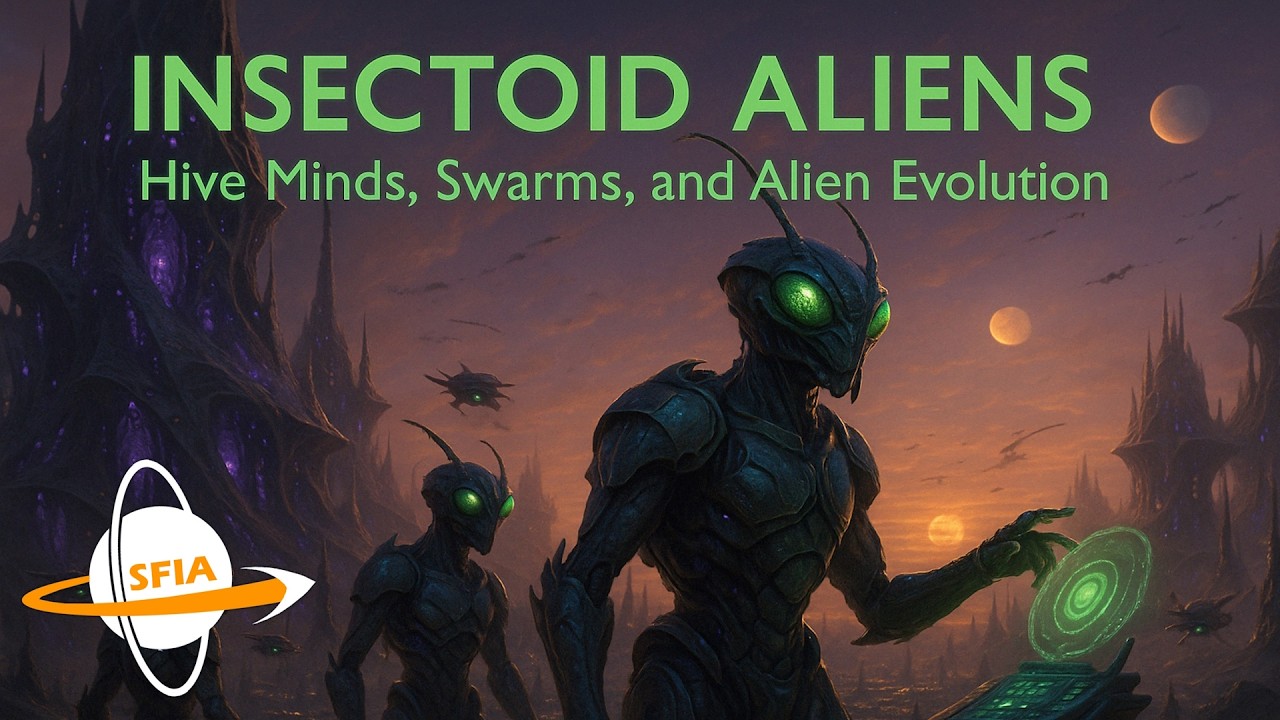
Insectoid Aliens - Hive Minds, Swarms, and Alien Evolution
Keywords
Summary
174 words
Critical Evaluation
Value of the Information & Strength of the Argument
The video provides substantial value by grounding speculative biology in real scientific principles, such as eusociality, exoskeleton mechanics, and communication methods. It systematically deconstructs common tropes (e.g., telepathic hive minds) and offers plausible alternatives based on Earth biology. The argumentation is solid, using examples like honeybee reproduction rates and termite mound engineering to support claims. The host clearly distinguishes between established science and informed speculation, which strengthens the credibility of the content.
Scientific Rigor, Source Quality, Title Accuracy
The video demonstrates scientific rigor by referencing real biological concepts and examples, though it does not cite specific academic papers. The host’s reputation for well-researched content adds to the reliability. The title accurately reflects the content, which is a comprehensive overview of insectoid alien possibilities. The description provides links to the channel’s website and community platforms, but no direct scientific sources are listed, which is a minor limitation for viewers seeking further reading.
160 words
Title / Content Match
The title accurately reflects the content, which systematically covers hive minds, swarms, and evolutionary pathways for insectoid aliens.
Quality & Reliability
8/10
The video presents a scientifically grounded exploration of insectoid alien biology and evolution, drawing on real biological principles (eusociality, exoskeletons, communication) and clearly distinguishing speculation from established science. The host is known for rigorous futurism content, and the episode includes appropriate caveats about the limits of our knowledge.
Key Moments
Markers derived by PSI from the transcript: the creator did not define chapters.
- Introduction: setting the stage for insectoid aliens, contrasting fiction with scientific possibilities.
- Hive Reproduction Strategy: comparing human and insect reproductive strategies, and the hybrid approach of social insects.
- Insectoid Evolutionary Paths: discussing the evolutionary divergence between arthropods and chordates, and constraints of exoskeletons.
- Signals in the Swarm: exploring communication methods beyond telepathy, such as pheromones and vibrations.
- Sensory Worlds: how insectoid senses (UV, polarized light, chemical) would shape their perception and culture.
- Intelligence & Individuality in Hive Species: challenging the 'mindless drone' trope and discussing potential for autonomy and conflict.
- Privacy: brief sponsor segment on VPN, then transition back to hive architecture.
- Hive Architecture & Technology: termite-inspired engineering, organic structures, and space habitats.
- Alien Ecology & Predators: how predators and competition shape hive evolution, and potential for ecosystem management.
- Cultural & Political Models: exploring governance models beyond a single queen, and diplomatic challenges.
- Spacefaring Adaptations: advantages of exoskeletons in space, generation ships, and asteroid colonization.
- Final Thoughts: summarizing the range of possibilities and the potential commonality of insectoid aliens.
Cited Sources
- Epidemic Sound — Music provided by Epidemic Sound, credited in the video description.
- Isaac Arthur Website — Official website for the channel, providing additional resources and information.
- Private Internet Access VPN — Sponsor link, offering a discount to viewers.
- Nebula — Streaming platform where Isaac Arthur's content is available.
- Reddit Community — Community discussion forum for the channel.
- Subscribestar — Platform for supporting the creator.
Concurring Sources
- Eusociality - Wikipedia — Supports the discussion of social insect behavior and the possibility of eusocial aliens.
- Exoskeleton - Wikipedia — Provides background on the advantages and limitations of exoskeletons, relevant to the video's analysis.
Contribution & Novelties
The video offers a comprehensive and scientifically informed perspective on insectoid aliens, moving beyond common tropes to explore a spectrum of biological and social possibilities. It synthesizes knowledge from entomology, evolutionary biology, and astrobiology to propose plausible alien designs and behaviors, such as hybrid reproductive strategies, chemical communication networks, and hive-based spacefaring adaptations. The discussion of individuality and conflict within hives adds nuance to the typical ‘hive mind’ concept.
Pour aller plus loin :
- Eusociality — Key biological concept underpinning hive societies.
- Exoskeleton — Structural basis for insectoid physiology and its constraints.
- Pheromone communication — Chemical signaling as a foundation for complex communication.
- Carboniferous period — Historical high-oxygen era enabling giant insects.
- Generation ship — Concept relevant to long-duration space travel for hive species.
124 words
Radar Profile
The radar profile shows a balanced performance across all dimensions, with slightly lower scores in technical depth and information quantity compared to quality and reliability. This indicates a well-rounded, accessible yet scientifically credible presentation, suitable for a broad audience interested in astrobiology and futurism.
💬 Très positif. Sur les 30 commentaires analysés, l'accueil est extrêmement enthousiaste, avec des références à des œuvres de science-fiction (Tyranids, Zerg, Ender's Game) et des discussions approfondies sur la biologie des insectes, montrant un public engagé et connaisseur.