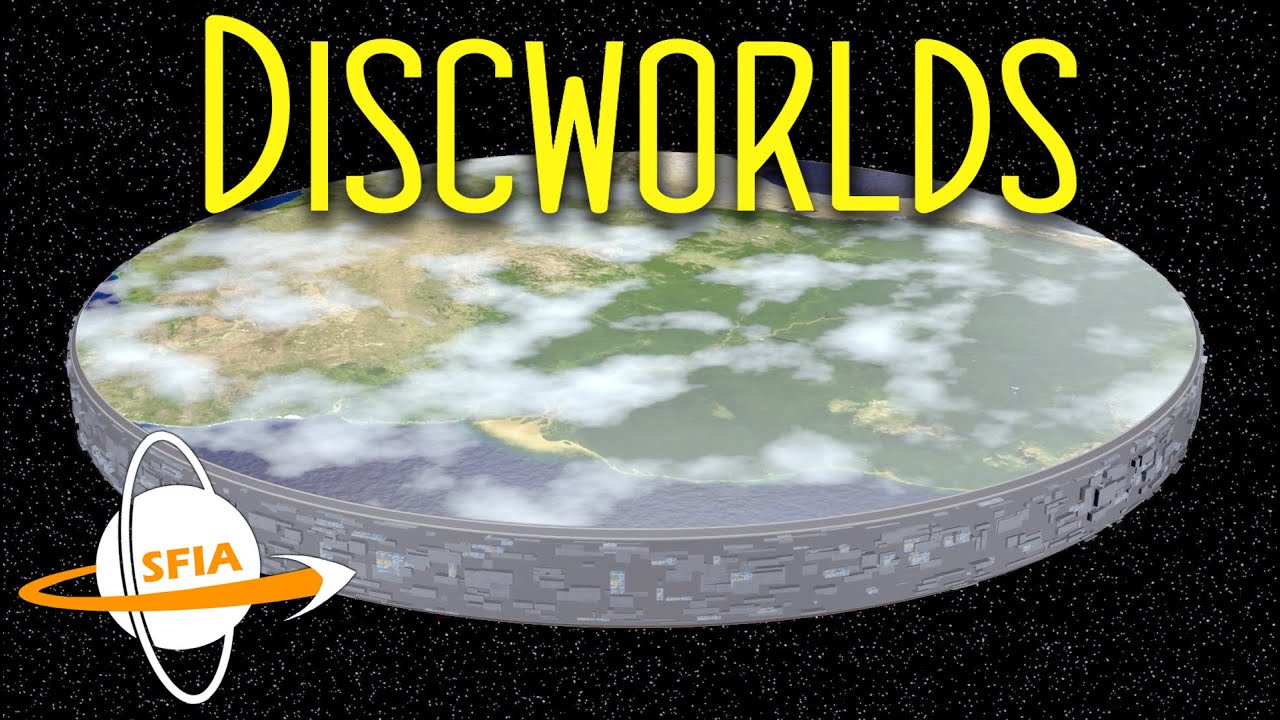
Discworlds: Flat Earths & Alderson Discs
Keywords
Summary
137 words
Critical Evaluation
Value of the Information & Strength of the Argument
The video provides substantial value by systematically deconstructing the physics of flat worlds, offering creative yet plausible engineering solutions. Arthur’s argumentation is solid, building from basic principles of gravity and orbital mechanics to propose active support structures. He acknowledges the impracticality of such megastructures but presents them as thought experiments that stretch our understanding of physics and engineering.
Scientific Rigor, Source Quality, Title Accuracy
The video demonstrates scientific rigor by grounding its speculative content in established physics, such as the inverse-square law and the concept of radiation pressure. While it does not cite specific academic papers, it references concepts like statites and orbital rings that are known in the scientific community. The title accurately reflects the content, and the video’s structure is logical and well-paced.
134 words
Title / Content Match
The title accurately reflects the content, which explores the feasibility and engineering of disc-shaped worlds.
Quality & Reliability
8/10
The video presents a rigorous, physics-based analysis of hypothetical megastructures, grounding speculative concepts in established principles of orbital mechanics, gravity, and materials science. The reasoning is internally consistent and acknowledges limitations, though it does not cite specific academic sources.
Key Moments
Markers derived by PSI from the transcript: the creator did not define chapters.
- Introduction to flat worlds and tribute to Terry Pratchett.
- Discussion of the Flat Earth Society model and its lighting system.
- Explanation of the Alderson Disk and its lighting challenges.
- Introduction of statites as a solution for lighting the disk.
- Analysis of gravity on a flat disk and the problem of central pull.
- Proposal of using orbital rings and space fountains for structural support.
- Discussion of artificial gravity and the possibility of gravity generators.
- Comparison of discworlds to shellworlds and conclusion on their practicality.
Cited Sources
- Isaac Arthur Website — Official website for additional content and resources.
- Nebula — Streaming platform hosting Isaac Arthur's videos.
- Reddit Community — Community discussion forum for the channel.
- Subscribestar — Platform for supporting the creator.
Concurring Sources
- Alderson Disk — Wikipedia article on Alderson Disks, consistent with the video's description.
- Statite — Wikipedia article on statites, supporting the video's lighting solution.
Contribution & Novelties
The video offers a novel, physics-based analysis of disc-shaped worlds, proposing active support structures as a solution to gravitational collapse. It also introduces the concept of using statites for lighting, which is a creative extension of existing ideas.
Pour aller plus loin :
- Alderson Disk — Wikipedia article providing background on the concept.
- Statite — Wikipedia article explaining the concept of a statite.
- Orbital ring — Wikipedia article on orbital rings as a megastructure concept.
75 words
Radar Profile
The radar profile shows high scores in information quantity and quality, with a strong technical level and reliability. This indicates a well-researched and informative video that balances speculative content with scientific rigor.
💬 Très positif. Sur les 30 commentaires analysés, les spectateurs expriment une admiration quasi unanime pour la qualité du contenu, la rigueur scientifique et l'hommage rendu à Terry Pratchett, avec quelques remarques humoristiques sur les théories de la Terre plate.