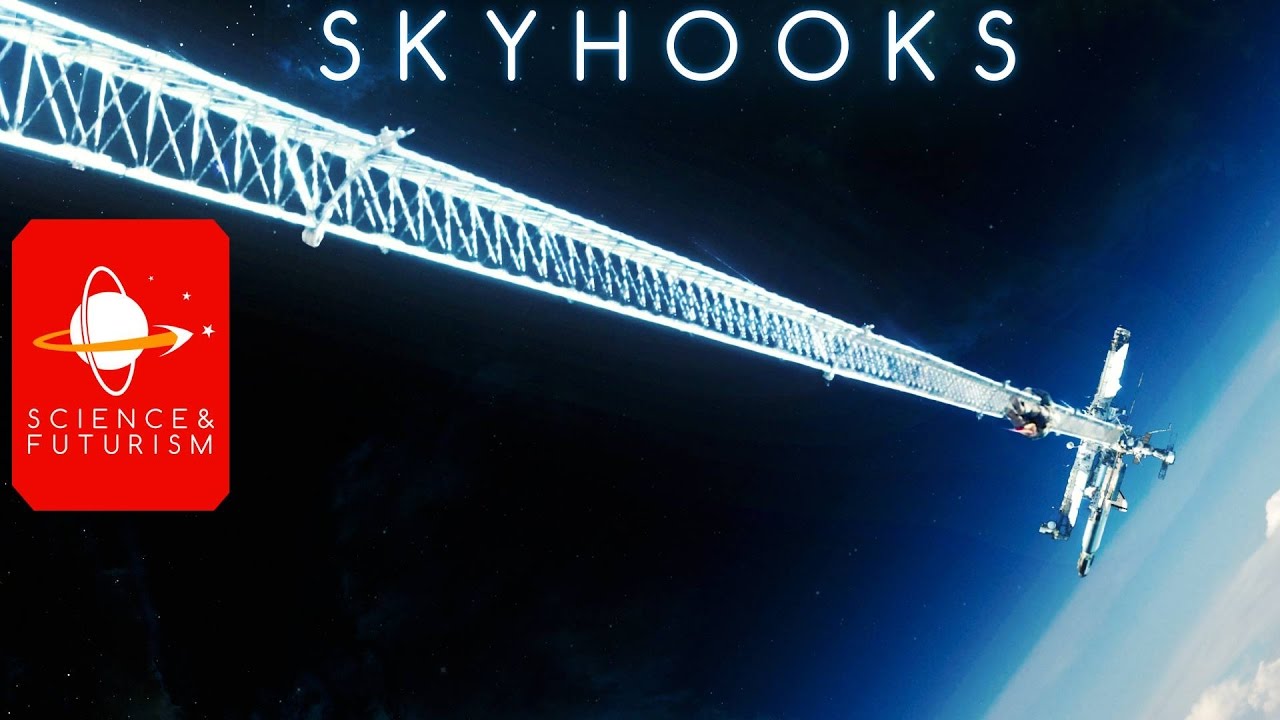
Skyhooks & Rotovators
Keywords
Summary
179 words
Critical Evaluation
Value of the Information & Strength of the Argument
The video provides substantial value by clearly explaining complex orbital mechanics concepts in an accessible manner, using analogies and step-by-step reasoning. The argumentation is solid, systematically addressing the physics of tethers, the benefits of reduced launch speeds, and the challenges of momentum conservation and material strength. The presenter acknowledges limitations and trade-offs, such as the impact of air drag and tether spinning constraints, which strengthens the credibility of the analysis. The inclusion of specific examples like the HASTOL study and the discussion of momentum regeneration techniques adds practical depth.
Scientific Rigor, Source Quality, Title Accuracy
The video demonstrates scientific rigor by grounding its explanations in established principles of orbital mechanics and engineering. It references the Boeing HASTOL study and mentions other tether concepts, providing a credible basis for the discussion. The title accurately reflects the content, focusing on skyhooks and rotovators as launch assist systems. The presentation is well-structured, with clear explanations and appropriate caveats about technological readiness and safety.
169 words
Title / Content Match
The title accurately reflects the content, focusing on skyhooks and rotovators as orbital tether systems for launch assistance.
Quality & Reliability
8/10
The video presents a well-structured, technically accurate overview of skyhook and rotovator concepts, grounded in orbital mechanics and engineering principles. It cites specific studies (HASTOL) and discusses practical considerations such as momentum regeneration and material limits. The content is consistent with established scientific knowledge, though it remains a conceptual exploration rather than a peer-reviewed analysis.
Key Moments
Markers derived by PSI from the transcript: the creator did not define chapters.
- Introduction to skyhooks and overview of the episode
- Explanation of the basic non-rotating skyhook and orbital mechanics
- Discussion of fuel savings and the benefits of lower hook speeds
- Introduction of the rotovator and its spinning motion
- Explanation of momentum regeneration using ion drives and electrodynamic tethering
- Applications of skyhooks on the Moon, Mars, and gas giants
- Discussion of skyhook ladders and multiple tether systems
- Safety considerations and potential hazards of skyhooks
- Cost analysis and comparison with space elevators and rockets
- Mention of the Boeing HASTOL study and conclusion
Cited Sources
- Boeing's Hypersonic Airplane Space Tether Orbital Launch (HASTOL) — Referenced as a practical skyhook system study.
- Isaac Arthur Website — Official website for the channel and additional resources.
- Audio of this episode on Soundcloud — Audio version of the episode.
- Cover Art by Jakub Grygier — Artist's portfolio for the cover art.
- IsaacArthur subreddit — Community discussion forum for the channel.
Concurring Sources
- Boeing's HASTOL study — Supports the feasibility of skyhook systems.
Contribution & Novelties
The video provides a comprehensive and accessible overview of skyhook and rotovator concepts, synthesizing existing knowledge into a clear narrative. It highlights the practical advantages of these systems, such as reduced fuel requirements and lower deployment costs compared to space elevators, while also addressing technical challenges like momentum regeneration and material limits. The discussion of multiple tether configurations and applications on various celestial bodies adds depth to the topic.
Pour aller plus loin :
- Space elevator — Related concept for comparison.
- Orbital mechanics — Fundamental physics behind tether dynamics.
- Electrodynamic tether — Technique for momentum regeneration.
- Ion thruster — Propulsion method for momentum restoration.
104 words
Radar Profile
The radar profile shows high scores in information quantity and quality, with a strong technical level and good reliability. The video excels in providing detailed information and maintaining scientific accuracy, though the technical depth is moderate, suitable for a general audience.
💬 Très positif. Sur les 30 commentaires analysés, les spectateurs expriment une admiration marquée pour la qualité des explications et la profondeur du contenu, avec plusieurs références à la vidéo de Kurzgesagt et des demandes de contenu plus long.