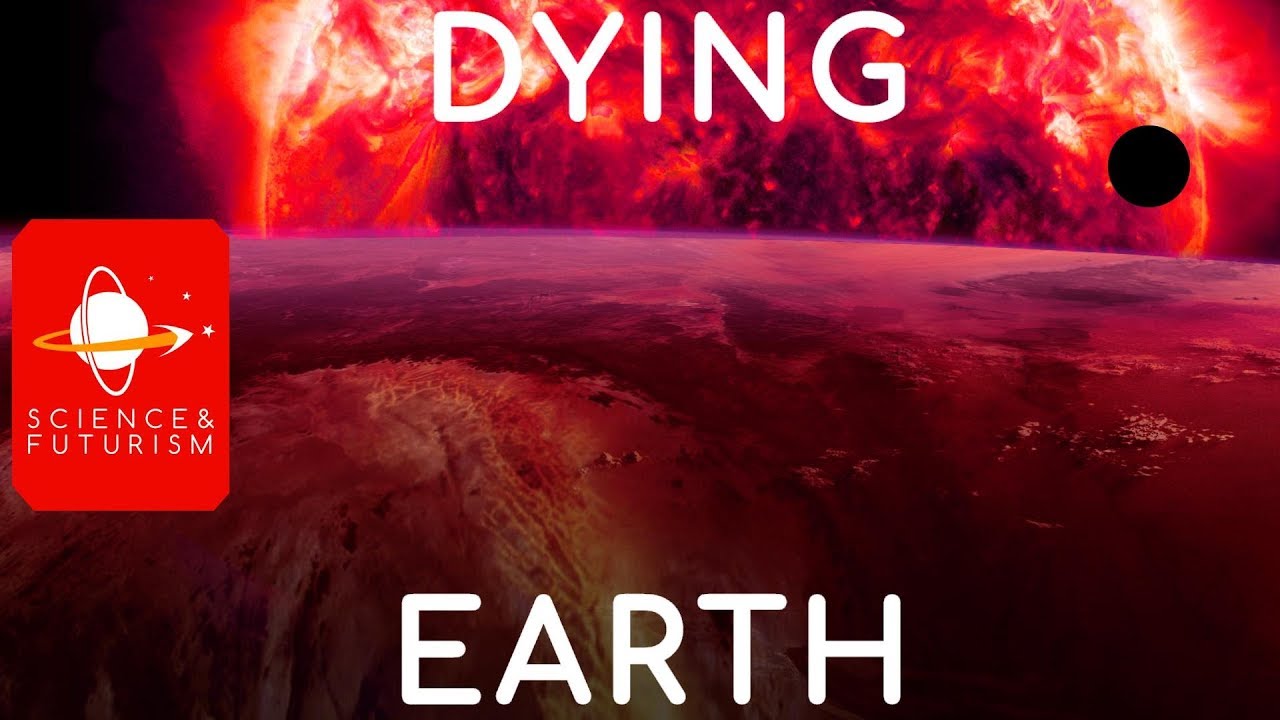
Civilizations at the End of Time: Dying Earth
Keywords
Summary
161 words
Critical Evaluation
Value of the Information & Strength of the Argument
The video provides substantial value by synthesizing concepts from astrophysics, engineering, and futurism into a coherent narrative about Earth’s long-term future. Arthur’s argumentation is logical and well-structured, building from current scientific understanding to plausible future technologies. He effectively counters the fatalistic view of Earth’s inevitable demise by presenting feasible, if ambitious, solutions. The discussion of starlifting and megastructures is detailed and technically sound, offering viewers a deep understanding of the possibilities. The argument that a civilization capable of such feats would not simply let its homeworld die is compelling and well-supported. The video also adds value by exploring the sociological implications of extreme longevity and preservation, adding depth to the technical discussion.
Scientific Rigor, Source Quality, Title Accuracy
The video demonstrates a high level of scientific rigor, with Isaac Arthur referencing established concepts in astrophysics and engineering. While specific sources are not cited in the video itself, the content aligns with current scientific consensus on stellar evolution and the long-term fate of the universe. The description provides links to the channel’s website and social media, but no direct references to academic papers. The title accurately reflects the content, which is a detailed exploration of Earth’s potential future. The video’s speculative elements are clearly presented as such, distinguishing between established science and futuristic conjecture. The production quality is high, with clear visuals and narration that enhance the presentation of complex ideas.
239 words
Title / Content Match
The title accurately reflects the content, which explores the long-term fate of Earth and how civilizations might survive the Sun's death.
Quality & Reliability
8/10
The video presents scientifically grounded concepts (stellar evolution, starlifting, megastructures) with clear explanations, though it blends speculative futurism with established science. The presenter is known for rigorous science communication, and the content aligns with current astrophysical understanding, but some ideas remain highly speculative.
Key Moments
Markers derived by PSI from the transcript: the creator did not define chapters.
- Introduction to the Dying Earth genre and the episode's focus on Earth's survival.
- Discussion on the mindset of those who stay on Earth while others colonize space.
- Exploration of Earth as a potential source of raw materials and the ethics of dismantling it.
- Concept of Earth becoming a layered tomb-world with preserved history.
- Techniques for extending the Sun's life, including starlifting and orbital adjustments.
- Long-term survival strategies, including using the Sun's mass as fuel and micro-black holes.
- Conclusion on the potential for civilization to persist trillions of years.
Cited Sources
- Isaac Arthur's Website — Official website for the channel, providing additional resources and information.
- Brilliant (Sponsor) — Sponsor link, offering educational content in science and math.
- Nebula (Streaming Platform) — Streaming platform where Isaac Arthur's content is available.
- Cover Art by Jakub Grygier — Artist's portfolio for the video's cover art.
- Sergio Botero's Artstation — Artist's portfolio for graphics contributions.
- Reddit Community — Community discussion forum for the channel.
- Subscribestar — Platform for supporting the channel.
- Music: Spacial Winds — Background music used in the video.
- Music: Soli — Background music used in the video.
- Music: Frequency Modulation — Background music used in the video.
- Music: After The Week I've Had — Background music used in the video.
- Music: String Theory — Background music used in the video.
- Music: Back to Home — Background music used in the video.
- Music: Always Tell me the odds — Background music used in the video.
- Music: Hydrogen Sonata — Background music used in the video.
Concurring Sources
- Isaac Arthur's Website — Official website with additional resources and episodes on similar topics.
- Nebula — Streaming platform with Isaac Arthur's content, often including more detailed versions.
Contribution & Novelties
This video offers a unique perspective on the ‘Dying Earth’ trope by combining hard science with speculative engineering. It provides a detailed, optimistic counter-narrative to the common fatalistic view, suggesting that advanced civilizations could preserve their homeworld for trillions of years. The concept of Earth becoming a layered tomb-world is a novel idea that merges sociology, preservation, and megastructure engineering. The video also contributes by framing starlifting and orbital mechanics as practical tools for long-term survival, making these advanced concepts accessible to a general audience.
Pour aller plus loin :
- Starlifting — A concept central to the video’s proposals for extending the Sun’s life.
- Dyson Sphere — Related megastructure concept for harnessing stellar energy.
- Klemperer Rosette — A configuration of planets mentioned in the video for creating multiple habitable worlds.
- Red Dwarf — Stellar type discussed for its long lifespan and potential as a long-term energy source.
147 words
Radar Profile
The radar profile shows high scores in information quantity and quality, indicating a content-rich and well-researched video. The technical level is also high, reflecting the advanced concepts discussed. The overall reliability is strong, with minor deductions for speculative elements. This profile suggests a video that is both informative and intellectually stimulating, suitable for viewers interested in deep futurism and astrophysics.
💬 Très positif. Sur les 30 commentaires analysés, les spectateurs expriment une admiration unanime pour la qualité du contenu, la profondeur des idées et la clarté de la présentation, avec des éloges récurrents pour la valeur éducative et inspirante de la chaîne.