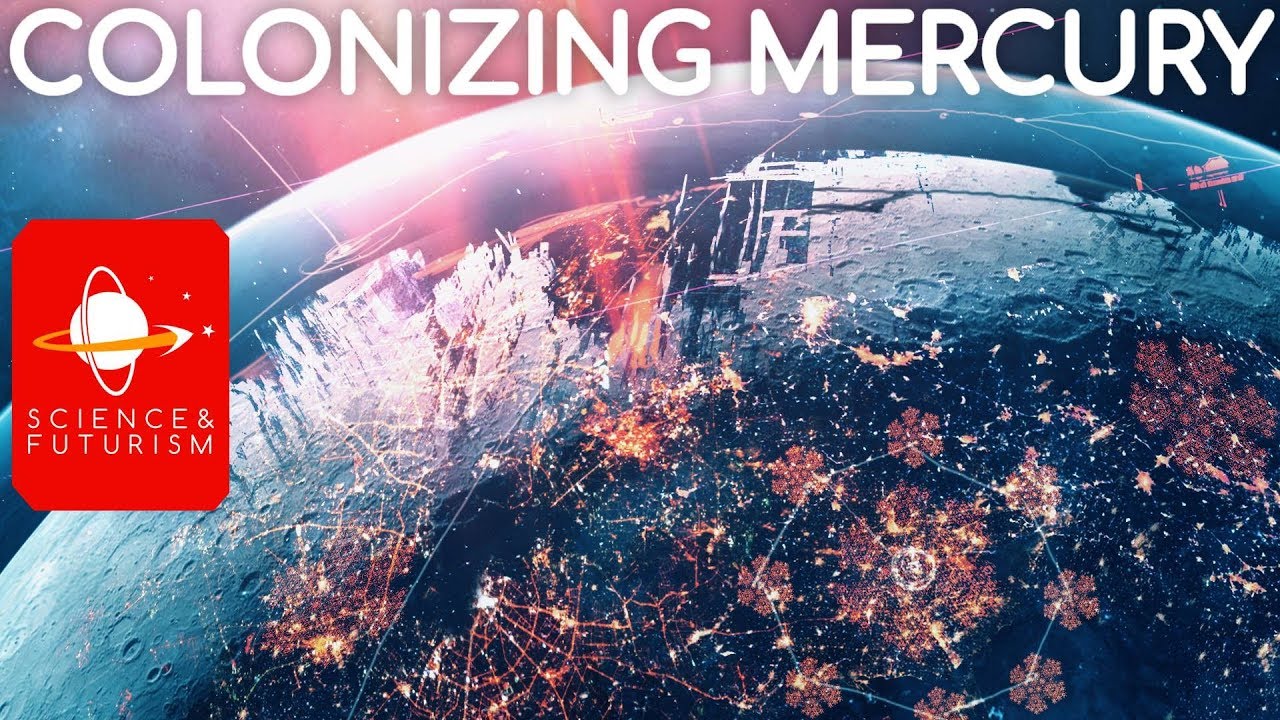
Colonizing Mercury
Keywords
Summary
181 words
Critical Evaluation
Value of the Information & Strength of the Argument
The video provides a high value of information by systematically deconstructing the perceived drawbacks of Mercury and proposing a range of plausible solutions. Arthur’s argumentation is solid, as he builds each concept on established physics and engineering principles, such as orbital mechanics, thermodynamics, and materials science. He effectively uses analogies (e.g., Dune’s sandcrawlers) to make complex ideas accessible. The speculative elements are clearly presented as possibilities, not certainties, and are grounded in current scientific understanding, making the argumentation both engaging and credible.
Scientific Rigor, Source Quality, Title Accuracy
The scientific rigor is high for a speculative video. Isaac Arthur consistently references real planetary data (e.g., Mercury’s orbital resonance, temperature ranges, escape velocity) and cites relevant scientific concepts. While the video does not cite specific academic papers, it aligns with established knowledge and the channel’s reputation for research. The title ‘Colonizing Mercury’ is perfectly adequate, as the video comprehensively addresses the topic. The inclusion of a sponsor segment (Brilliant) is clearly marked and does not detract from the content’s integrity.
178 words
Title / Content Match
The title accurately reflects the content, which focuses on the colonization of Mercury, covering both near-term and long-term possibilities.
Quality & Reliability
8/10
The video is a well-researched speculative analysis grounded in known planetary science (orbital mechanics, temperature gradients, resources). Isaac Arthur consistently distinguishes between established facts and speculative concepts, and the episode is part of a series known for its rigorous approach to futurism.
Key Moments
Markers derived by PSI from the transcript: the creator did not define chapters.
- Introduction: Mercury's mythological namesake and its potential as a colony.
- Discussion of Mercury's extreme temperatures and long day-night cycle.
- Explanation of Mercury's 3:2 orbital resonance and the slow-moving terminator.
- Proposal of mobile bases that chase the terminator to maintain habitable temperatures.
- Introduction of 'mushroom' habitats with reflective umbrellas and stilts.
- Discussion of power generation using thermocouples, Stirling engines, and solar panels.
- Exploration of long-term terraforming possibilities, including mirrors and shades.
- Mercury as a shipbuilding and launch site, with potential for Stellaser propulsion.
- Mercury in science fiction, referencing works by Ben Bova, David Brin, and Dennis E. Taylor.
Cited Sources
- Brilliant.org — Sponsor segment; recommended for learning about escape velocity and orbital mechanics.
- TMRO Interview — Mentioned as an interview with Isaac Arthur.
- SFIA Website — Official website for the channel and additional resources.
- Nebula — Streaming platform where the video is also available.
- Patreon — Support page for the channel.
- Subscribestar — Alternative support page.
- Reddit Community — Community discussion forum.
- Soundcloud Audio — Audio-only version of the episode.
- Soundcloud Narration-only — Narration-only audio version.
Concurring Sources
- NASA - Mercury — Provides scientific data on Mercury's characteristics, supporting the video's claims.
- Mercury (planet) - Wikipedia — General reference for Mercury's orbital and physical properties.
External References
Contribution & Novelties
The video’s original contribution lies in its comprehensive and optimistic reassessment of Mercury as a colonization target, moving beyond the common trope of it being merely a mining outpost. It synthesizes a wide range of concepts—mobile habitats, thermal management, power generation, and long-term terraforming—into a coherent vision. The ‘Star Wheel’ and ‘Star Forge’ concepts, while speculative, offer novel ideas for harnessing solar wind and resources.
Pour aller plus loin :
- Mercury (planet) — Provides foundational facts about the planet.
- Orbital resonance — Explains the 3:2 resonance mentioned in the video.
- Stirling engine — The power generation concept discussed.
- Dyson sphere — Related to the Dyson swarm concept.
- Terraforming of Venus — Offers comparative terraforming ideas.
115 words
Radar Profile
The radar profile shows a strong performance across all dimensions, with particularly high scores in information quantity and quality. The technical level is high but accessible, and the overall reliability is solid, reflecting the video's well-researched and speculative nature.
💬 Très positif. Sur les 30 commentaires analysés, l'enthousiasme est unanime, les spectateurs saluant la qualité de la recherche, la clarté des explications et la capacité d'Isaac Arthur à rendre un sujet apparemment peu attrayant fascinant.