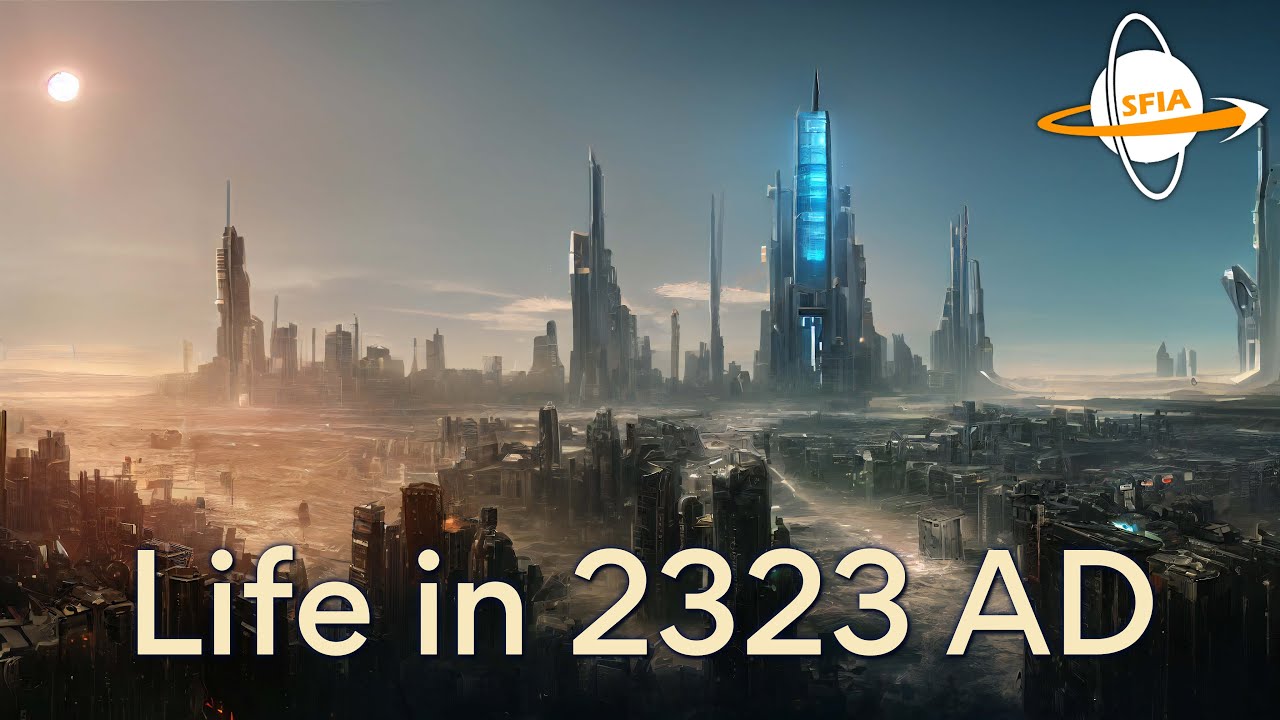
Life in 2323 A.D.
Keywords
Summary
173 words
Critical Evaluation
Value of the Information & Strength of the Argument
The video’s value lies in its comprehensive and imaginative exploration of plausible future scenarios. Isaac Arthur grounds his speculations in current scientific principles and technological trajectories, making the content intellectually stimulating. The argumentation is solid: he clearly states his assumptions and reasoning, and he acknowledges the inherent uncertainty of long-term predictions. The use of multiple character perspectives allows for a multifaceted examination of potential social, ethical, and technological developments, enriching the discussion beyond a simple technological forecast.
Scientific Rigor, Source Quality, Title Accuracy
The video demonstrates scientific rigor by basing its speculations on established concepts like life extension, nanotechnology, and space colonization. While it does not cite specific academic sources, it references the channel’s own extensive library of episodes for deeper dives into these topics. The title ‘Life in 2323 A.D.’ is appropriate and accurately reflects the content’s focus on everyday life rather than just technological marvels. The narrative structure is clearly presented as a thought experiment, not a definitive prediction, which enhances its credibility.
174 words
Title / Content Match
The title accurately reflects the content, which explores potential lifestyles and societal structures in the year 2323.
Quality & Reliability
8/10
The video is a well-reasoned speculative exercise grounded in current scientific understanding and technological trends. Isaac Arthur clearly distinguishes between predictions and possibilities, and he avoids overclaiming certainty. The content is internally consistent and logically structured, though it remains inherently speculative.
Key Moments
Markers derived by PSI from the transcript: the creator did not define chapters.
- Introduction to the episode's premise and the seven characters.
- Discussion of key assumptions: life extension, AI, nanobots, and energy.
- Introduction of Amy and Steve, and the suburban lifestyle with HOA rules.
- Becky's story: life in the Neo-Sears Tower arcology and her large family.
- Cameron's story: techno-primitivism and his family's transhumanist history.
- Duncan's story: overseeing a minimalist asteroid colony.
- Emily's story: life on an interstellar arkship and the challenges of automation.
- Conclusion and reflections on the future of humanity.
Cited Sources
- SFIA Episode Chronology — A spreadsheet listing all SFIA episodes, providing context for the show's history and topics.
- Isaac Arthur's Website — Official website for Isaac Arthur and the Science & Futurism with Isaac Arthur show.
- Nebula — Streaming platform where Isaac Arthur's content is available.
- Reddit Community — Subreddit for fans of the show to discuss episodes and topics.
- Subscribestar — Platform for supporting Isaac Arthur's work.
- Epidemic Sound — Music licensing service used for the episode's soundtrack.
Concurring Sources
- Life extension — The video's assumption of widespread life extension aligns with ongoing research in this field.
- Nanotechnology — The video's use of nanobots for medical and maintenance purposes is consistent with current nanotech research directions.
- Space colonization — The video's depiction of space habitats and asteroid colonies reflects concepts discussed in space colonization literature.
Dissenting Sources
- No direct discordant sources — The video is speculative and does not directly contradict established scientific knowledge, though some may argue that the timeline for certain technologies is overly optimistic.
Contribution & Novelties
This episode provides a unique and engaging synthesis of many futurist themes, weaving them into a coherent narrative about everyday life in the 24th century. It goes beyond simple technological predictions to explore the social, cultural, and personal implications of advanced technologies. The use of multiple character perspectives allows for a nuanced examination of diverse lifestyles and values that might emerge.
Pour aller plus loin :
- Life extension — Relevant to the core assumption of extended lifespans.
- Nanotechnology — Central to the medical and maintenance applications discussed.
- Space colonization — The broader context for the asteroid colonies and arkships.
- Transhumanism — The philosophical movement behind many of the augmentations and uploads.
- Orbital ring — The proposed space infrastructure for cheap access to orbit.
123 words
Radar Profile
The radar profile shows high scores in information quantity and quality, reflecting the video's dense and well-structured content. The technical level is moderate, making it accessible to a broad audience while still providing depth. The overall reliability is high for a speculative piece, given the clear reasoning and acknowledgment of uncertainty.
💬 Très positif. Sur les 30 commentaires analysés, l'immense majorité exprime une profonde gratitude et admiration pour le travail d'Isaac Arthur, célébrant le 400e épisode et la qualité constante de la chaîne. Plusieurs commentaires partagent des réflexions personnelles sur l'avenir et l'espoir que ces visions inspirent.