Life in a Space Colony, ep3: Early Interstellar Colonies
Keywords
Summary
167 words
Critical Evaluation
Value of the Information & Strength of the Argument
The video provides substantial value by offering a detailed, plausible scenario for interstellar colonization, integrating concepts like fusion propulsion, space elevators, and in-situ resource utilization. The argumentation is solid, as Isaac Arthur systematically builds the narrative from established physics and engineering principles, clearly stating assumptions and their implications. He addresses potential counterarguments, such as the difficulty of landing large ships and the need for space infrastructure before planetary settlement. The use of a concrete example (Tau Ceti) and named moons enhances clarity and engagement. The discussion of cultural and political evolution adds depth, making the speculative content more realistic and thought-provoking.
Scientific Rigor, Source Quality, Title Accuracy
The scientific rigor is high for a speculative piece: the content is grounded in known astrophysics (e.g., Tau Ceti’s characteristics), engineering concepts (fusion, space elevators), and references to prior episodes and classic science fiction (e.g., Isaac Asimov’s Aurora). However, the video does not cite specific academic sources or data, relying instead on general knowledge and logical extrapolation. The title accurately reflects the content, focusing on early interstellar colonies. The description provides links to the channel’s website, Nebula, Soundcloud, and social media, but no direct references to scientific papers. The video’s internal consistency and clear reasoning compensate for the lack of formal citations, making it a reliable source for educational speculation.
226 words
Title / Content Match
The title accurately reflects the content, focusing on the early stages of interstellar colonization as part of a series.
Quality & Reliability
8/10
High-quality speculative futurism grounded in known physics and engineering principles, with clear assumptions and logical reasoning. The content is internally consistent and well-structured, though it remains hypothetical and not based on empirical data.
Key Moments
Markers derived by PSI from the transcript: the creator did not define chapters.
- Introduction to the episode's focus on early interstellar colonies and recap of previous episodes.
- Selection of Tau Ceti as the target system, discussing its properties and suitability.
- Arrival at Tau Ceti and decision to land on the icy moon Hodor for refueling and initial setup.
- Establishment of base on Hodor, including ice dome construction and fusion power setup.
- Expansion to Thor for mining and Njord for nitrogen, including space elevator deployment.
- Terraforming of Aurora begins, with discussion of domes and soil creation.
- Cultural and political divergence among colonies, including governance and representation issues.
- Unity prepares to leave, with colonists deciding their futures; conclusion of the series.
Cited Sources
- Isaac Arthur Website — Official website for the channel, providing additional resources and episode archives.
- Nebula — Streaming platform where Isaac Arthur's content is available, often with early access.
- Soundcloud Audio — Audio version of this episode for listening on the go.
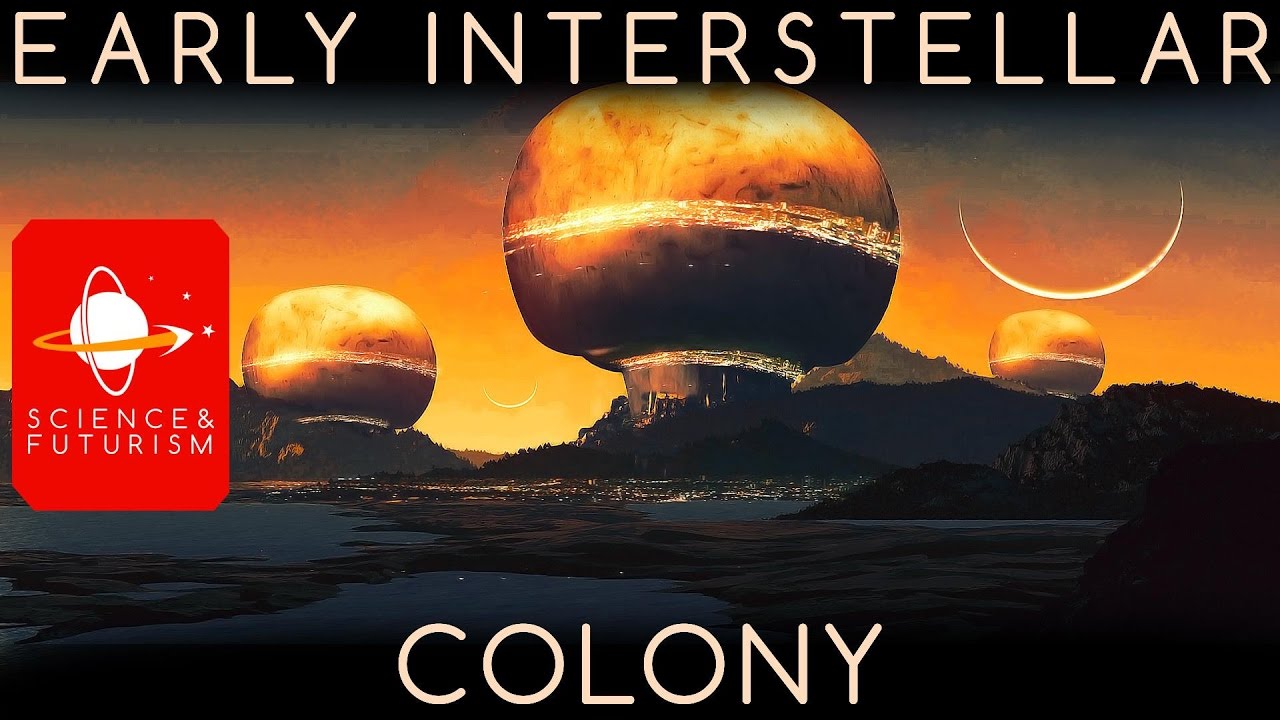
- Cover Art by Jakub Grygier — Artist's portfolio for the cover art used in this episode.
- Reddit Community — Community discussion forum for fans and additional content.
- Subscribestar — Alternative support platform for the channel.
Concurring Sources
- Tau Ceti - Wikipedia — Confirms the star's properties and its use in science fiction, aligning with the episode's setting.
- Space elevator - Wikipedia — Supports the feasibility discussion of space elevators in the episode.
- Terraforming - Wikipedia — Provides background on the terraforming concepts mentioned in the episode.
Dissenting Sources
- No direct discordant sources found — The video is speculative and does not contradict established scientific consensus; it builds on known principles.
Contribution & Novelties
This episode contributes a comprehensive, narrative-driven exploration of early interstellar colonization, integrating engineering, resource management, and sociopolitical dynamics. It offers a realistic sequence of steps, from landing on moons to terraforming a planet, and highlights the importance of space infrastructure before planetary settlement. The discussion of cultural divergence and governance adds a novel dimension to typical space colonization content.
Pour aller plus loin :
- Tau Ceti — Provides astronomical data on the star system used in the episode.
- Space elevator — Concept central to the episode’s logistics.
- Terraforming — Relevant to the long-term goal of colonizing Aurora.
- Fusion power — Assumed energy source for the colonies.
- Isaac Asimov’s Robot series — Inspiration for the planet Aurora and the narrative style.
120 words
Radar Profile
The radar profile shows high scores across all dimensions, with particularly strong performance in quantity and quality of information, reflecting the video's depth and clarity. The technical level is also high, indicating a sophisticated audience. The overall reliability is strong for a speculative piece, supported by logical reasoning and clear assumptions.
💬 Très positif. Sur les 30 commentaires analysés, les spectateurs expriment une admiration enthousiaste pour la profondeur et la qualité du contenu, le comparant à Carl Sagan et à la science-fiction classique, et demandent davantage d'épisodes.