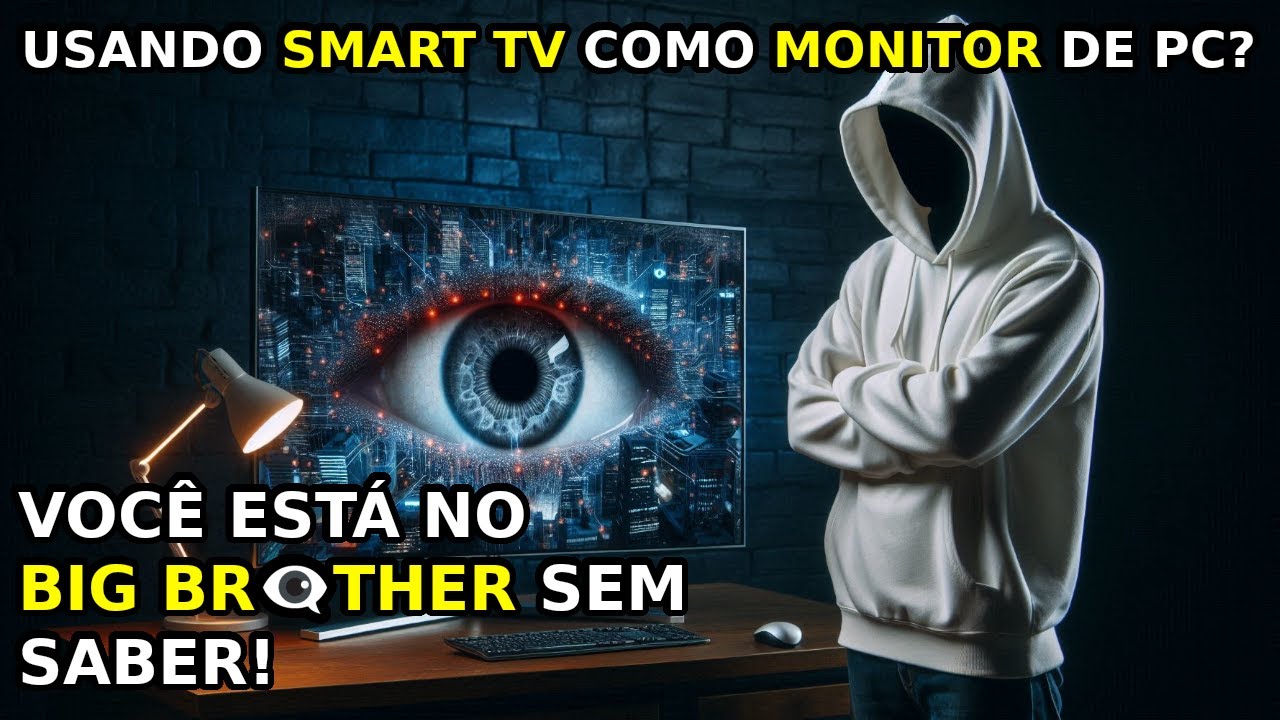
SMART TV ESPIONA, FOTOGRAFA E GRAVA SUA SEED DE CRIPTOMOEDA, SENHAS E DOCUMENTOS | CONTRA-ATAQUE
Keywords
Summary
143 words
Critical Evaluation
Value of the Information & Strength of the Argument
The video provides a valuable warning about potential privacy risks of Smart TVs, which is a relevant topic. However, the argumentation is largely based on speculation and hypothetical scenarios rather than concrete evidence. The host uses the UCL study and FTC case as references, but does not delve into technical details or provide a balanced view. The reasoning often relies on fear-mongering and unverified claims about covert ACR activation and government backdoors. The argumentation is persuasive but lacks scientific rigor, making it more of an opinion piece than an evidence-based analysis.
Scientific Rigor, Source Quality, Title Accuracy
The video cites two credible sources: a UCL study on Smart TV tracking and an FTC case against Vizio. These sources are relevant and support the general concern about data collection. However, the host extrapolates from these to make broader claims about covert surveillance and backdoors, which are not directly supported by the cited sources. The title accurately reflects the content, focusing on Smart TV espionage and its implications for cryptocurrency and personal data. The video includes promotional content for courses and consulting, which may bias the presentation. Overall, the scientific rigor is moderate, with a mix of credible references and speculative assertions.
209 words
Title / Content Match
The title accurately reflects the content, focusing on Smart TV surveillance and its implications for cryptocurrency and personal data security.
Quality & Reliability
4/10
The video presents plausible security concerns about Smart TVs, but relies heavily on speculative claims and anecdotal examples. It references two credible sources (UCL study and FTC case) but does not provide detailed evidence or technical analysis. The argumentation is persuasive but lacks rigorous scientific backing.
Key Moments
Markers derived by PSI from the transcript: the creator did not define chapters.
- Introduction and channel promotion
- Overview of Smart TV espionage risks
- Explanation of ACR technology and UCL study
- Discussion of Vizio FTC case
- Risks of using Smart TV as monitor for sensitive operations
- Examples of data capture: seeds, passwords, PGP keys
- Discussion of offline data storage and transmission
- Comparison with Apple Siri backdoor case
- Recommendations: use non-smart monitors, avoid Smart TVs for sensitive tasks
- Conclusion and call to action
Cited Sources
- Smart TV tracking raises privacy concerns — Referenced as evidence of ACR data collection by Smart TVs.
- Vizio tracked and sold user data from millions of smart TVs, FTC says — Referenced as an example of a company collecting and selling user data from Smart TVs.
- Artigo completo: Smart TV espionagem e criptomoedas — Linked as a full article with more details on the topic.
Concurring Sources
- Smart TV tracking raises privacy concerns — Supports the claim that Smart TVs collect viewing data via ACR.
- Vizio tracked and sold user data from millions of smart TVs, FTC says — Supports the claim that Smart TV manufacturers have engaged in data collection and sale.
Dissenting Sources
- No direct discordant sources provided — The video does not present opposing viewpoints or sources that contradict its claims.
External References
Contribution & Novelties
The video highlights a specific and often overlooked risk: Smart TVs used as monitors can capture sensitive information displayed on screen, even from offline computers. It emphasizes the potential for covert data collection via ACR and closed-source systems, drawing parallels with the Apple Siri case. The practical advice to use non-smart monitors for sensitive operations is useful.
Pour aller plus loin :
- Automatic Content Recognition (ACR) — Overview of ACR technology and its applications.
- Vizio FTC settlement — Details of the FTC case against Vizio.
- Smart TV privacy concerns — Consumer Reports article on Smart TV privacy issues.
98 words
Radar Profile
The radar profile shows moderate scores in information quantity and technical level, but lower scores in information quality and reliability. This indicates a video that provides a substantial amount of information but with questionable scientific backing, leaning towards opinion and speculation.
💬 Sur les 0 commentaires analysés, aucune tendance n'a pu être dégagée.