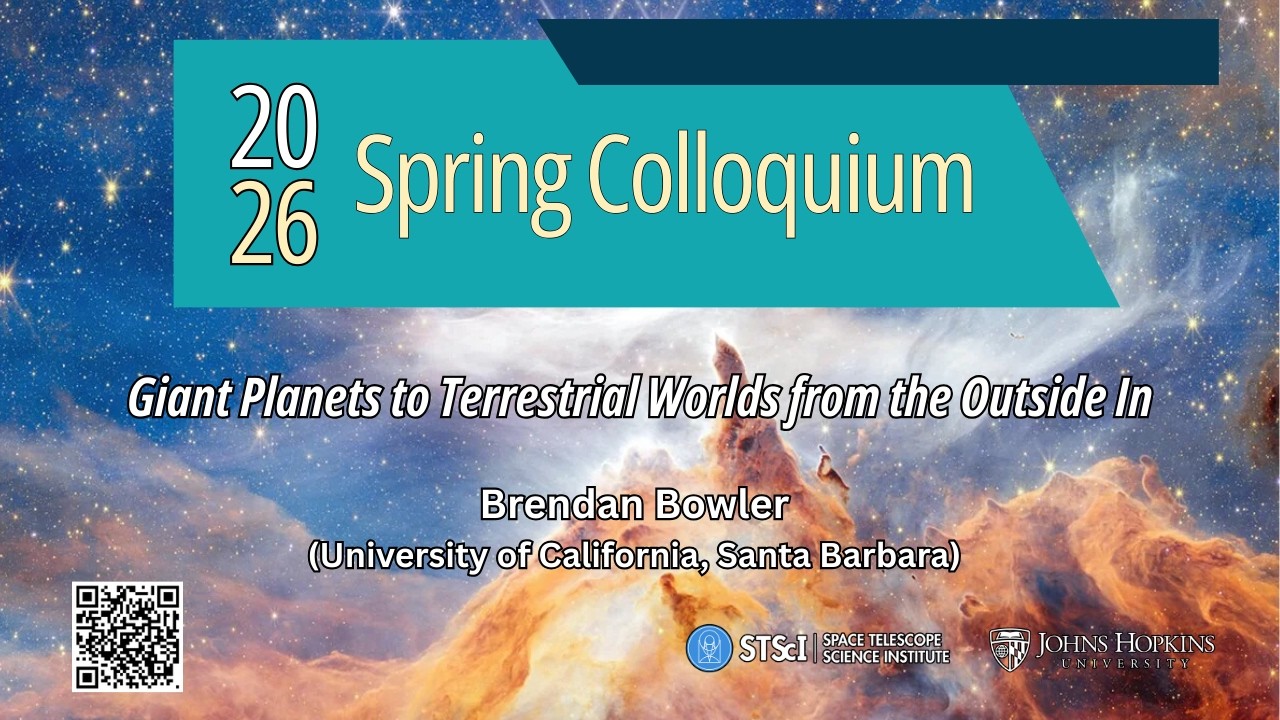
Giant Planets to Terrestrial Worlds from the Outside In
Keywords
Summary
123 words
Critical Evaluation
Value of the Information & Strength of the Argument
The talk provides a comprehensive overview of the current state of giant planet research, synthesizing results from various observational techniques. The argumentation is solid, based on peer-reviewed studies and ongoing research. The speaker carefully notes uncertainties and biases, and presents a coherent narrative of planet formation and evolution. The value lies in the synthesis of diverse data and the forward-looking perspective on upcoming Gaia results.
Scientific Rigor, Source Quality, Title Accuracy
The talk is scientifically rigorous, with references to specific papers and ongoing programs. The speaker is an established expert, and the content aligns with current scientific consensus. The title accurately reflects the content, focusing on giant planets from wide separations inward. The talk does not include any promotional content.
129 words
Title / Content Match
The title accurately reflects the content, which focuses on giant planets and their formation, observed from wide separations inward.
Quality & Reliability
8/10
The talk is given by an expert in the field, presenting recent research results and contextualizing them within the broader scientific literature. The content is based on peer-reviewed studies and ongoing projects, with appropriate caveats about uncertainties.
Key Moments
Markers derived by PSI from the transcript: the creator did not define chapters.
- Introduction to the talk and the beauty of protoplanetary disks.
- Discussion of disk diversity and correlations with stellar mass and age.
- Overview of planet detection methods and their biases.
- Formation timescales and the analogy between young planets and T Tauri stars.
- Case study of SR12C: accretion and circumplanetary disk properties.
- Ensemble of accreting planets and grain growth indicators.
- Giant planet demographics and the upcoming Gaia revolution.
Cited Sources
- Gaia DR4 — Mentioned as upcoming data release expected to yield thousands of astrometric planet discoveries.
- Habitable Worlds Observatory — Future mission aimed at imaging habitable exoplanets.
Concurring Sources
- PDS 70 — A system with directly imaged protoplanets and circumplanetary disks, supporting the talk's discussion.
Contribution & Novelties
The talk provides a synthesis of recent direct imaging and astrometry results, highlighting the importance of wide-separation giant planets for understanding planet formation. It presents new data on circumplanetary disks and accretion, and anticipates the impact of Gaia astrometry on the field.
Pour aller plus loin :
- Direct imaging of exoplanets — Overview of the technique.
- Circumplanetary disk — Definition and relevance.
- Gaia mission — Space observatory measuring stellar positions.
70 words
Radar Profile
The radar profile shows high scores across all dimensions, indicating a well-balanced and informative presentation. The talk excels in technical depth and reliability, with a strong emphasis on current research and future prospects.