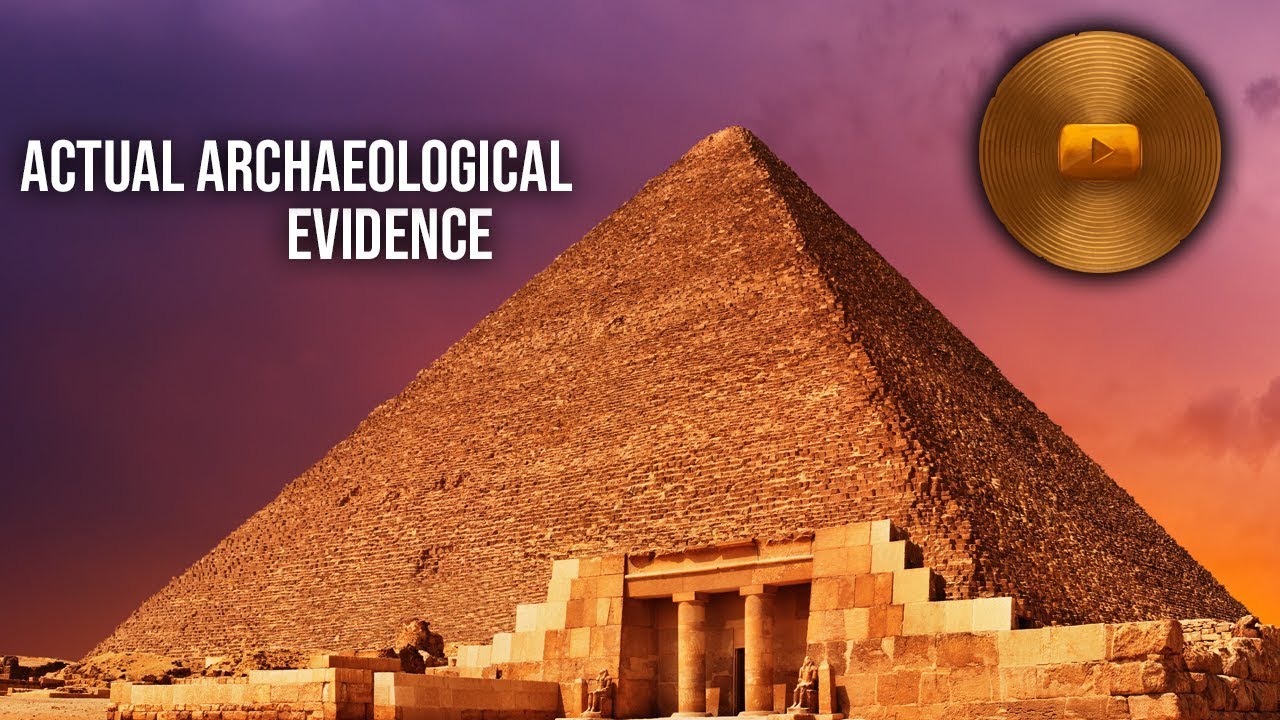
How the Egyptians MIGHT have built the Great Pyramid - #thebronzeage
Keywords
Summary
135 words
Critical Evaluation
Value of the Information & Strength of the Argument
The video provides valuable information by synthesizing recent archaeological discoveries (e.g., Hatnub ramp, Wadi al-Jarf papyrus) and experimental studies (e.g., wet sand friction). The argumentation is solid: the presenter presents evidence and then explains how it informs plausible construction methods, while clearly labeling hypotheses as such. He avoids overstating certainty, which strengthens the overall credibility. The inclusion of specific numbers (e.g., 340 stones per day, 20-30 men per stone) adds concreteness, though some estimates are acknowledged as rough. The video successfully demystifies the construction while preserving the sense of wonder.
Scientific Rigor, Source Quality, Title Accuracy
The video demonstrates strong scientific rigor by citing academic sources (e.g., Hawass, Lehner, Tallet) and recent excavations. The presenter explicitly mentions that all sources are in the description, which includes peer-reviewed articles and university press releases. The title’s use of ‘MIGHT’ appropriately signals the speculative nature of the reconstruction. The content aligns well with the title, focusing on archaeological evidence rather than fringe theories. The video also acknowledges gaps in knowledge, such as the lack of surviving ramps for large pyramids, which is a mark of intellectual honesty.
193 words
Title / Content Match
The title accurately reflects the content: the video presents plausible methods based on archaeological evidence, emphasizing the speculative nature of the reconstruction.
Quality & Reliability
8/10
The video is well-researched, citing recent archaeological findings and academic sources. The author clearly distinguishes between established evidence and educated guesses, and acknowledges uncertainties. Minor inaccuracies (e.g., Grand Gallery lining) were corrected in the comments, but overall the content is reliable and transparent about its limitations.
Key Moments
Markers derived by PSI from the transcript: the creator did not define chapters.
- Introduction: challenges of filming in snow, overview of the Great Pyramid's scale and the collaboration.
- Site selection criteria: flat land, proximity to quarry and Nile.
- Aligning to true north using shadow measurements and the cord stretching ceremony.
- Leveling the site: only a ring around the foundation, not the entire plateau.
- Cutting limestone with dolerite hammers and granite with copper saws; experimental archaeology.
- Moving stones over sand: wet sand reduces friction by 50% (University of Amsterdam study).
- Transport by water: potential harbor location and the Wadi al-Jarf papyrus.
- Ramp theories: straight ramps, 6-degree ramp for lower courses, and the Hatnub ramp discovery.
- Workforce estimates: 680-1400 haulers based on stone moving rates.
- Unanswered questions: building the top and maintaining the angle.
- Conclusion: summary, collaboration promotion, and humorous outro.
Cited Sources
- Ancient quarry ramp system may have helped workers build Egypt's Great Pyramids — Discussed in the video as the 2018 discovery of a 20-degree ramp at Hatnub, dated to Khufu's reign.
- Giza Plateau Mapping Project - Heit el-Ghurab — Referenced as a source for the workers' town at Giza.
- Giza Pyramid Complex - Photos — Used for images of the Giza plateau.
- Dolorite hammer — Image attribution for dolerite hammers used in quarrying.
- Jack Rackam's video on the Bronze Age — Part of the collaboration playlist.
- History Time's video on the Bronze Age — Part of the collaboration playlist.
Concurring Sources
- The Harbor of Khufu on the Red Sea Coast at Wadi al-Jarf, Egypt — Academic article cited in the description, supporting the papyrus discovery and harbor evidence.
- Immutable Laws of Friction: Preparing and Fitting Stone Blocks into the Great Pyramid of Giza — Academic article cited in the description, relevant to stone moving and fitting.
Dissenting Sources
- Internal ramp theory by Jean-Pierre Houdin — Some commenters mention this alternative theory, which the video does not discuss in detail.
Contribution & Novelties
The video’s original contribution lies in its synthesis of recent archaeological discoveries (e.g., Hatnub ramp, Wadi al-Jarf papyrus) and experimental studies (e.g., wet sand friction) to present a plausible, evidence-based reconstruction of the Great Pyramid’s construction. It effectively communicates the current state of knowledge while clearly distinguishing between established facts and hypotheses.
Pour aller plus loin :
- Wadi al-Jarf papyrus — The papyrus is the oldest known papyrus with text, providing direct evidence of Khufu’s logistics.
- Hatnub — The alabaster quarry where the 20-degree ramp was discovered.
- Great Pyramid of Giza — General overview and construction theories.
- Experimental archaeology — Methodology used to test ancient techniques.
- Dolerite — The rock type used for hammers in quarrying.
116 words
Radar Profile
The radar profile shows high scores in information quantity, quality, and reliability, with a slightly lower technical level, indicating that the video is accessible to a general audience while still being well-founded. The balanced profile reflects the video's strength in both educational value and scientific credibility.
💬 Très positif. Sur les 30 commentaires analysés, l'enthousiasme est général, avec des éloges pour la qualité de la recherche, l'humour et la clarté de la présentation, et un engagement actif avec les théories alternatives.