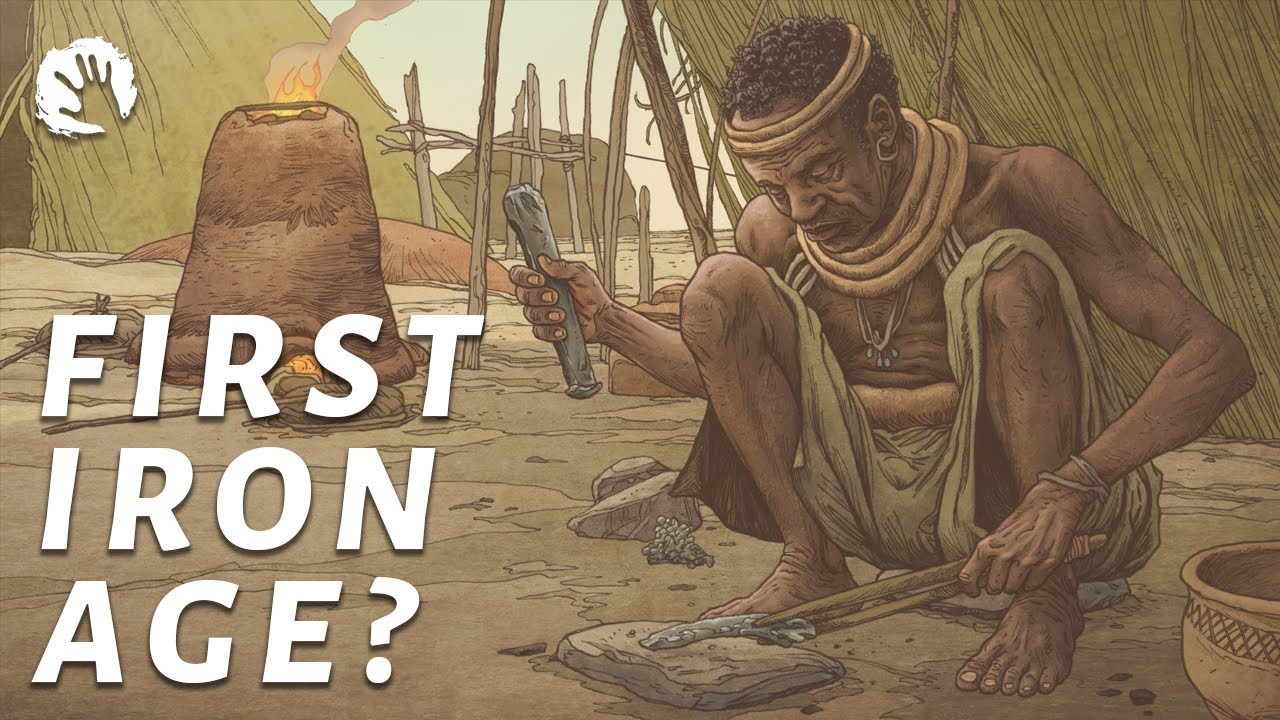
Did Africa Have The First Iron Age?
Keywords
Summary
169 words
Critical Evaluation
Value of the Information & Strength of the Argument
The video provides a valuable overview of a complex archaeological debate, synthesizing evidence from multiple peer-reviewed sources. The argumentation is balanced, presenting both diffusion and invention hypotheses with their respective strengths and weaknesses. The creator clearly explains the technical aspects of iron smelting and the limitations of radiocarbon dating, which are crucial for understanding the debate. The use of specific archaeological sites and their dating evidence strengthens the discussion, and the creator’s acknowledgment of uncertainty and the need for further research adds to the credibility. The video effectively communicates the nuances of the debate without oversimplifying, making it a solid introduction for those interested in African archaeology.
Scientific Rigor, Source Quality, Title Accuracy
The video demonstrates high scientific rigor by citing numerous academic sources, including journal articles and books, and by discussing methodological issues such as radiocarbon dating and the ‘old wood’ problem. The creator is transparent about the limitations of the evidence and does not overstate conclusions. The title accurately reflects the content, which directly addresses the question of whether Africa had the first iron age. The video’s balanced treatment of the debate and its reliance on published research contribute to its credibility. The description provides a comprehensive list of sources, allowing viewers to verify the information presented.
218 words
Title / Content Match
The title accurately reflects the central question of the video, which examines whether sub-Saharan Africa had the earliest iron age. The content directly addresses this question by presenting evidence for both diffusion and independent invention.
Quality & Reliability
8/10
The video presents a balanced review of the debate on the origins of iron metallurgy in sub-Saharan Africa, citing numerous peer-reviewed sources and acknowledging uncertainties. The creator clearly distinguishes established facts from interpretations and openly discusses methodological limitations such as radiocarbon dating issues. The content is well-researched and aligns with current archaeological scholarship, though it does not present original research.
Key Moments
Markers derived by PSI from the transcript: the creator did not define chapters.
- Introduction to the debate on the origins of iron metallurgy in sub-Saharan Africa.
- Explanation of the technical challenges of iron smelting and the 'old wood' problem in radiocarbon dating.
- Discussion of the diffusion argument, focusing on Carthage and Meroe as potential sources.
- Examination of the lack of direct trade evidence across the Sahara and the role of chariot cultures.
- Presentation of the invention argument, highlighting sites like Walalde and the Nok culture.
- Discussion of the controversial site of Oboui and its potential early dates.
- Analysis of the criticisms against Oboui and the broader implications for the debate.
- Conclusion summarizing the state of the debate and the need for more research.
Cited Sources
- Ferrous Metallurgy from the Bir Massouda Metallurgical Precinct at Phoenician and Punic Carthage and the Beginning of the North African Iron Age — Source for early iron production at Carthage.
- Filling Gaps in the Protohistory of the Eastern Maghreb: The Althiburos Archaeological Project (El Kef, Tunisia) — Source for iron slag at El Kef.
- A New Radiocarbon Chronology for Ancient Iron Production in the Meroe Region of Sudan — Source for iron production at Meroe.
- Did They or Didn't They Invent It? Iron in Sub-Saharan Africa — Key source on the debate.
- Ancient and Modern DNA Reveal Dynamics of Domestication and Cross-Continental Dispersal of the Dromedary — Source for the introduction of camels to the Sahara.
- Camels in Saharan Rock Art — Source for camel imagery in rock art.
- Chariots in Saharan rock art: An aesthetic and cognitive review — Source for chariot rock art.
- The West African Savanna — Source for West African archaeology.
- Sudanic Genesis: Nubia — Source for Nubian archaeology.
- The Origins of African Metallurgies — Overview of African metallurgy origins.
- New Paradigms for Old Iron: Thoughts on É. Zangato & A.F.C. Holl's 'On the Iron Front.' — Critique of early iron claims.
- Excavations at Walaldé: New Light on the Settlement of the Middle Senegal Valley by Iron-Using Peoples — Source for Walalde site.
- A Chronology of the Central Nigerian Nok Culture — 1500 BC to the Beginning of the Common Era — Source for Nok culture chronology.
- Nok Early Iron Production in Central Nigeria — New Finds and Features — Source for Nok iron production.
- On Evidence, Ideas and Fantasy: The Origins of Iron in Sub-Saharan Africa Thoughts on É. Zangato & A.F.C. Holl's 'On the Iron Front.' — Critique of early iron claims.
- The Innovation and Adoption of Iron in the Ancient Near East — Source for iron in the Near East.
- The Mastery and Uses of Fire in Antiquity — Source on ancient pyrotechnology.
- 5,000 Years Old Egyptian Iron Beads Made from Hammered Meteoritic Iron — Source for meteoritic iron beads.
- Making Iron The Old-Fashioned Way Is A Tricky Business — Source on iron smelting difficulty.
- Tainted ores and the rise of tin bronzes in Eurasia, c. 6500 years ago — Source for early bronze working.
Concurring Sources
- Did They or Didn't They Invent It? Iron in Sub-Saharan Africa — Supports the complexity of the debate and the possibility of independent invention.
- The Origins of African Metallurgies — Provides an overview that acknowledges multiple origins.
Dissenting Sources
- New Paradigms for Old Iron: Thoughts on É. Zangato & A.F.C. Holl's 'On the Iron Front.' — Critiques the early dates for ironworking in Central Africa, suggesting they may be flawed.
- On Evidence, Ideas and Fantasy: The Origins of Iron in Sub-Saharan Africa Thoughts on É. Zangato & A.F.C. Holl's 'On the Iron Front.' — Questions the evidence for very early iron smelting in sub-Saharan Africa.
Contribution & Novelties
The video provides a comprehensive and accessible synthesis of the debate on the origins of iron metallurgy in sub-Saharan Africa, highlighting the key evidence and methodological challenges. It does not present new research but offers a balanced overview that is valuable for a general audience. The creator’s emphasis on the limitations of radiocarbon dating and the ‘old wood’ problem is particularly instructive.
Pour aller plus loin :
- The Origins of African Metallurgies — Comprehensive academic overview of the topic.
- Iron metallurgy in Africa — Wikipedia article summarizing the debate and key sites.
- Radiocarbon dating — Explanation of the method and its limitations.
- Nok culture — Overview of the Nok culture and its ironworking.
- Old wood problem — Explanation of this dating issue.
122 words
Radar Profile
The radar profile shows high scores in quantity and quality of information, reflecting the video's comprehensive coverage and use of credible sources. The technical level is moderately high, suitable for an interested lay audience. Overall reliability is strong, though the creator's cautious conclusions and acknowledgment of uncertainties prevent a perfect score.
💬 Très positif. Sur les 30 commentaires analysés, les spectateurs expriment une forte appréciation pour la qualité de la recherche et la clarté de la présentation, avec de nombreux éloges pour le contenu et l'humour du créateur.