Keywords
Summary
147 words
Critical Evaluation
Value of the Information & Strength of the Argument
The video provides substantial value by synthesizing diverse lines of evidence—archaeological, genetic, and paleontological—into a coherent narrative about early human habitation of Australia. It presents multiple hypotheses (e.g., timing of arrival, megafauna extinction) and evaluates them with reference to specific studies, demonstrating a balanced approach. The argumentation is generally solid, with the creator clearly distinguishing between established facts, inferences, and open questions. However, some speculative elements, such as the cultural motivations for exploration, are presented with less rigor, though they are framed as personal reflections.
Scientific Rigor, Source Quality, Title Accuracy
The video demonstrates strong scientific rigor by citing numerous peer-reviewed studies and acknowledging uncertainties. The sources are reputable (Nature, PNAS, etc.) and directly relevant to the claims made. The title accurately reflects the content, and the video adheres to its scope without significant digressions. The creator’s engagement with the material is evident, and he appropriately notes when evidence is debated or incomplete.
162 words
Title / Content Match
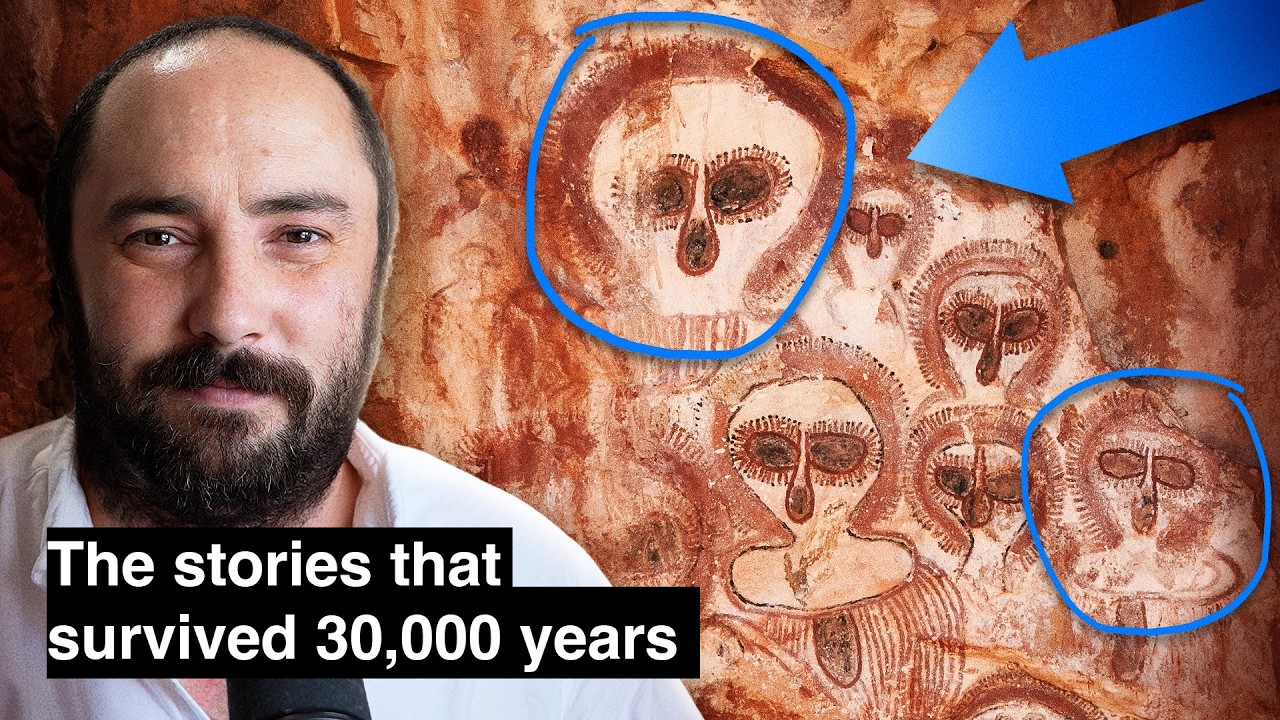
The title accurately reflects the content, which focuses on the first human inhabitants of Australia and their interactions with the environment and megafauna.
Quality & Reliability
8/10
The video presents a well-researched synthesis of archaeological, genetic, and paleontological evidence, citing multiple peer-reviewed studies. The creator acknowledges uncertainties and debates, and the content aligns with current scientific consensus. Minor caveats include occasional speculative interpretations and the inherent limitations of popular science communication.
Chapters
Cited Sources
- The spread of people to Australia - Australian Museum — Reference for the general narrative of human arrival in Australia.
- Tommy McRae - Wikipedia — Mentioned in the context of Aboriginal art and history.
- Nebula - Stefan Milo — Platform for ad-free viewing of the creator's videos.
- Archaeology in Oceania - Wiley — Source for archaeological evidence on early human occupation.
- Antiquity - Akerman — Reference for rock art and archaeological findings.
- Nature - Human occupation of northern Australia — Key study on the timing of human arrival in Australia.
- Nature - Aboriginal mitogenomes — Genetic study on Aboriginal Australian mitochondrial DNA.
- Nature - Human dispersal and megafauna extinction — Study linking human arrival to megafauna extinction.
- Nature - Ancient genomes and human history — Recent genomic study relevant to human migration.
- PNAS - Eggshell burning and Genyornis extinction — Study on burnt eggshells as evidence for human exploitation of Genyornis.
Concurring Sources
- Nature - Human occupation of northern Australia — Supports the early arrival of humans in Australia.
- PNAS - Eggshell burning and Genyornis extinction — Provides evidence for human impact on megafauna.
Dissenting Sources
- Nature - Human occupation of northern Australia — The dating of Madjedbebe to 65,000 years ago is contested by some geneticists who argue for a later arrival around 50,000 years ago.
External References
Contribution & Novelties
The video offers a comprehensive and accessible synthesis of current knowledge about the first Australians, integrating recent genetic and archaeological findings. It highlights the potential of oral traditions as a source of historical information, a topic often overlooked. The discussion of the Genyornis eggshell burning study provides a concrete example of how human activity may have contributed to megafauna extinction without direct hunting.
Pour aller plus loin :
- Sahul - Wikipedia — Overview of the prehistoric continent connecting Australia and New Guinea.
- Megalania - Wikipedia — Information on the giant monitor lizard mentioned in the video.
- Genyornis - Wikipedia — Details on the extinct bird species and its extinction.
- Dreamtime - Wikipedia — Explanation of the Aboriginal spiritual concept.
- Mungo Man - Wikipedia — Context for the oldest human remains in Australia.
132 words
Radar Profile
The radar profile shows high scores in information quantity and quality, indicating a content-rich and well-sourced video. The technical level is moderately high, suitable for an interested lay audience. Overall reliability is strong, with minor caveats due to speculative elements.
💬 Très positif. Sur les 30 commentaires analysés, la grande majorité exprime une appréciation chaleureuse, notamment de la part d'Australiens et d'Aborigènes, saluant le respect et la précision du traitement du sujet.