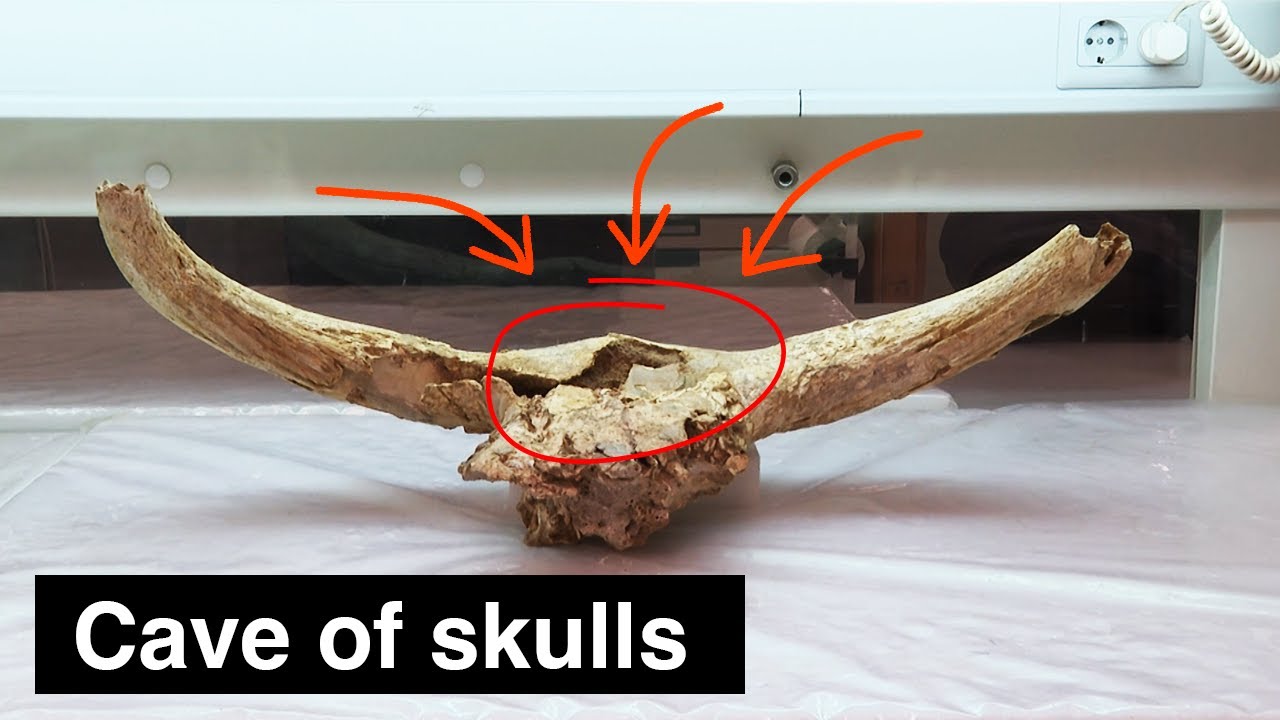
Neanderthals put 35 skulls in this cave…. why?
Keywords
Summary
158 words
Critical Evaluation
Value of the Information & Strength of the Argument
The video provides substantial value by presenting a detailed case study of a significant archaeological find and interpreting it within the broader context of Neanderthal symbolic behavior. The argumentation is methodical: the presenter builds a cumulative case, starting with the unusual composition of the skulls (all horned animals, no other body parts), then adding layers of evidence such as the placement on fires and the non-local gneiss rock. He acknowledges counterarguments (e.g., brain consumption) but effectively counters them by emphasizing the repeated, deliberate pattern. The comparison to Thanksgiving dinner as a secular ritual is an effective rhetorical device that makes the concept of ritual more accessible. The video also benefits from referencing peer-reviewed sources and discussing the limitations of older excavations, which strengthens the credibility of the argument. However, the presenter’s enthusiasm occasionally leads to speculative phrasing (e.g., ‘skull cult’), which, while clearly framed as a possibility, could be seen as overstating the evidence.
Scientific Rigor, Source Quality, Title Accuracy
The video demonstrates strong scientific rigor by grounding its claims in peer-reviewed research, specifically citing the Baquedano et al. (2023) paper in Nature Human Behaviour and the Hoffmann et al. (2018) paper in Science. The presenter is careful to note the caveats of older excavations (Grotte du Prince, Teshik-Tash) and the limitations of dating methods. The title accurately reflects the content, which is centered on the mystery of the skull accumulation and the ritual hypothesis. The video’s content aligns well with the title, as it thoroughly investigates the ‘why’ behind the skulls. The inclusion of a sponsor segment (MyHeritage) is clearly marked and does not detract from the scientific content. Overall, the sources are high-quality and appropriately used, and the title-contenu adéquation is strong.
293 words
Title / Content Match
The title is engaging and accurately reflects the central mystery of the video, which is the discovery of 35 horned animal skulls in a Neanderthal cave and the possible ritualistic interpretation.
Quality & Reliability
8/10
The video is well-researched, referencing a peer-reviewed study in Nature Human Behaviour and a Science paper on cave art dating. The creator clearly distinguishes evidence from interpretation, acknowledges limitations of older excavations, and presents multiple hypotheses. The tone is balanced and scientifically grounded, though the presenter's personal enthusiasm and speculative elements (e.g., the 'skull cult' phrasing) slightly temper the overall reliability.
Chapters
Cited Sources
- A symbolic Neanderthal accumulation of large herbivore crania — The primary study on Cueva Des-Cubierta, providing the archaeological evidence for the skull accumulation.
- U-Th dating of carbonate crusts reveals Neandertal origin of Iberian cave art — Used to date the La Pasiega cave art, supporting the case for Neanderthal symbolic behavior.
- Stefan Milo on Nebula — Mentioned as a platform for ad-free viewing, not a scientific source.
Concurring Sources
- A symbolic Neanderthal accumulation of large herbivore crania — The primary study supporting the ritual interpretation.
- U-Th dating of carbonate crusts reveals Neandertal origin of Iberian cave art — Provides evidence for Neanderthal symbolic art, reinforcing the case for ritual behavior.
Dissenting Sources
- Alternative interpretations (e.g., food processing) — The video acknowledges that the skulls could simply be the result of brain consumption, but argues that the pattern of deposition suggests more.
Contribution & Novelties
The video synthesizes recent archaeological findings to argue for Neanderthal ritual behavior, specifically at Cueva Des-Cubierta. It provides a clear and accessible explanation of the evidence, including the unusual accumulation of horned animal skulls and their placement on fires and a gneiss rock. The video also connects this site to broader evidence of Neanderthal symbolic thought, such as cave art at La Pasiega, and discusses other potential ritual sites. This contributes to the ongoing reevaluation of Neanderthal cognitive capabilities.
Pour aller plus loin :
- Neanderthal behavior — Overview of the evidence for Neanderthal symbolic behavior and culture.
- Cueva Des-Cubierta — Wikipedia page on the site, providing additional context.
- Marine isotope stages — Explanation of the dating method used to place the site in time.
- La Pasiega — Wikipedia page on the cave art site, relevant to the discussion of Neanderthal art.
141 words
Radar Profile
The radar profile shows high scores across all dimensions, indicating a well-rounded and reliable video. The strongest aspects are the quantity and quality of information, as well as the technical level, which is appropriate for a general audience while still being scientifically accurate. The fiabilité globale is also high, reflecting the use of peer-reviewed sources and balanced argumentation.
💬 Très positif. Sur les 30 commentaires analysés, les spectateurs expriment une forte appréciation pour la qualité de la vidéo, la clarté des explications et la pertinence du sujet, avec de nombreux commentaires personnels sur les rituels de chasse et la valeur des trophées.