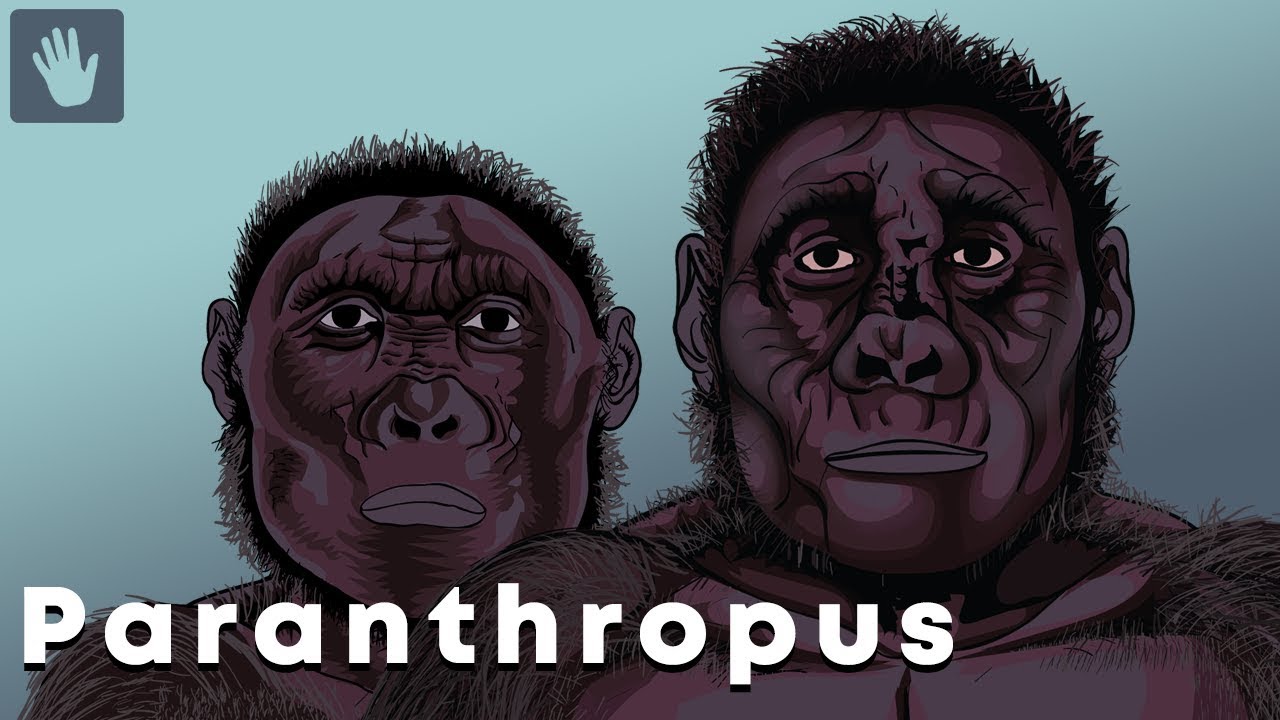
Paranthropus Evolution
Keywords
Summary
147 words
Critical Evaluation
Value of the Information & Strength of the Argument
The video provides a comprehensive and engaging overview of Paranthropus, synthesizing information from multiple peer-reviewed sources. The argumentation is solid, presenting evidence for diet, tool use, and evolutionary relationships while clearly distinguishing between established facts and hypotheses. The use of stable isotope analysis is explained clearly, and the presenter appropriately notes the limitations of the evidence. The discussion of the herpes transmission hypothesis is presented as a plausible but unproven scenario, demonstrating scientific rigor. The video’s value lies in its ability to make complex paleoanthropological research accessible to a general audience without oversimplifying the science.
Scientific Rigor, Source Quality, Title Accuracy
The video demonstrates strong scientific rigor by citing numerous peer-reviewed studies in the description, including papers on isotopic evidence, fossil discoveries, and genetic analyses. The presenter also acknowledges the provisional nature of many conclusions and encourages viewers to consult the sources. The title accurately reflects the content, which focuses on the evolution and biology of Paranthropus. The video’s production quality is high, with clear visuals and expert input, enhancing its credibility. The creator’s transparency about the limits of current knowledge further strengthens the video’s reliability.
195 words
Title / Content Match
The title 'Paranthropus Evolution' accurately reflects the content, which focuses on the evolutionary history, biology, and ecology of Paranthropus.
Quality & Reliability
8/10
The video is well-researched, citing numerous peer-reviewed studies, and presents information with appropriate scientific caution. The creator acknowledges uncertainty and encourages viewers to verify claims. Minor limitations include occasional informal tone and lack of in-depth discussion of some debates.
Key Moments
Markers derived by PSI from the transcript: the creator did not define chapters.
- Introduction to Paranthropus and the questions to be addressed.
- Overview of the three Paranthropus species and their physical characteristics.
- Discussion of body size, sexual dimorphism, and what is known from fossil remains.
- Explanation of stable isotope analysis and its use in reconstructing ancient diets.
- Presentation of isotopic evidence showing Paranthropus boisei's grass-based diet.
- Discussion of Paranthropus robustus's more varied diet and potential tool use.
- Exploration of the hypothesis that Paranthropus transmitted genital herpes to Homo erectus.
- Theories on the extinction of Paranthropus and the role of competition with Homo.
Cited Sources
- Evidence of Termite Foraging by Swartkrans Early Hominids — Cited as evidence for tool use and termite foraging by Paranthropus robustus.
- Diet of Paranthropus Boisei in the Early Pleistocene of East Africa — Cited for stable isotope evidence of a C4 grass-based diet.
- The Evolution of Zinjanthropus Boisei — Cited for evolutionary history and morphology of Paranthropus boisei.
- Erratum: Strontium Isotope Evidence for Landscape Use by Early Hominins — Cited for evidence on landscape use and mobility patterns.
- First Partial Skeleton of a 1.34-Million-Year-Old Paranthropus Boisei from Bed II, Olduvai Gorge, Tanzania — Cited for the only known partial skeleton of Paranthropus boisei.
- The Pliocene Hominin Diversity Conundrum: Do More Fossils Mean Less Clarity? — Cited for discussion of hominin diversity and evolutionary relationships.
- Isotopic Evidence For Contrasting Diets of Early Hominins Homo Habilis and Australopithecus Boisei of Tanzania — Cited for isotopic evidence of dietary differences between Homo habilis and Paranthropus boisei.
- The Demise of 'Nutcracker Man' — Cited for challenging the 'nutcracker man' hypothesis.
- Evidence for Stone-Tool-Assisted Consumption of Animal Tissues before 3.39 Million Years Ago at Dikika, Ethiopia — Cited for evidence of early stone tool use.
- Evolution: the Human Story — General reference for human evolution.
- Isotopic Evidence for Dietary Variability in the Early Hominin Paranthropus Robustus — Cited for isotopic evidence of dietary variability in Paranthropus robustus.
- The Human Past: World Prehistory and the Development of Human Societies — General reference for prehistory.
- Hand of Paranthropus Robustus from Member 1, Swartkrans: Fossil Evidence for Tool Behavior — Cited for evidence of tool use by Paranthropus robustus.
- Network Analysis of the Hominin Origin of Herpes Simplex Virus 2 from Fossil Data — Cited for the hypothesis that Paranthropus transmitted HSV-2 to Homo erectus.
- Evolutionary Origins of Human Herpes Simplex Viruses 1 and 2 — Cited for genetic evidence on the origins of herpes simplex viruses.
Concurring Sources
- Diet of Paranthropus Boisei in the Early Pleistocene of East Africa — Supports the claim of a C4 grass-based diet for Paranthropus boisei.
- Isotopic Evidence for Dietary Variability in the Early Hominin Paranthropus Robustus — Supports the claim of a varied diet for Paranthropus robustus.
- Hand of Paranthropus Robustus from Member 1, Swartkrans: Fossil Evidence for Tool Behavior — Supports the claim of tool use by Paranthropus robustus.
Dissenting Sources
- The Demise of 'Nutcracker Man' — Challenges the traditional 'nutcracker man' hypothesis, which the video also refutes.
Contribution & Novelties
The video provides a comprehensive and accessible synthesis of current knowledge about Paranthropus, highlighting recent isotopic evidence that overturns older assumptions about their diet. It also presents the intriguing hypothesis linking Paranthropus to the transmission of genital herpes to humans, a topic rarely covered in popular science media. The video’s strength lies in its ability to present complex scientific data in an engaging manner while maintaining scientific accuracy.
Pour aller plus loin :
- Paranthropus - Wikipedia — Overview of the genus, including species and key debates.
- Stable isotope analysis - Wikipedia — Explanation of the technique used to reconstruct ancient diets.
- Oldowan - Wikipedia — Context for early stone tool industries mentioned in the video.
- Herpes simplex virus - Wikipedia — Background on the virus and its evolution.
128 words
Radar Profile
The radar profile shows a well-rounded video with high scores in information quantity, quality, and reliability, and a slightly lower but still strong technical level. This indicates a scientifically robust yet accessible presentation.
💬 Très positif. Sur les 30 commentaires analysés, le public exprime un enthousiasme marqué pour la qualité de la vidéo, son humour et sa rigueur scientifique, avec de nombreux éloges pour la clarté des explications et la transparence des sources.