Neanderthals & Art: Interview with Dr. Wragg Sykes
Keywords
Summary
170 words
Critical Evaluation
Value of the Information & Strength of the Argument
The video provides substantial value by offering a nuanced, expert perspective on a complex topic. Dr. Wragg Sykes presents a balanced argument, acknowledging the ambiguity of evidence and the multiple possible interpretations of pigment use. She systematically builds a case for Neanderthal symbolism by presenting multiple lines of evidence, from the presence of pigments in non-functional contexts to the transport of exotic objects. Her argumentation is rigorous, as she distinguishes between what is known, what is probable, and what is speculative. The interview format allows for deep exploration of the subject, and the host’s questions are well-informed, facilitating a thorough discussion. The value is further enhanced by the expert’s ability to communicate complex ideas clearly, making the content accessible without oversimplifying.
Scientific Rigor, Source Quality, Title Accuracy
The scientific rigor is high, as the discussion is grounded in specific archaeological sites and recent research, with references to peer-reviewed publications and credible media. The sources cited in the description include a PLOS ONE article on Fumane Cave, a Vimeo video of Bruniquel Cave, a Cambridge University Press article on Cioarei-Borosteni, and a Guardian article on Bruniquel. These are reputable and directly relevant to the claims made. The title accurately reflects the content, which is an interview focused on Neanderthal art. The adequacy is excellent, as the title is concise and descriptive. The video does not contain any promotional segments, and the host’s disclaimer about being a rough guide and providing sources for verification enhances transparency.
253 words
Title / Content Match
The title accurately reflects the content: a focused interview on Neanderthal art and symbolism with Dr. Wragg Sykes.
Quality & Reliability
8/10
The interview features a recognized expert in Paleolithic archaeology, Dr. Rebecca Wragg Sykes, who provides nuanced, evidence-based perspectives. The discussion is grounded in specific archaeological sites and recent research, with references to peer-reviewed publications. The host maintains a critical stance, distinguishing between evidence and interpretation. Minor limitations include the conversational format and the lack of systematic citation of all claims.
Key Moments
Markers derived by PSI from the transcript: the creator did not define chapters.
- Introduction to the topic and guest.
- Discussion on the controversy of Neanderthal symbolism in academia.
- Explanation of pigment use and its potential practical purposes.
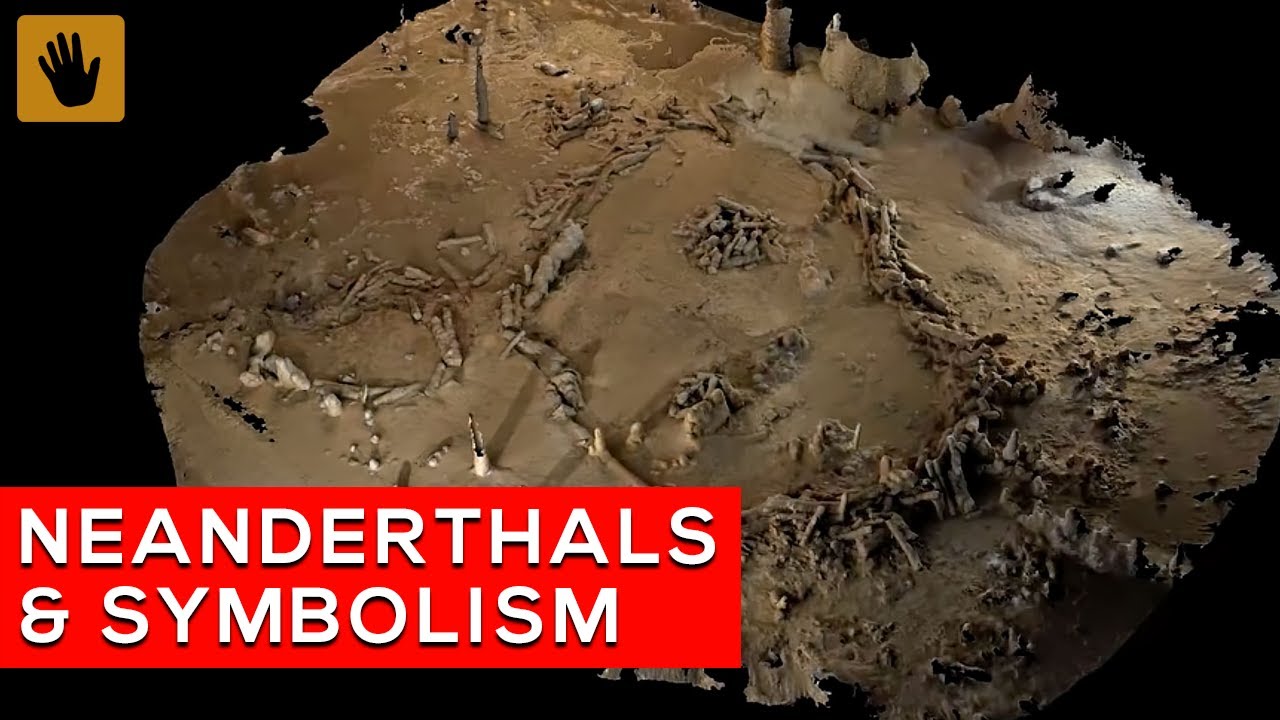
- Examples of Neanderthal symbolic behavior: Bruniquel, Cioarei-Borosteni, and Fumane.
- Discussion on the fossil shell with ochre from Fumane Cave.
- Comparison of Neanderthal evidence with early Homo sapiens in Africa.
- Conclusion and final thoughts on Neanderthal cognition and art.
Cited Sources
- Fumane Cave, Italy - PLOS ONE article — Referenced as an example of Neanderthal symbolic behavior, specifically the fossil shell with ochre.
- Bruniquel Cave, France - Vimeo video — Mentioned as a site with Neanderthal-built structures, possibly symbolic.
- Cioarei-Borosteni Cave, Romania - Antiquity article — Referenced for evidence of pigment on stalagmites and a geode.
- Bruniquel Cave, France - The Guardian article — Mentioned as a news source for the Bruniquel Cave structures.
Concurring Sources
- PLOS ONE article on Fumane Cave — Provides scientific evidence for Neanderthal symbolic behavior, supporting the interview's claims.
Dissenting Sources
- No direct discordant sources provided — The video does not present opposing views, but the discussion acknowledges that some scholars interpret the evidence differently.
Contribution & Novelties
The interview provides an original contribution by synthesizing recent archaeological evidence and expert interpretation on Neanderthal art and symbolism. It challenges the traditional view that Neanderthals lacked symbolic capabilities, presenting a nuanced perspective that acknowledges the ambiguity of the evidence. The discussion highlights specific sites and finds that are not widely known to the public, such as the geode with ochre from Romania and the fossil shell from Fumane. This adds to the ongoing scholarly debate and offers a more balanced view of Neanderthal cognition.
Pour aller plus loin :
- Neanderthal behavior — Overview of Neanderthal cultural and cognitive capabilities.
- Art of the Upper Paleolithic — Context for later Homo sapiens art.
- Symbolic culture — Theoretical framework for understanding symbolism in archaeology.
122 words
Radar Profile
The radar profile shows high scores in quantity and quality of information, reflecting the in-depth expert discussion. The technical level is moderate, making it accessible to a general audience while still providing depth. The overall reliability is high, supported by credible sources and expert testimony.
💬 Très positif. Sur les 30 commentaires analysés, les spectateurs expriment une grande appréciation pour la profondeur de l'entretien et l'expertise de Dr. Wragg Sykes, avec des demandes pour plus de contenu similaire.