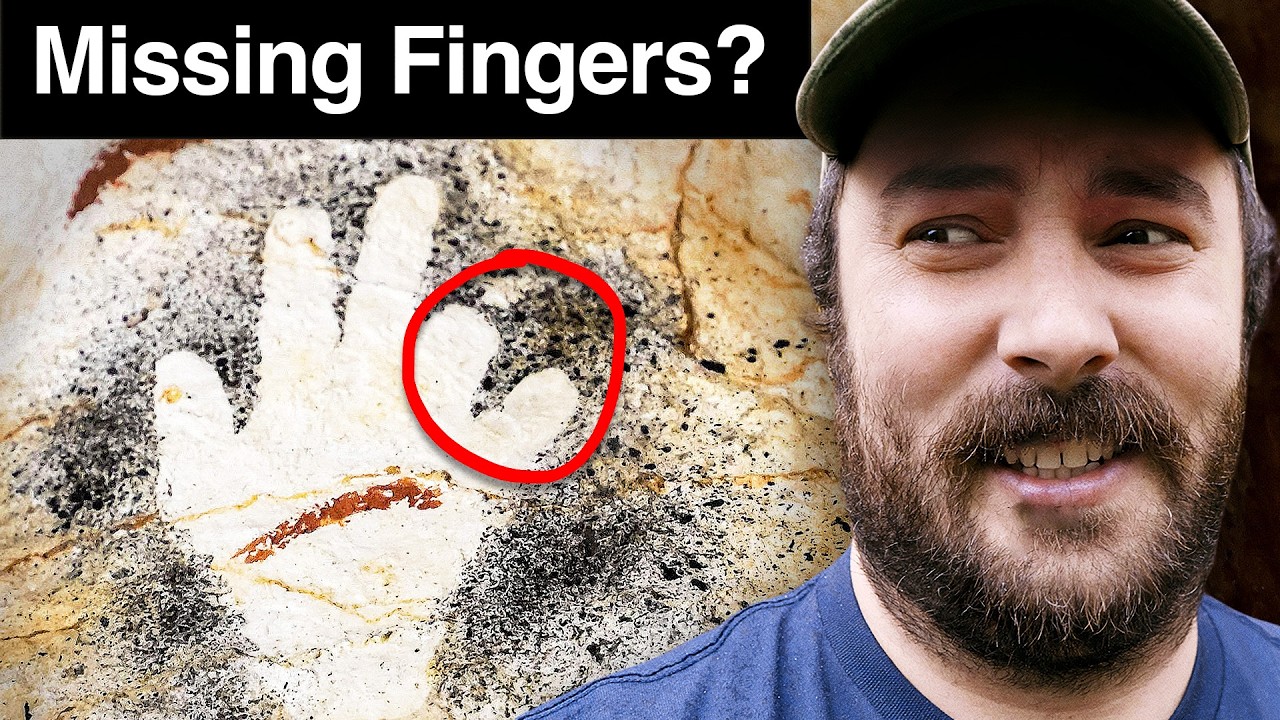
Did Stone age People Really Chop These Off? — Enigmatic Artefacts
Keywords
Summary
113 words
Critical Evaluation
Value of the Information & Strength of the Argument
The video provides a balanced and well-structured overview of the leading hypotheses, supported by references to archaeological and ethnographic studies. The argumentation is logical, and the creator clearly distinguishes between evidence and speculation. The practical experiment adds a hands-on perspective, though its inconclusive nature is honestly acknowledged. The video’s value lies in its synthesis of current research and its accessible presentation of complex ideas.
Scientific Rigor, Source Quality, Title Accuracy
The video demonstrates scientific rigor by citing specific studies (e.g., McCauley and Collard) and ethnographic examples. The sources are relevant and credible, though not all are formally cited with URLs. The title accurately reflects the content, and the video’s exploration of the topic is thorough. The creator’s personal experiment, while not scientifically rigorous, is presented as a preliminary test and does not undermine the overall credibility.
145 words
Title / Content Match
The title accurately reflects the video's central question about the missing fingers in Paleolithic hand stencils, and the content directly addresses this enigma.
Quality & Reliability
8/10
The video presents multiple hypotheses with references to ethnographic and archaeological studies, and includes a practical experiment. The creator is transparent about uncertainties and limitations, and the content aligns with current scientific discourse.
Chapters
Cited Sources
- Nebula — Ad-free viewing platform for the creator's videos.
- Surfshark VPN — Sponsor of the video; VPN service.
Concurring Sources
- Gargas Cave — Site with numerous hand stencils, many missing fingers.
- Cosquer Cave — Underwater cave with hand stencils, some missing fingers.
Dissenting Sources
- Alternative interpretations — Some researchers propose that the missing fingers are due to folded fingers rather than amputation, as discussed in the video.
Contribution & Novelties
The video synthesizes existing research and presents a clear, accessible overview of the debate surrounding missing fingers in Paleolithic hand stencils. It highlights the ethnographic parallels and the challenges of testing hypotheses. The creator’s practical experiment, while not conclusive, offers a unique perspective.
Pour aller plus loin :
- Gargas Cave — Key site with numerous hand stencils.
- Cosquer Cave — Underwater cave with hand stencils.
- Gravettian — Cultural period associated with the art.
- Finger amputation in ethnographic and archaeological records — Study by McCauley and Collard.
- Venus figurines — Contemporary art form.
92 words
Radar Profile
The radar profile shows high scores in information quantity and quality, with a moderate technical level. This indicates a well-researched and informative video that is accessible to a general audience, with a strong focus on presenting evidence and hypotheses.
💬 Positif. Sur les 30 commentaires analysés, le public est très favorable, appréciant l'humour, la démonstration pratique et la qualité de la présentation, tout en engageant des discussions constructives sur les hypothèses.