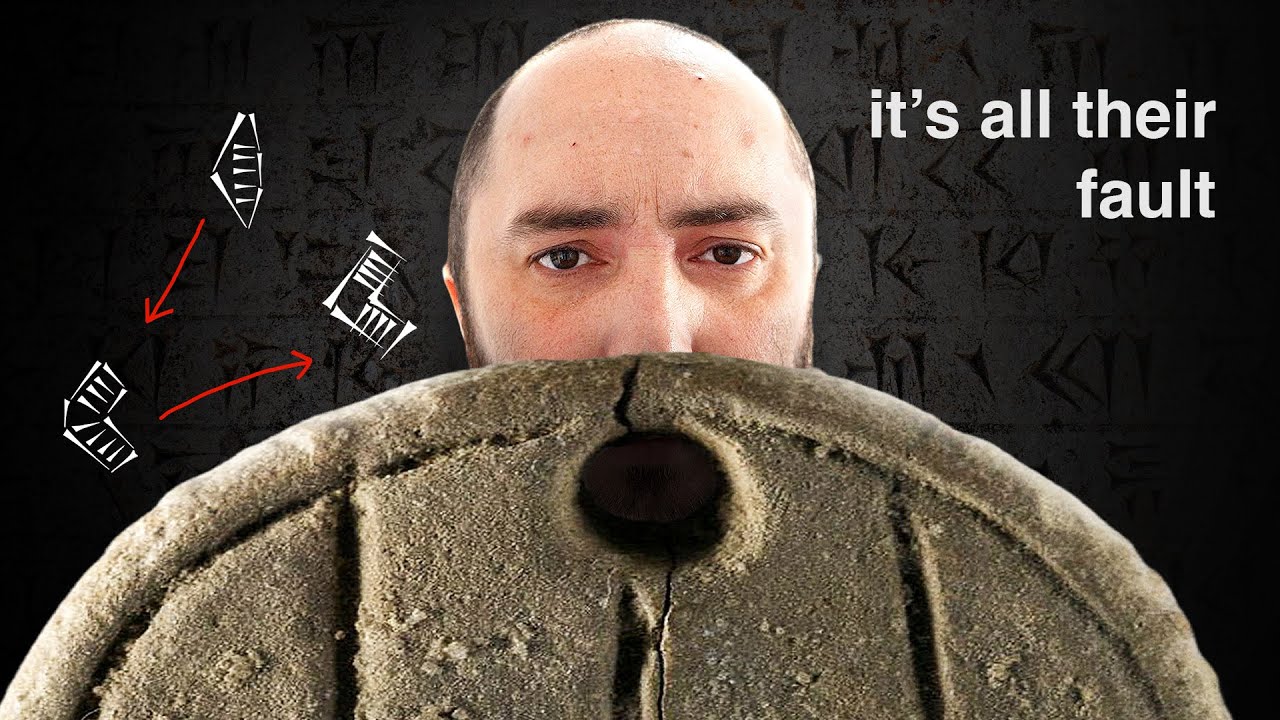
The most important lumps of dry mud in history
Keywords
Summary
152 words
Critical Evaluation
Value of the Information & Strength of the Argument
The video provides valuable insights into the origins of writing and bureaucracy, supported by expert commentary and archaeological evidence. The argumentation is solid, presenting a coherent narrative from tokens to writing, with appropriate caveats about uncertainties. The inclusion of Dr. Hafford adds credibility, and the video effectively communicates complex ideas in an engaging manner.
Scientific Rigor, Source Quality, Title Accuracy
The video demonstrates scientific rigor by consulting an expert and referencing specific archaeological sites and artifacts. The sources cited are credible, including the Penn Museum and the companion video on standardized measurements. The title accurately reflects the content, and the video maintains a high standard of factual accuracy while acknowledging speculative elements.
121 words
Title / Content Match
The title is catchy and accurate, reflecting the video's focus on clay tokens and their historical significance.
Quality & Reliability
8/10
The video is well-researched, featuring an expert interview (Dr. Brad Hafford) and referencing archaeological evidence. It presents hypotheses with appropriate nuance, acknowledging uncertainties. The information is reliable and up-to-date, though some interpretations are speculative.
Key Moments
Markers derived by PSI from the transcript: the creator did not define chapters.
- Introduction to clay tokens as the most important pieces of dry mud in history.
- Introduction of Dr. Brad Hafford and the site of Tepe Gawra.
- Explanation of how tells (mounds) form from accumulated human settlement.
- Discussion on whether ancient people knew they were living on top of earlier settlements.
- Evidence linking tokens to accounting, including linguistic clues and archaeological context.
- The cognitive revolution of numbers and planning enabled by tokens.
- Tokens in graves and the emergence of social stratification.
- Seals and the development of authentication and private property.
- The possible connection between tokens and board games like the Royal Game of Ur.
- The transition from tokens to writing, with examples of token impressions on tablets.
Cited Sources
- Penn Museum Middle East Galleries — Mentioned as a resource for those interested in Mesopotamia.
- Stefan Milo on Nebula — Ad-free viewing platform for the channel.
Concurring Sources
- Penn Museum — Institution that excavated Tepe Gawra and holds relevant collections.
Contribution & Novelties
The video synthesizes existing research on clay tokens and presents it in an accessible format, highlighting their role in the development of writing and bureaucracy. It offers a compelling narrative that connects accounting to the rise of social elites and even board games.
Pour aller plus loin :
- Clay tokens - Wikipedia — Overview of clay tokens and their significance.
- Cuneiform - Wikipedia — The writing system that evolved from tokens.
- Royal Game of Ur - Wikipedia — The ancient board game possibly linked to accounting.
86 words
Radar Profile
The radar profile shows high scores in information quantity and quality, with a slightly lower technical level, indicating a well-researched yet accessible presentation. The reliability score is strong, reflecting the use of expert input and credible sources.
💬 Très positif. Sur les 30 commentaires analysés, les spectateurs expriment un enthousiasme marqué pour le sujet niche et la qualité de la présentation, avec des éloges pour la collaboration avec Dr. Hafford et des réflexions personnelles sur les parallèles modernes.