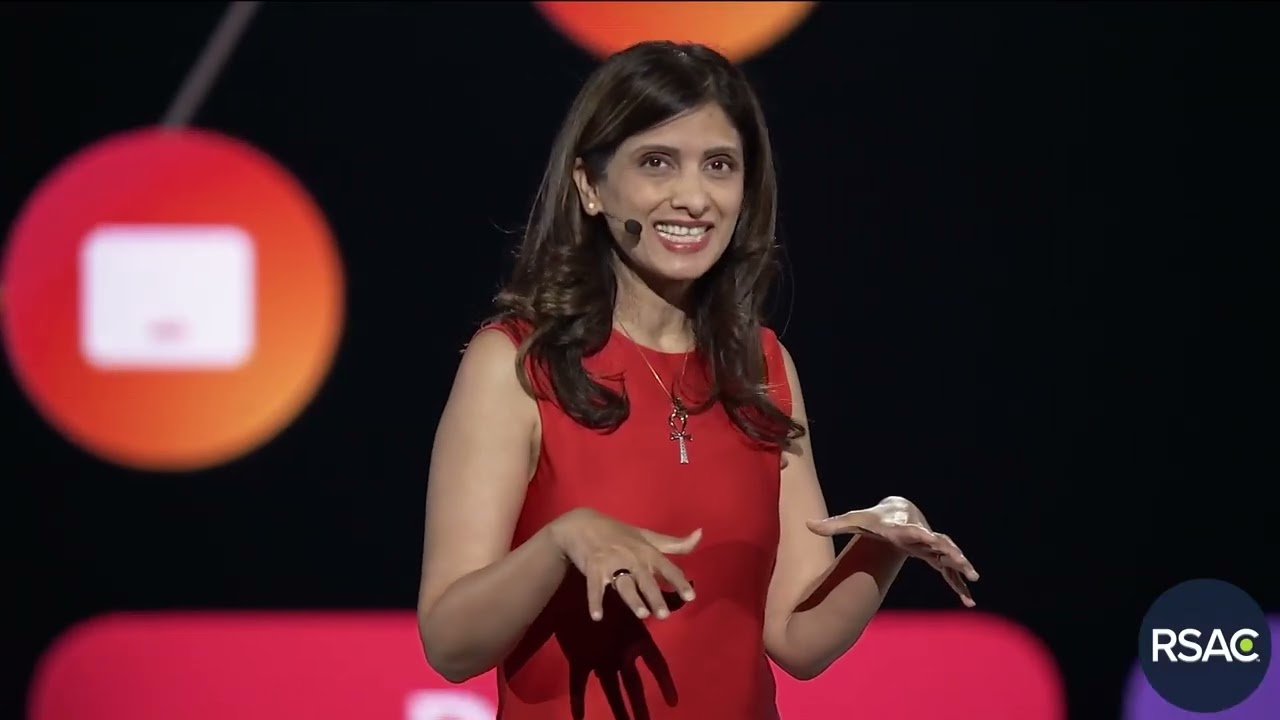
Ambient and Autonomous Security: Building Trust in the Agentic AI Era
Keywords
Summary
176 words
Critical Evaluation
Value of the Information & Strength of the Argument
The talk provides valuable insights into the emerging threats posed by agentic AI and the strategic direction for security. It effectively argues that traditional security approaches are insufficient and that a paradigm shift towards ambient and autonomous security is necessary. The argumentation is coherent and well-structured, supported by references to real-world examples such as North Korean threat actors and Anthropic’s Claude. However, the talk is primarily a high-level vision statement rather than a detailed technical analysis. It lacks specific technical details, implementation strategies, and empirical evidence to substantiate the claims. The argumentation is persuasive but relies heavily on Microsoft’s corporate perspective, which may introduce bias.
Scientific Rigor, Source Quality, Title Accuracy
The talk demonstrates a moderate level of scientific rigor. It references credible sources such as Microsoft Threat Intelligence and Anthropic, but these are not independently verified. The talk does not provide citations or links to specific reports, making it difficult to verify the claims. The title accurately reflects the content, and the talk stays on topic. The inclusion of the UAE government’s perspective adds a real-world application, but it is presented as a promotional video rather than a critical analysis. Overall, the sources are relevant but not exhaustive, and the talk would benefit from more transparent referencing.
217 words
Title / Content Match
The title accurately reflects the content, focusing on ambient and autonomous security in the context of agentic AI.
Quality & Reliability
7/10
The talk is an expert keynote from a Microsoft executive, presenting a corporate vision for agentic AI security. It references specific threat intelligence (Microsoft Threat Intelligence, Anthropic's Claude use case) and industry projections (IDC, Fortune 500). However, it lacks detailed technical depth, verifiable data, and independent sources, making it more of a strategic overview than a rigorous scientific analysis.
Key Moments
Markers derived by PSI from the transcript: the creator did not define chapters.
- Introduction and congratulations to RSAC's 35th anniversary; reflection on technological changes since 1991.
- Discussion of AI-powered attacks, citing Microsoft Threat Intelligence and examples like North Korean actors and Anthropic's Claude.
- Introduction of the concept of 'ambient and autonomous security' and the need to secure the AI stack.
- Emphasis on securing foundations: identity, data, endpoints, cloud, and infrastructure.
- Discussion on securing AI agents, including observability, identity, threat protection, data security, and governance.
- Highlighting the role of agents in augmenting defenders and the need for a comprehensive platform.
- Lessons learned: zero trust, measurements and evaluations, and evolving security skillsets.
- Video message from H.E. Dr. Mohamed Al Kuwaiti on UAE's national AI agent initiative and National XDR.
- Closing remarks on the future of security and the importance of community collaboration.
Cited Sources
- Microsoft Threat Intelligence — Referenced as the source for observations on AI-powered attacks and threat actor tradecraft.
- Anthropic's report on Claude — Cited as an example of agentic AI being used in attack workflows, with Claude performing 80-90% of tasks autonomously.
- IDC projection — Mentioned as the source for the prediction of 1.3 billion agents by 2028.
Concurring Sources
- Microsoft Security Blog — Microsoft's official security blog often discusses AI security and agentic AI, aligning with the talk's themes.
- Anthropic's Claude documentation — Provides information on Claude's capabilities, which are referenced in the talk.
Dissenting Sources
- Critique of AI hype in cybersecurity — Some experts argue that the emphasis on AI-driven attacks may be overstated, and that traditional security measures remain effective.
Contribution & Novelties
The talk contributes to the discourse on AI security by proposing a comprehensive framework for ‘ambient and autonomous security’ specifically tailored to agentic AI. It emphasizes the need for continuous, embedded security across the entire AI stack and introduces concepts like agent identity, observability control planes, and the extension of zero trust to AI. The inclusion of the UAE’s National XDR initiative provides a real-world example of scaling security to a national level. However, the talk is largely a strategic vision rather than a novel technical contribution, and it does not present new empirical data or detailed methodologies.
Pour aller plus loin :
- Zero Trust Architecture — Foundational concept for securing AI agents.
- Prompt Injection Attacks — Key threat to AI agents.
- Agentic AI — Overview of autonomous AI agents.
- Extended Detection and Response (XDR) — Concept extended to national level in the talk.
144 words
Radar Profile
The radar profile shows high scores in quantity and quality of information, reflecting the talk's comprehensive coverage of the topic. The technical level is moderate, indicating that the content is accessible to a broad audience but lacks deep technical detail. The overall reliability is moderate, as the talk relies on corporate sources and lacks independent verification.
💬 No comments were provided for analysis.