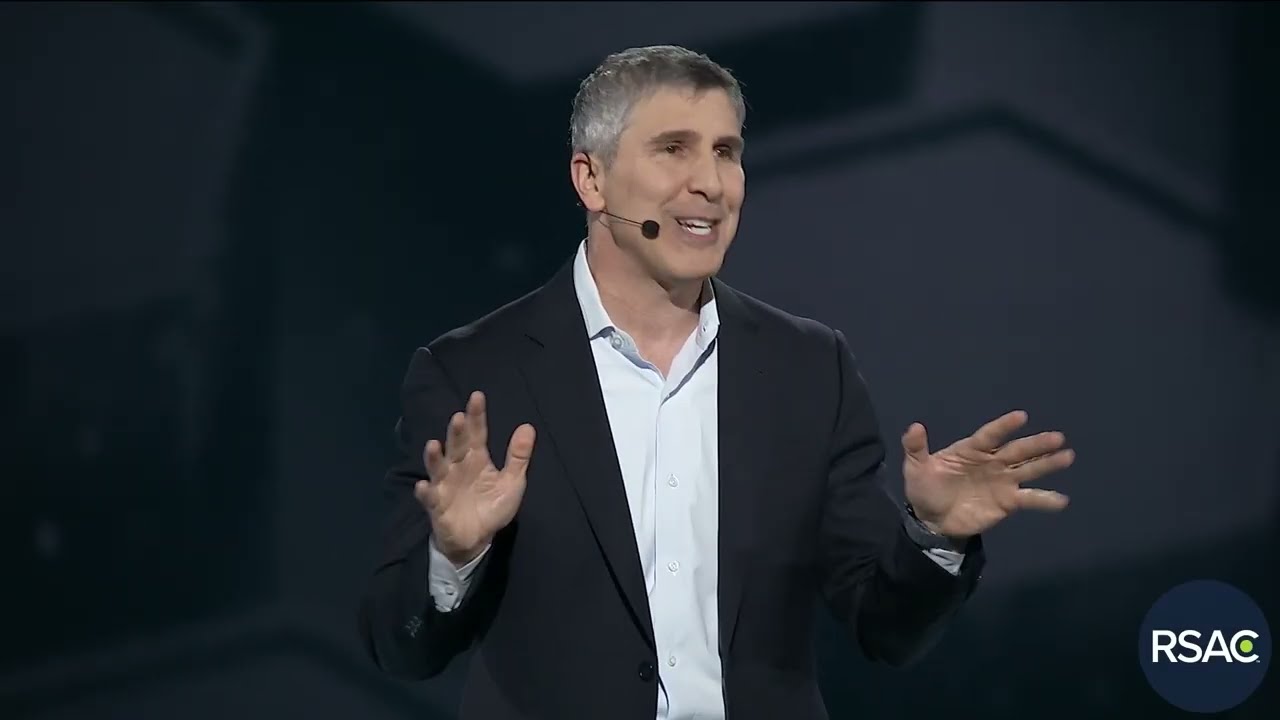
The Responsibility Gap: AI and the Shift to True Security Accountability
Keywords
Summary
143 words
Critical Evaluation
Value of the Information & Strength of the Argument
The talk provides valuable insights into the organizational and governance challenges of AI security, highlighting the fragmentation of responsibility and the need for proactive risk management. The argumentation is persuasive, using concrete examples and analogies to illustrate the urgency. However, the evidence is largely anecdotal, and the speaker’s position as a vendor of exposure management solutions introduces a potential bias. The call for outcome-based regulation and adaptation of existing frameworks is reasonable, but the talk lacks depth on technical specifics and alternative viewpoints.
Scientific Rigor, Source Quality, Title Accuracy
The talk references several public frameworks and events, including the NIST Cybersecurity Framework, ISO standards, OWASP GenAI Security Project, and the White House legislative framework released on March 20th. These are credible sources, but the talk does not provide specific citations or URLs. The title accurately reflects the content, focusing on the responsibility gap. The speaker’s expertise lends credibility, but the lack of detailed sourcing and the promotional tone for Tenable’s solutions slightly reduce the scientific rigor.
175 words
Title / Content Match
The title accurately reflects the core theme of the responsibility gap in AI security and accountability.
Quality & Reliability
7/10
The speaker is a co-CEO of Tenable, a cybersecurity company, providing expert opinion based on industry experience. The talk includes anecdotal evidence and references to public frameworks, but lacks detailed citations or verifiable data. The content is plausible and aligns with known AI risks, but the lack of specific sources reduces the score.
Key Moments
Markers derived by PSI from the transcript: the creator did not define chapters.
- Introduction and setup of the talk with three stories.
- Story 1: Financial institution AI assistant misconfiguration.
- Story 2: AI search platform jailbreak and hallucination.
- Story 3: Sales rep AI agent report causing lost deal.
- Reveal that all stories are true and discussion of real-world AI risks.
- Introduction of the responsibility gap and fragmented ownership.
- Comparison to past tech shifts and the speed of AI adoption.
- Discussion of citizen developers and AI agents' autonomy.
- Call for outcome-based regulation and use of existing frameworks.
- Emphasis on proactive risk management and exposure management.
- Conclusion: accountability and visibility as keys to trust.
Cited Sources
- NIST Cybersecurity Framework — Mentioned as a starting point for AI security regulation.
- ISO cybersecurity standards — Mentioned as international standards adaptable for AI security.
- OWASP GenAI Security Project — Mentioned as providing practical tools for securing Agentic AI.
- White House legislative framework on AI — Referenced as released on March 20th, focusing on AI innovation and preempting state regulations.
Concurring Sources
- NIST AI Risk Management Framework — Aligns with the call for proactive risk management and governance.
- EU AI Act — Supports the need for outcome-based regulation and accountability.
- OWASP Top 10 for LLM Applications — Provides specific risks that align with the examples of AI failures.
Dissenting Sources
- AI and the Future of Work — Some argue that AI will create more opportunities than risks, potentially downplaying the urgency of the responsibility gap.
Contribution & Novelties
The talk contributes a compelling framing of the ‘responsibility gap’ in AI security, emphasizing the fragmentation of ownership and the need for proactive risk management. It bridges the gap between technical AI risks and governance, offering a practical call to action for executives and boards. The emphasis on exposure management as a proactive approach is a valuable perspective.
Pour aller plus loin :
- NIST AI Risk Management Framework — Official framework for managing AI risks, complementary to the cybersecurity framework.
- EU AI Act — European regulation on AI, providing a comprehensive legal framework.
- OWASP Top 10 for LLM Applications — Specific risks for LLM-based applications, relevant to the talk’s examples.
- AI Incident Database — Repository of real-world AI incidents, supporting the talk’s claims of AI failures.
126 words
Radar Profile
The radar profile shows balanced scores across information quantity, quality, technical level, and reliability, indicating a well-rounded presentation. The slightly lower technical level suggests the talk is accessible to a broad audience, while the reliability score reflects the expert opinion nature and lack of detailed citations.
💬 No comments were provided for analysis.