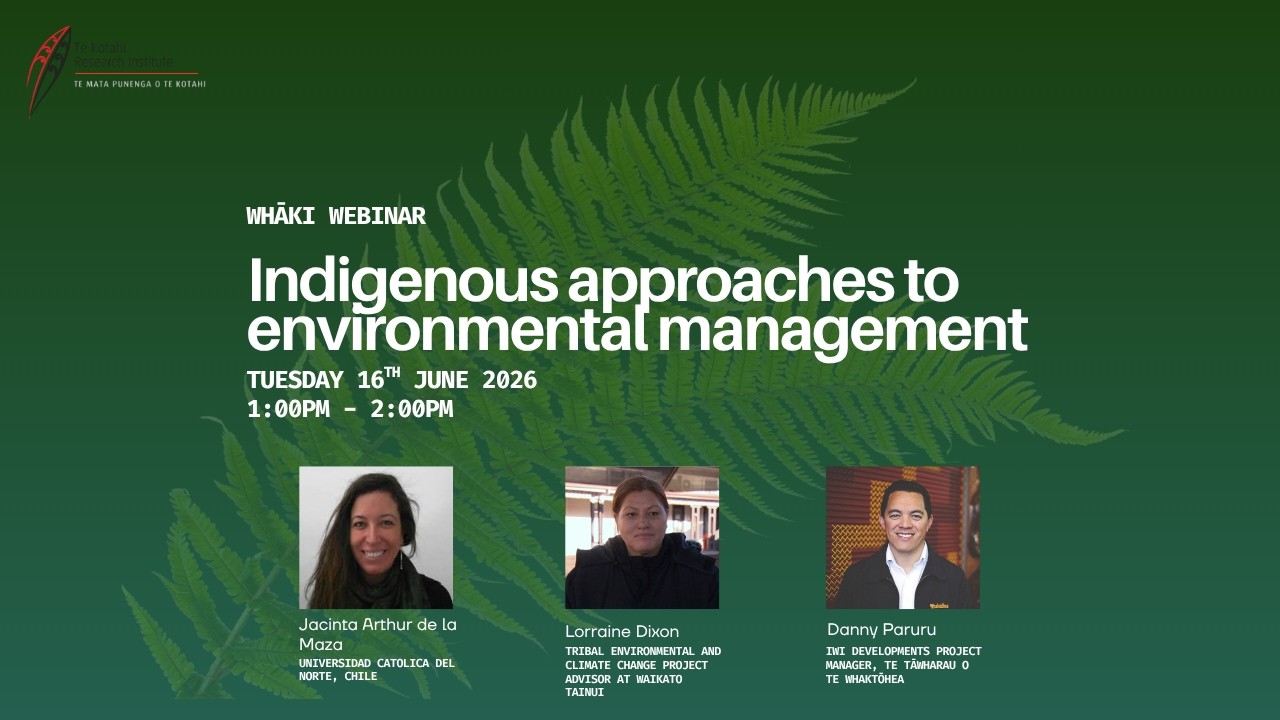
Whāki Webinar Hune - Indigenous Approaches to Environmental Management
Keywords
Summary
138 words
Critical Evaluation
Value of the Information & Strength of the Argument
The webinar provides valuable insights into indigenous approaches to environmental management, showcasing real-world examples of how indigenous knowledge can be integrated into formal systems. The speakers present compelling arguments for the inclusion of indigenous perspectives, supported by their practical experiences. The value lies in the demonstration of co-management frameworks and the development of cultural indicators, which offer a model for other communities. The argumentation is solid, grounded in lived experience and specific case studies, though it could benefit from more rigorous data or comparative analysis.
Scientific Rigor, Source Quality, Title Accuracy
The webinar demonstrates scientific rigor through the involvement of academic researchers and practitioners with deep expertise. The sources cited are primarily the speakers’ own projects and reports, such as the Ramsar report and the Rapa Nui wetland project, which are credible but not extensively referenced. The title accurately reflects the content, and the webinar maintains a high level of relevance to its stated topic. The lack of formal citations and the informal format slightly reduce the overall rigor, but the practical knowledge shared is valuable.
185 words
Title / Content Match
The title accurately reflects the content, which focuses on indigenous approaches to environmental management in Aotearoa and Rapa Nui.
Quality & Reliability
7/10
The webinar features expert practitioners and researchers with direct experience in indigenous environmental management, providing credible firsthand accounts. However, the informal webinar format and lack of detailed citations or peer-reviewed references limit the verifiability of specific claims.
Key Moments
Markers derived by PSI from the transcript: the creator did not define chapters.
- Introduction to the webinar and speakers.
- Jacinta Arthur de la Maza begins her presentation on the Pacific Wetlands Education Network.
- Discussion of the history of Rapa Nui and the national park governance.
- Overview of the project's objectives and research exchanges.
- Lorraine Dixon starts her presentation on co-writing the Ramsar report.
- Explanation of the cultural indicators and monitoring tools developed.
- Comparison between scientific and indigenous monitoring approaches.
- Danny Paruru presents on Whakatōhea's environmental management in commercial development.
- Discussion on embedding cultural values in development projects.
- Q&A session and concluding remarks.
Cited Sources
- Ramsar Convention on Wetlands — Referenced by Lorraine Dixon as the international treaty for wetland conservation, specifically the reporting framework and Article 3.2.
- Waikato-Tainui Raupatu Claims Settlement Act 1995 — Mentioned by Lorraine Dixon as the treaty settlement that established co-management arrangements for the Waikato River and its wetlands.
Concurring Sources
- Ramsar Convention on Wetlands — Supports the importance of wetland conservation and the role of indigenous knowledge in reporting.
Contribution & Novelties
The webinar offers a novel perspective on environmental management by centering indigenous knowledge and co-management approaches. It provides concrete examples of how indigenous communities are developing their own monitoring tools and integrating them into formal reporting systems, such as the Ramsar report. This contributes to the growing body of literature on decolonizing conservation and the importance of indigenous data sovereignty.
Pour aller plus loin :
- Mātauranga Māori — Provides background on the concept of Māori knowledge and its role in environmental management.
- Ramsar Convention — The international treaty for wetland conservation, relevant to the reporting framework discussed.
- Indigenous data sovereignty — Discusses the rights of indigenous peoples to control data about their communities and lands, a key theme in the webinar.
121 words
Radar Profile
The radar profile shows high scores in information quantity and quality, reflecting the rich content and expert speakers. The technical level is moderate, making it accessible to a broad audience. The overall reliability is strong due to the practical experience shared, though formal citations are limited.
💬 No comments were provided for analysis.