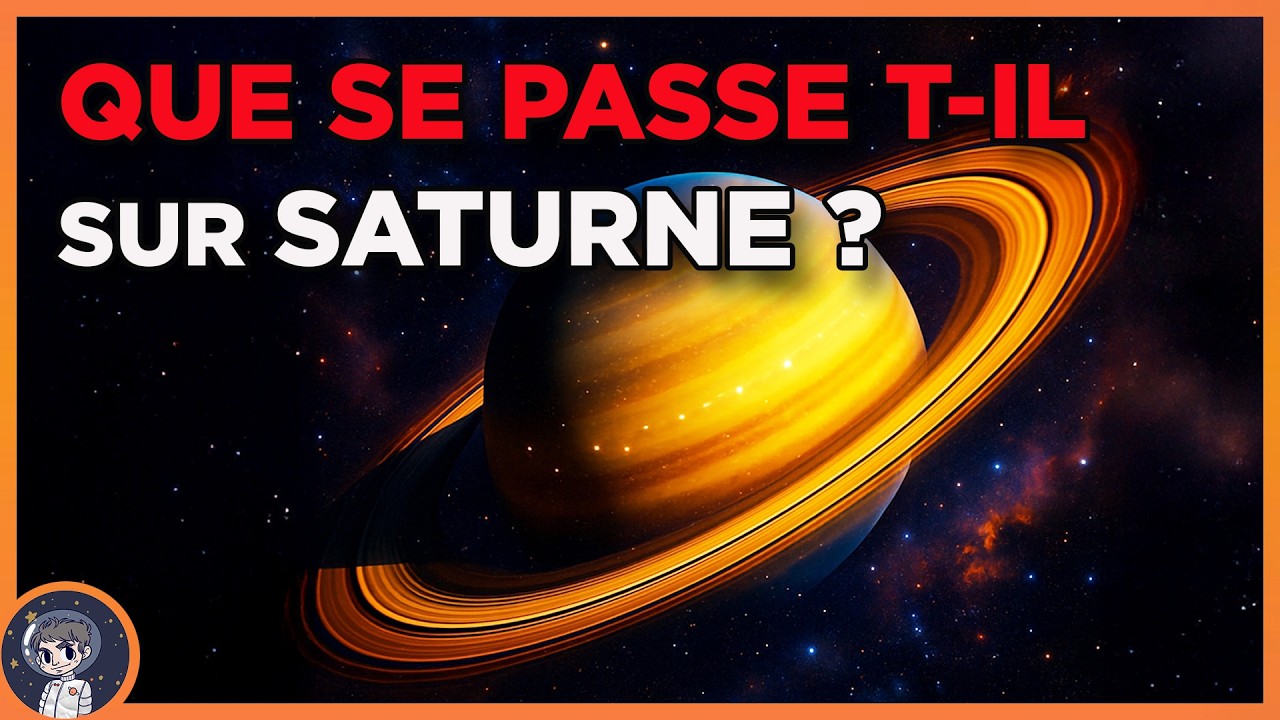
JAMES WEBB observe un phénomène ETRANGE sur Saturne - Le Journal de l'Espace #309 - Actu spatiale
Keywords
Summary
137 words
Critical Evaluation
The video provides a comprehensive overview of recent space news, with a focus on scientific discoveries and upcoming events. The information is presented in an engaging and accessible manner, making it suitable for a general audience. The segment on James Webb’s observations of Saturn is particularly interesting, as it highlights new findings that could reshape our understanding of gas giants. The discussion on the probability of alien civilizations is thought-provoking, referencing a study that emphasizes the longevity of biospheres and the rarity of technological civilizations. The technical explanation of deorbiting is clear and accurate. However, the video lacks direct citations to primary sources, which would enhance its credibility. The presenter’s enthusiasm is contagious, but the reliance on secondary sources and the lack of in-depth analysis in some segments prevent it from being a top-tier scientific resource. The adéquation between title and content is good, as the James Webb segment is a highlight, but the video covers multiple topics, so the title is slightly narrow. Overall, this is a valuable source for staying informed about space news, but viewers should seek primary sources for detailed scientific information.
186 words
Title / Content Match
The title highlights the James Webb observation on Saturn, which is one of the main segments, but the video covers multiple news items, so the title is somewhat narrow but not misleading.
Quality & Reliability
7/10
The video presents recent space news with a mix of factual reporting and scientific context. The information appears accurate and up-to-date, but the lack of direct citations to primary sources in the video reduces the score. The presenter is knowledgeable and the content is well-structured.
Chapters
Cited Sources
- Creative Commons Attribution 4.0 International — License for the music used in the video.
- CreatorChords — Source for the music track 'Superepic' by Alexander Nakarada.
- Le Journal de l'Espace Blog — Official blog of the channel, providing additional articles and information.
- Quentin Leicht on LinkedIn — Professional profile of the presenter.
- Scott Buckley — Composer of music possibly used in the video.
- YouTube video: LD6BeK2OtkE — Referenced video, possibly related to Saturn's hexagon.
- YouTube video: rBlOQTFFEKI — Referenced video, possibly related to a previous episode.
Concurring Sources
- NASA Solar Physics — NASA's heliophysics program, which includes missions to study the Sun and space weather.
- ESA - Space Weather — ESA's page on space weather, providing information on solar activity and its effects.
Dissenting Sources
- No direct discordant sources found — The video does not present controversial claims that contradict established science; it aligns with current scientific understanding.
External References
Contribution & Novelties
The video provides a concise synthesis of recent space news, with a focus on James Webb’s observations of Saturn, which are relatively new and not widely covered. It also highlights the upcoming comet event and the study on alien civilizations, offering a balanced perspective. The ‘Minute Tech’ segment adds educational value by explaining deorbiting.
Pour aller plus loin :
- James Webb Space Telescope — Official NASA site for JWST, providing detailed information on its observations and capabilities.
- Lagrange point L1 — Wikipedia article explaining Lagrange points, including L1, and their use in space missions.
- Draconids meteor shower — Wikipedia article on the Draconids meteor shower, its origin and visibility.
- Fermi paradox — Wikipedia article discussing the apparent contradiction between the high probability of extraterrestrial civilizations and the lack of evidence.
130 words
Radar Profile
The radar profile shows high scores in quantity of information and fiabilité, indicating a well-informed and reliable video. The technical level is moderate, making it accessible to a broad audience. The quality of information is good, but there is room for improvement in providing direct citations.
💬 Très positif. Sur les 30 commentaires analysés, les téléspectateurs expriment leur gratitude et leur enthousiasme pour le contenu, saluant la qualité des informations et la clarté des explications, avec une mention particulière pour la 'Minute Tech'.